Whitewater Creeking in 2026: The Class IV Step-Up That Quietly Ends More River Careers Than Big Drops
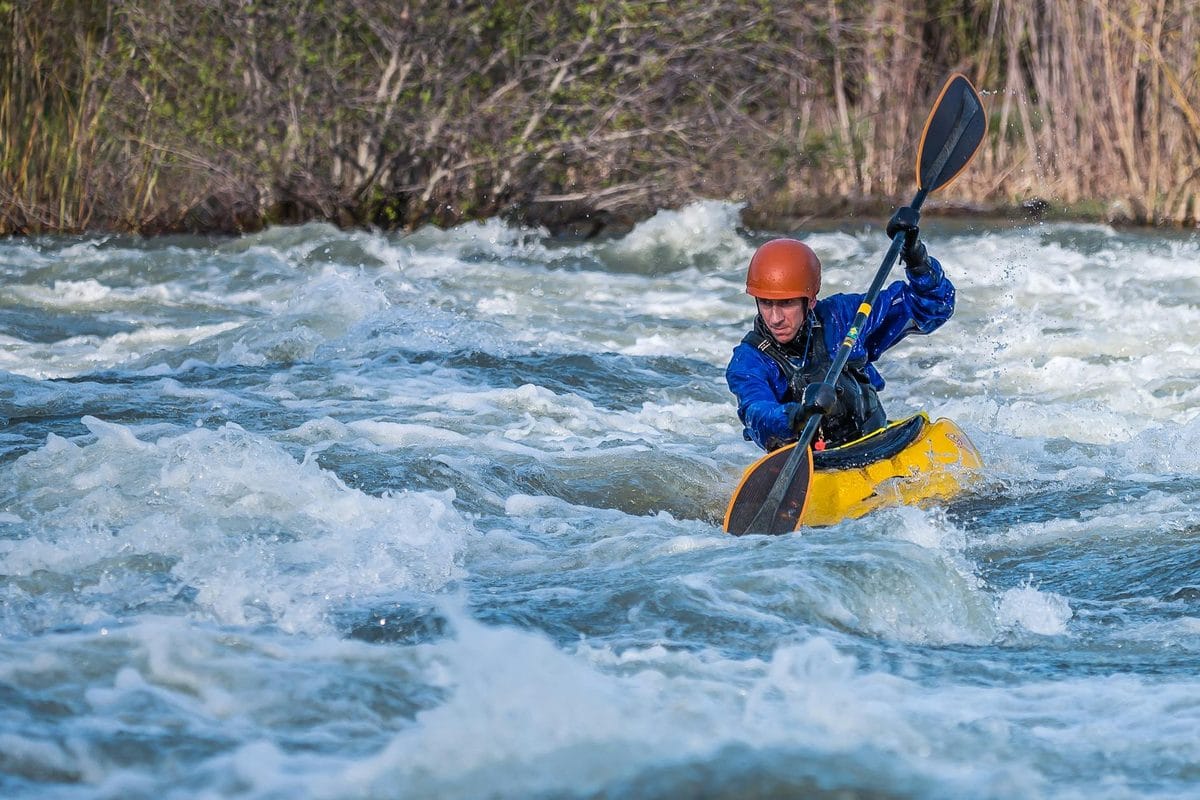
Most paddlers who quit creeking don't quit on a waterfall. They quit on a horizon line they couldn't read, in cold water, after a swim that taught them their roll falls apart the moment their heart rate spikes. The move from confident Class III to Class IV is the single hardest step in whitewater, and it has almost nothing to do with the size of the drops you can see in the videos.
Creeking — steep, low-volume, technical water, usually graded IV and up — rewards a very specific kind of competence. You need a roll that works when you're upside down in 8°C water with your nose full of river and no idea which way is downstream. You need to read a rapid from the eddy in ten seconds, because that's how long you get before the current makes the decision for you. And you need the honesty to walk a drop on a day when your head isn't in it. The paddlers who last are not the bravest ones. They're the ones who treated the Class IV step-up as a two-season project instead of a summer.
Why Class IV breaks people who breezed through Class III
Class III is forgiving. The lines are wide, the consequences of a swim are usually a cold float to the next pool, and you can muscle through a lot of bad technique. Class IV removes that margin. The eddies get smaller and harder to catch, the must-make moves stack up with no recovery water between them, and a swim can mean a long, dangerous flush past undercut rock or into a strainer. The water doesn't get twice as hard. The penalty for getting it wrong gets ten times worse.
The honest truth is that the gap is mostly mental and it shows up in your roll. A combat roll that hits 95% of the time on flat water can drop to 60% the first time you flip in pushy Class IV, because fear floods your system and your technique compresses. That's the real test. Not "can you run the drop" but "can you recover when the drop runs you". Until your roll is bombproof under stress, every step up is borrowed time.
The boat and the kit that actually matter
Gear won't make you a better paddler, but the wrong gear will get you hurt faster. A few things are non-negotiable for stepping into IV:
- A modern creek boat with high volume in the bow and stern. The Pyranha Scorch X and the Dagger Phantom are the two most-paddled creekers on Western rivers right now, both in the £1,100–£1,400 range new, and both resurface from a deep boof in a way that older displacement hulls simply don't.
- A type V rescue PFD with a quick-release harness. A Palm or Astral vest runs roughly £180–£260 and the harness is what lets a teammate pull you off a pin. Don't paddle IV without one.
- A solid helmet rated for whitewater — a Sweet Protection Rocker or WRSI sits around £120–£200. Skateboard lids and climbing helmets are not the same thing and will not protect the back of your skull against rock.
- A throw bag clipped where you can reach it, a knife on your PFD, and at least one pin kit between the group. If nobody in your crew owns a Z-drag setup, you are not a Class IV crew yet.
Buy the safety kit before you buy the flashy boat. A £1,400 hull does nothing for a paddler who can't be rescued.
How to actually build the step-up
The fastest way to get good at IV is to spend an unglamorous amount of time getting bored on hard III. Pick a single run within your comfort zone and lap it until you can catch every micro-eddy, surf every wave, and run it switch. That eddy-hopping precision is the exact skill IV demands, just with smaller margins. Paddlers who skip this and chase the grade on adrenaline plateau hard around their second season and never understand why.
Get your roll tested under real stress before you need it. Flip on purpose in moving water. Have a friend hold your bow under while you roll up. Roll in cold water with a full face of spray. The goal is to make the upside-down world boring, so that when you flip for real on a IV your body rolls up without your brain getting a vote.
Then step up with people who are better than you, not with your usual crew of equals. One paddler who has run the line a hundred times, who can set safety and talk you through the entrance move, is worth more than three friends at your own level cheering you on. The Upper Gauley in West Virginia, the North Fork sections in California, and the Tryweryn's harder releases in North Wales all have established crews who run them weekly — find them, paddle at the back, and watch where the strong paddlers put their boats.
The discipline nobody films
The skill that separates paddlers who last from paddlers who get carried out is the walk. Scouting a drop, looking at it honestly, and deciding to portage on a day your head isn't right is not weakness — it's the entire reason the experienced paddlers in your group still have all their teeth. Ego runs are how good paddlers become statistics. The river is there next weekend. So, ideally, are you.
There's a version of this where you treat the whole thing as a numbers game: more days, more grades, more drops ticked off a list. That version produces fast progress and short careers. The paddlers still creeking at fifty did it the slow way, and not one of them regrets the runs they walked.