The Solo Climbing Boom in 2026: Why More Men Are Climbing Alone, the Real Risk Profile, and the Discipline That Keeps Them Alive
Solo climbing has tripled in popularity in five years. The death rate has tripled too. Here is what experienced soloists actually do that beginners do not, and where the line should sit.
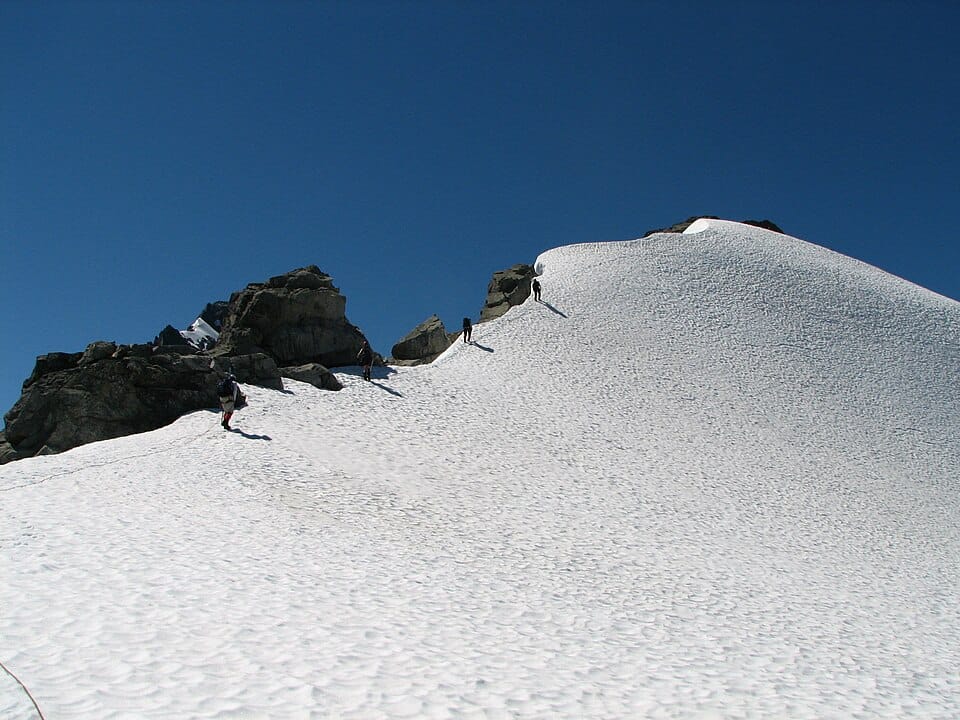
The data on solo climbing in 2026 tells a story most outdoor publications haven't fully grappled with. Solo climbing — defined as any climbing pursuit done without a partner, including roped solo trad, rope-soloing on toprope systems, free soloing, and glaciated alpine solos — has surged in popularity over the past five years. The American Alpine Club's 2026 climber survey found 31% of intermediate-and-above climbers reported a solo outing in the past 12 months, up from 11% in 2021. Solo climbing fatalities in the same period have grown at a similar rate.
This isn't an article telling you not to do it. Most of the men reading this who are interested in solo climbing are going to climb solo regardless of what is written here. What's worth your time is the honest difference between solo climbers who survive and solo climbers who don't — because that difference, on close inspection, comes down to a small number of disciplines that separate the experienced from the optimistic.
What solo climbing actually means
The term covers four distinctly different activities with very different risk profiles. Lumping them together — as most casual coverage does — obscures the conversation that matters.
Free soloing. Climbing without ropes, without protection, without a backup of any kind. Made famous by Alex Honnold's Free Solo film. The fall results in death or catastrophic injury in essentially all cases above 50 feet. This is the smallest category by participant count and the most public.
Rope soloing on lead. Climbing alone with a self-belay device, placing protection as you go, and managing rope through devices like the Edelrid Eddy or the Petzl Grigri configured for solo use. The fall is caught by the system, but the system requires constant attention to detail. Equipment misuse, rope management errors, and gear failure are the dominant accident causes.
Rope soloing on toprope. Climbing with a self-belay device on a rope anchored at the top of the route. The lowest-risk solo technique. Failure modes include anchor failure (rare, with proper setup), device failure (extremely rare with current generation equipment), and ground-fall injuries from running out the rope on misjudged routes.
Alpine soloing. Solo glacier travel, alpine ridge ascents, and mixed mountaineering performed alone. The risk profile here is dominated by hazards that have nothing to do with falls — crevasse falls, avalanche, weather, hypothermia, route-finding errors that compound when there is no second mind to check the decision.
The accident pattern that emerges from the data
The American Alpine Club publishes Accidents in North American Climbing every year. The pattern across solo climbing accidents in the 2024 and 2025 reporting years is striking. The fatal accidents are concentrated overwhelmingly in three scenarios.
First: experienced climbers operating below their normal grade, on routes they consider easy, with simplified or absent gear. The hubris-fueled "I can solo this 5.6 in the rain" decision is far more often fatal than the careful free-solo of a 5.11.
Second: solo climbers using devices in configurations the manufacturer did not certify. The most common pattern: rope-soloing with a Grigri configured for solo lead climbing in a way that produces inconsistent grip on the rope under specific fall geometries. The accident reports describe the same mechanism repeatedly: a fall taken in a particular orientation that the device was never tested to catch reliably.
Third: alpine soloists caught in conditions they would not have entered with a partner. The decision to turn back is harder when you are alone, when the partner's calibrating influence is absent, when the day's investment is pinned entirely on your own commitment. Solo summit-fever is a recognised cause of death in the alpine literature.
The disciplines that separate survivors
The experienced soloists who climb regularly without incident have a remarkably consistent set of practices. None of them are secret, but they require a discipline that the casual solo entrant rarely brings.
The grade margin. Experienced soloists operate three to five letter grades below their leading max. A climber who leads 5.11+ confidently solos 5.8 or 5.9, not 5.10 or 5.11. The margin protects against the long-tail bad days — the hand that slips on an unexpectedly mossy hold, the grip that fails after twenty minutes on the wall longer than expected. Closing the margin to a single grade kills people who otherwise have decades of experience.
The pre-climbed route requirement. Experienced soloists do not solo routes they have not first climbed roped. Most have climbed the route many times, including in marginal conditions. The familiarity removes route-finding uncertainty, identifies the cruxes in advance, and ensures no surprise feature exists that catches the climber off-guard at a dangerous height.
The no-witness rule, inverted. The myth is that solo climbers want to climb alone with no audience. The discipline among experienced soloists is the opposite: someone always knows the route, the time, the expected return. A wife, a climbing partner, a search-and-rescue acquaintance, the local ranger station. The solo aspect is the absence of a partner on the wall, not the absence of a contingency network.
The gear obsession. Solo rope-climbing gear is examined, tested and re-certified by the climber himself before every session. Device wear, rope condition, anchor materials. The gear-failure accidents in the literature almost exclusively involve climbers who treated the equipment casually.
The emotional state check. Experienced soloists do not climb when they are angry, distracted, or freshly arguing with someone. The mental discipline required to solo safely is incompatible with emotional volatility. A bad morning kills the climbing day, not just the climbing performance.
The Edelrid and Petzl gear baseline
For roped solo climbing in 2026, two devices dominate the experienced-user market. The Petzl Grigri is the standard for top-rope soloing when configured per Petzl's published technique. The Edelrid Spoc and Eddy are purpose-built for solo lead use and are the industry default for technically demanding rope-soloing.
Either device used outside its intended configuration is dangerous in ways the climber may not appreciate until the fall geometry that exposes the problem actually happens. The accident literature is unkind to climbers who improvised configurations beyond what the manufacturer documented.
Why the solo boom is happening
The growth in solo climbing participation tracks the broader cultural shift toward solitary outdoor pursuits — the rise of bikepacking, ultrarunning, packraft expeditions and other multi-day individual sports. Three factors specifically drive solo climbing.
The first is partner availability. Climbers who got into the sport in the 2010s often find that their original climbing partners have moved away, had children, or shifted to lower-commitment activities. Solo climbing emerges as the workaround when the social infrastructure thins.
The second is the pace and rhythm. Solo climbing — particularly long alpine days — produces a state of focused, single-mind concentration that double-team climbing rarely matches. Men who have done both regularly describe the solo experience as deeper, even if less social.
The third is the cultural pull of the Honnold archetype. Free Solo (2018) reframed solo climbing in the public imagination as an extreme but legitimate athletic discipline, and a portion of the new solo climbing population is explicitly trying to participate in that lineage.
The honest framing
If you are reading this and considering solo climbing, the framework that the experienced practitioners actually use is straightforward. Solo at grades well below your leading max. Solo only routes you have repeatedly climbed roped. Solo with a documented contingency network. Solo with gear you have personally inspected against manufacturer specifications. Solo only when your emotional state is calm and your sleep was good. Solo with a humility that recognises the experienced soloists who have died were almost always overcome not by physical limits but by judgment slips.
The growth in solo climbing in 2026 is going to continue. The corresponding growth in solo accidents is also going to continue, until the practitioner population becomes more uniformly experienced. The men who climb solo and don't make the accident report are not lucky. They are disciplined in ways that look almost boring from the outside. The discipline itself is the survival mechanism.