Paramotoring in 2026: The No-License Way Regular Guys Are Getting Off the Ground for Less Than a Used Motorcycle
No FAA license, no medical, no hangar bill. Why paramotoring is the loophole into flying — what the kit really costs, where to launch, and the one risk that actually matters.
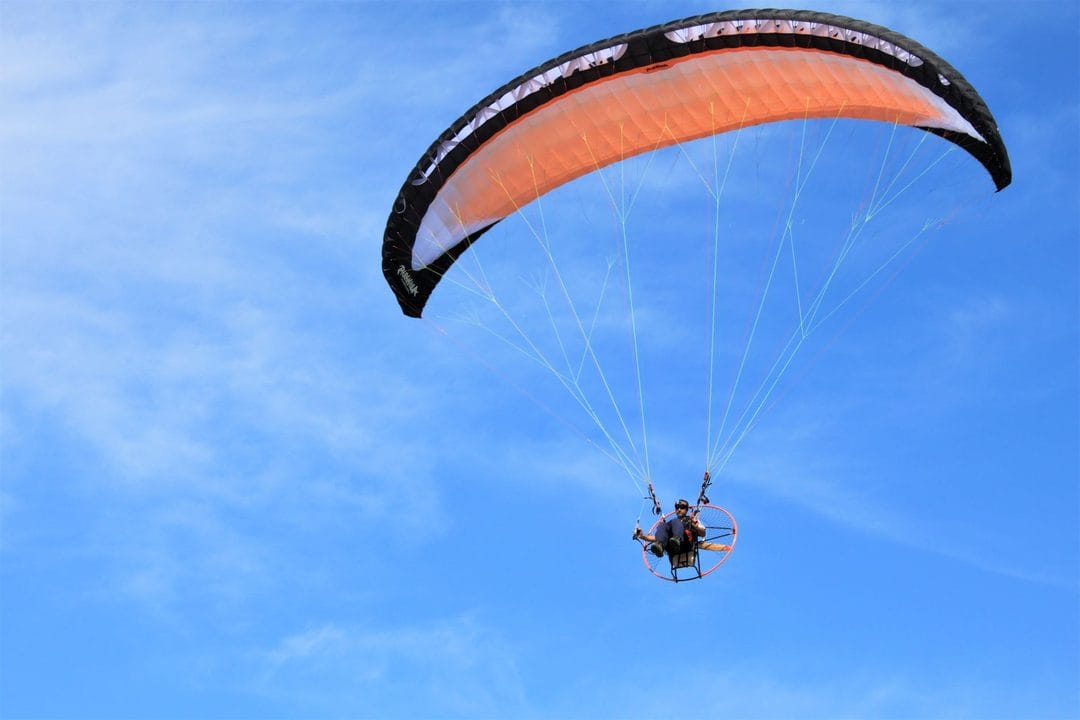
Most guys who get curious about flying assume the entry fee is a private pilot's license, $15,000 of training, and a hangar bill that never stops. Paramotoring — strapping a motor to your back and launching off a flat field under a paraglider wing — is the loophole. There's no FAA license required for a single-seat ultralight under Part 103 in the US, no medical exam, and a complete used setup runs less than a decent used motorcycle. That combination is why the sport quietly doubled its student numbers over the last few seasons, and why June, with its calm dawn air, is when most people take their first flight.
What you're actually signing up for
The kit is two parts: a paramotor (a two-stroke engine, propeller, and cage worn like a backpack frame, usually 50 to 75 pounds fueled) and a paraglider wing rated for powered flight. You run a few steps across an open field, the wing inflates overhead, the throttle in your right hand spins the prop, and you lift off at maybe 15 mph. Cruise speed sits around 25 to 35 mph. With a few gallons of pump gas mixed with two-stroke oil you'll stay up for two to three hours, which is genuinely a long time to be looking down at hayfields and rivers from a thousand feet.
The reason it feels safe to so many newcomers is that the wing is always a wing. Cut the engine and you're a paraglider — you glide down and land on your feet. There's no stall-and-drop failure mode the way people imagine with small planes. That said, the honest part nobody puts in the marketing: the danger isn't the engine quitting, it's a spinning propeller eighteen inches behind your head and your own decision-making about weather. More on that below.
The money, laid out plainly
A new motor from a reputable builder like Parajet, SCOUT, or Air Conception lands between $7,500 and $11,000. A new beginner wing — an Ozone Mojo 6 or a Gin Bobcat are the two most-recommended — runs $3,500 to $4,500. So a brand-new package is $11,000 to $15,000.
But almost nobody serious tells a beginner to buy new. The used market is where the deals live:
- A clean used motor with a few hundred hours: $3,500 to $5,500.
- A wing with a recent porosity check and under 200 hours: $1,500 to $2,500.
- Reserve parachute, helmet with comms, and a flight suit: budget another $800 to figure it out properly.
The one place not to cheap out is training. Expect to pay $2,500 to $4,000 for a proper 7-to-10-day course with a USPPA-certified instructor, and pay it. Self-teaching from YouTube is how the sport's worst accident stories start.
Why the propeller is the real risk
Engine reliability is a solved problem. The injuries that put paramotoring on the news are almost always one of two things: a hand or a deflated wing line going into the spinning prop on the ground, or a pilot flying in air he had no business being in. Thermals build through the afternoon and turn smooth morning air into invisible washing-machine turbulence by 1 p.m. — which is exactly why experienced pilots are packed up and drinking coffee while the beginners who slept in are getting tossed around.
Fly the first and last 90 minutes of daylight. That's the whole secret to a long, boring, uneventful flying career, and boring is what you want.
Where to launch this summer
You need an open field, the landowner's permission, and enough distance from controlled airspace — the B4UFLY app from the FAA shows you the rings around airports in about ten seconds. The Midwest is paramotoring's natural home: flat, endless agricultural sections, and forgiving terrain if a landing goes sideways. The Texas and Oklahoma fly-in community is large and welcoming, and the annual gatherings are the fastest way to meet people who'll let you watch a launch up close before you commit a dollar.
Coastal pilots get a different reward entirely — flying the beach at sunrise, low and slow over the waterline, is the footage that pulls most people into the sport in the first place. Just know that salt air eats two-stroke engines, so a freshwater rinse routine is non-negotiable if you live near the ocean.
Is it for you?
If you're the kind of guy who'd rather spend a Saturday learning a real skill than scrolling, and you can stomach a two-week learning curve where you'll faceplant a few times during ground handling, the answer is probably yes. The barrier was never money or licensing. It's whether you'll actually show up to a field at 5:30 a.m. and run drills with a deflated wing for three mornings before the motor ever goes on your back.
The ones who do that are flying by the end of the second week. The ones chasing a shortcut are the cautionary tales.