Via Ferrata in 2026: The Iron-Rung Route That Gets You Onto Real Rock Without Learning to Lead Climb
Via ferrata lets a total beginner get onto vertical Alpine rock with a steel cable instead of years of lead-climbing practice. Here is the kit, the grades, the best first routes, and the one rule that keeps you alive.
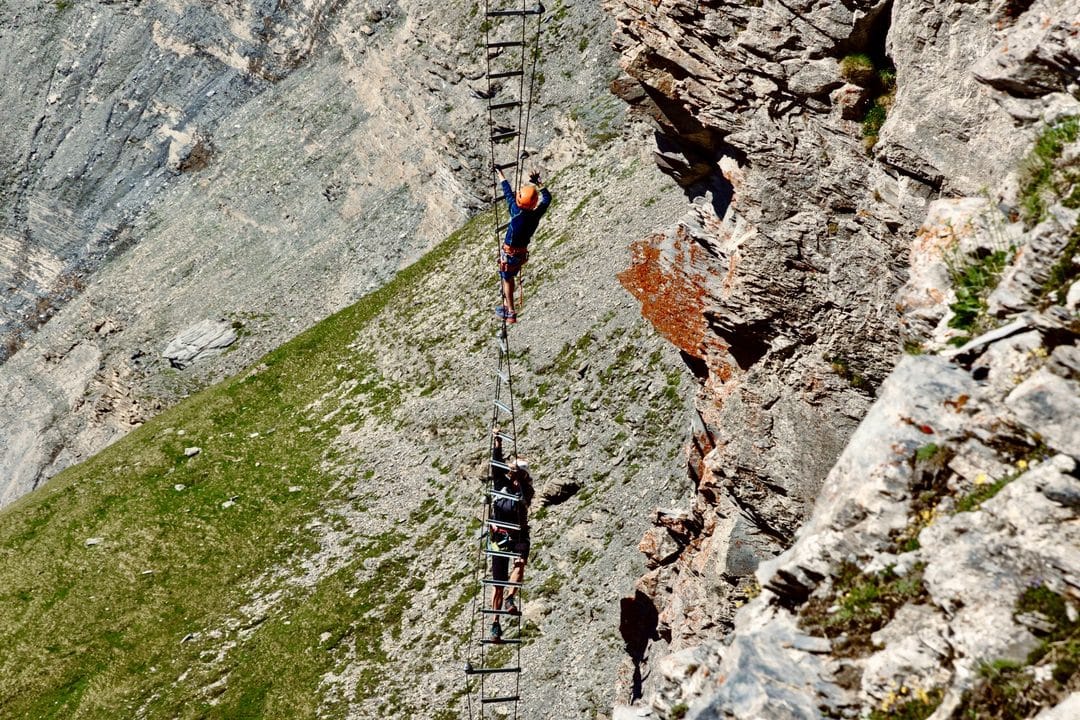
There is a stretch of the Italian Dolomites where a man who has never touched a rope can clip onto a steel cable, walk out across a 600-metre drop, and feel exactly what an alpinist feels — minus the decade of training. The route is bolted to the cliff with iron rungs, ladders and a continuous cable, and the only skill it demands is the discipline to stay clipped. This is via ferrata, and it is the single fastest way for a working adult to get onto vertical rock that actually scares them.
The sport is not new. Italian and Austrian troops strung the first cables across the Dolomites during the First World War to move men over terrain that would otherwise have needed roped climbing. What changed recently is the gear, the route count, and the fact that an ordinary person with a free weekend can now book a guide, rent a kit, and be on a Grade 2 line by lunchtime. If you have spent two summers telling yourself you would "get into climbing eventually," this is the shortcut that skips the gym membership and the lead-climbing apprenticeship.
What via ferrata actually is, and why it is not just a hike with a cable
A via ferrata (Italian for "iron path") is a climbing route equipped with fixed steel infrastructure: a cable that runs the length of the route anchored every three to ten metres, plus rungs, pegs, ladders and the occasional suspension bridge where the rock gives out entirely. You wear a harness with a special lanyard — two arms ending in carabiners — and you keep at least one carabiner on the cable at all times. When you reach an anchor, you move one carabiner past it, then the other, so you are never fully detached.
That last sentence is the whole sport. The cable does not pull you up; your legs and arms do that. What the cable does is catch you if you slip, and the via ferrata lanyard contains a tearing fabric brake that absorbs the shock of a fall so the rope does not snap your spine. A normal climbing sling will not do this — a fall onto a static lanyard from above an anchor generates forces high enough to injure you badly even when the gear holds. People who improvise with regular slings get hurt, and that is the most important thing a beginner needs to internalise before booking anything.
The grading system you will actually see
Most of Europe uses a letter scale from A (easy) to E or F (extremely difficult), though the Dolomites often use a 1-to-5 number system that maps roughly onto it. A Grade A or 1 route is mostly a steep walk with cable for security and a few exposed steps. A Grade C is properly vertical, sustained, and will burn your forearms if you grip the cable instead of the rock. Grades D and up demand real upper-body strength and a head that stays calm when there is nothing under your boots but air.
Start at A or B. There is no honour in choosing a route that turns you into a gripped, exhausted liability halfway up — and a packed Grade C with a queue behind you is not the place to discover your forearms have given out.
The kit, and what it costs to start
The non-negotiable three pieces are a climbing harness, a certified via ferrata lanyard set (look for the EN 958 standard stamped on it), and a helmet. Rockfall on these routes is the main thing that kills people, not falls — other climbers above you knock stones loose, and a helmet is the difference between a bruise and a hospital. A full rental kit from a shop in Cortina d'Ampezzo or Arco runs roughly €15 to €25 a day, which is the smart way to start before you spend money on your own gear.
If you decide to buy, expect to pay in these ranges:
- A dedicated via ferrata lanyard set from Petzl, Edelrid or Camp: €60–€110. Buy new, never second-hand — the fabric brake degrades and you cannot inspect that by eye.
- A basic climbing helmet: €50–€90. The Petzl Boreo is the one half the guides on the Dolomites seem to wear.
- A harness: €45–€80 for something comfortable enough to hang in.
- Approach gloves — fingerless, to save your hands from the steel cable, which shreds bare skin over a long route. Maybe €20, and worth every cent by the third anchor.
That is roughly €200 to own the lot, less than a single weekend of guided ice climbing. Sticky-rubber approach shoes work on the easier lines, but for anything Grade C and up you want a proper mountain boot with a stiff sole — your feet stand on rungs and tiny edges for hours, and a soft trail runner turns that into agony.
Where to go for your first season
The Dolomites are the spiritual home and have the densest concentration of routes anywhere — the area around Cortina d'Ampezzo alone has dozens, and the Brenta group offers multi-day traverses that string huts together with cable. The Tofana di Mezzo and the Punta Anna routes above Cortina are classics, but they are not beginner lines; for a first outing, the easier routes around the Cinque Torri or the Lagazuoi tunnels (old war galleries cut through the mountain) give you the exposure without the brutal sustained sections.
Outside Italy, the choice is wider than most newcomers expect. Austria's Tyrol has hundreds of routes and a culture that treats via ferrata as a normal weekend activity rather than an exotic one. The French Alps around Chamonix and the Briançon valley have a strong network, and Spain's Picos de Europa hides some superb, quiet lines. Even the UK, which has almost no purpose-built routes, has Honister Slate Mine in the Lake District running a commercial via ferrata on an old miners' path — not the real Alpine thing, but a genuine taste of clipping a cable above a drop, and an easy first try without leaving the country.
One honest caveat: a via ferrata in a thunderstorm is one of the worst places on earth to be, because you are clipped to a continuous steel cable running up a mountain. Afternoon storms in the Alps are routine in July and August, so the unglamorous discipline of starting at dawn and being off the route by early afternoon is what keeps experienced people alive. Check the forecast the night before, and if it calls for storms, do something else — the route will still be there.
The skills nobody tells beginners to practise
The clipping technique is simple to describe and surprisingly easy to get wrong when you are tired and exposed. The rule is absolute: never have both carabiners off the cable at the same time. At every anchor you move them across one at a time. People die on via ferrata not because the gear fails but because they unclip both arms to get past an awkward anchor, then slip in that two-second window.
Beyond clipping, the thing that separates someone who enjoys their first route from someone who arrives at the top wrecked is grip management. Beginners haul on the cable with their arms as if it were a rope. Do not. Use your legs, stand on the rungs and the rock, and treat the cable as a handrail you touch lightly, not a winch you pull yourself up. Climbers call this "climbing with your feet," and on a long Grade C it is the difference between finishing strong and being rescued.
Hire a guide for the first two or three outings. A qualified mountain guide in the Dolomites charges roughly €250–€350 for a day with a small group, and what you are buying is not just safety — it is someone teaching you the clipping rhythm, the rest positions, and how to read whether a route is within your ability before you are committed forty metres up it. After a few guided days you will know whether you want your own kit and whether you want to push past Grade B on your own.
Is it climbing, or is it cheating?
Purists will tell you via ferrata is not real climbing, and in a narrow technical sense they are right — you are not placing protection, not leading, not making the moves that a roped climber makes on bare rock. But that misses the point entirely. The terror of standing on a six-inch rung with nothing below your heels for half a kilometre is exactly the same terror, and learning to function inside it is a transferable skill that makes everything else in the mountains feel more manageable.
For a lot of people via ferrata becomes the gateway to roped climbing, because it removes the technical barrier and leaves only the fear to deal with. For others it stays the whole point — a way to stand in places that look impossible without committing five years to becoming a climber. Either is a fine reason to clip in. The iron is bolted to the rock, the drop is real, and your hands will be shaking at the first big bridge. That is not nothing.