Tor des Géants 2026: Record Run, Historic Women's Leap
At the 330km Tor des Géants across Italy's Aosta Valley, Jiaju Zhao broke the men's course record while Katharina Hartmuth erased roughly twelve hours from the women's mark — in a race that still eats 40% of its field.
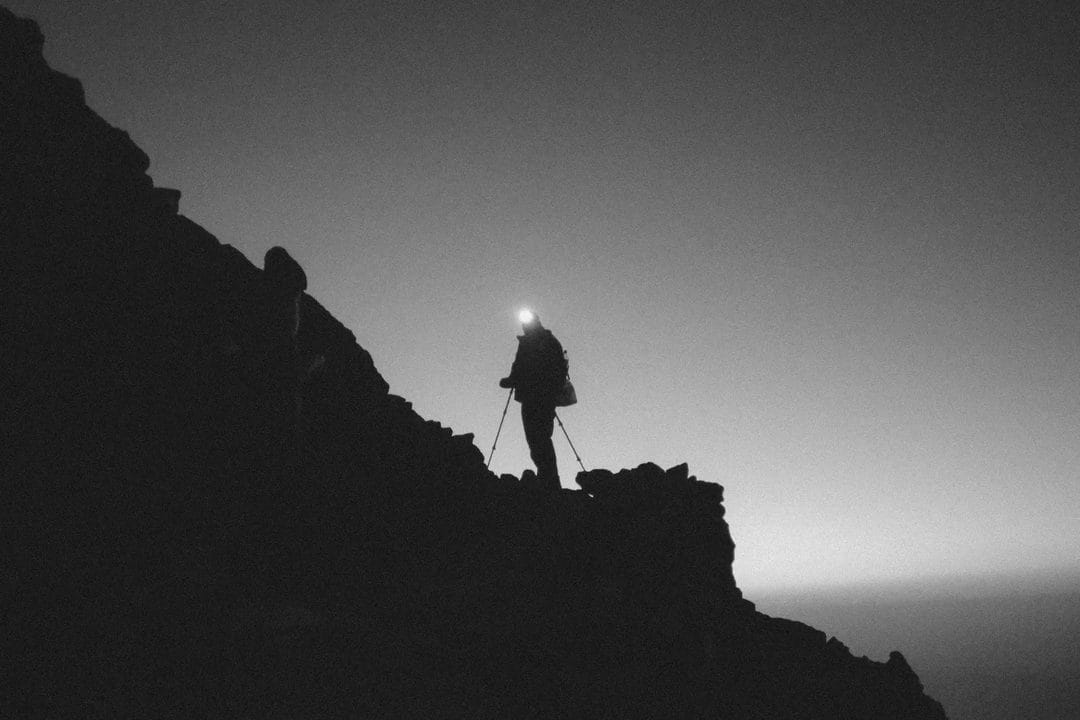
Just past midnight on 14 September, two headlamps crested the Col du Loson within a few hundred metres of each other. Jiaju Zhao, a 31-year-old from Guizhou province in China, had been running alone through the Aosta Valley's high passes for more than two days by that point, and the Swiss runner Jonathan Schindler was refusing to let him go. Neither man had slept more than twenty minutes at a stretch since the start gun in Courmayeur. By the time Zhao crossed back into Courmayeur to finish, he had run 336 kilometres, climbed more than 26,000 vertical metres, and rewritten the record book for one of the hardest single-stage races on the calendar: the Tor des Géants. Spectators tracking the live feed from their sofas saw dots crawling across a map of the Aosta Valley, but on the ground it was a different picture entirely — a thin beam of light picking its way along a ridge with a 900-metre drop on one side and nothing but silence for company. That's the race most people never see, the hours between checkpoints where nobody is watching and the decision to keep moving is entirely the runner's own.
A race that refuses to work like UTMB
If you know the format from UTMB — start line, staged cutoffs at named checkpoints, a clock that eliminates you town by town — the Tor des Géants asks you to unlearn it. There is one cutoff here, not a dozen: 150 hours from the Courmayeur start to the Courmayeur finish, full stop. Runners can sleep for six hours at a life base or push through the night on a ridge with nothing but a bivvy bag; the race doesn't care how you spend the clock, only that you spend it wisely. That single rule changes the entire character of the event. Where UTMB punishes a bad patch with instant disqualification at the next timing mat, the Tor lets you crawl through a low point, recover at a life base, and still make the cut three days later — provided you haven't burned too much of your 150 hours doing it.
Life bases, not aid stations
The route carries six life bases spaced roughly every 50 kilometres, plus 43 smaller refreshment points where runners can eat, patch blisters, or get looked at by a medic. A life base is a different proposition entirely: hot food, a change of kit from a drop bag, a shower if you can be bothered, and a limited number of camp beds for anyone willing to trade race position for four hours of horizontal sleep. Around 2,000 volunteers keep the whole system running across a route that touches 34 municipalities. Pack a headlamp with at least 300 lumens and two spare batteries — the descents off Col Loson and Col Fenêtre du Tsan are technical enough in daylight, and you will be doing at least one of them at 2 a.m. regardless of how fast you go.
The numbers that make it brutal
The Tor's stated distance has always carried an asterisk. Wikipedia and the race's own long-run description put it at "about 330 kilometres" with 24,000 metres of climbing, and that figure has stuck as shorthand for a decade. This year's official measurement, after route adjustments around Cogne, came in at 335.6 kilometres and 26,782 metres of vertical gain — noticeably harder than the number most entrants trained for. The course climbs over 25 mountain passes above 2,000 metres, skirts 30 alpine lakes, and cuts through two natural parks, ranging from a low point of 300 metres to a high point of 3,300 metres on the Col Collon. None of that variation is a rounding error; it's the reason pacing plans built around last year's splits fall apart by the second night. For context, the high point on Col Collon sits only a few hundred metres below the summit of Mont Blanc itself, and runners cross it not once but as part of a repeated pattern of climbs that rarely drops below 2,000 metres for more than a few kilometres at a time. Altitude sickness is a genuine risk here, not a theoretical one, and the medical teams at the life bases treat it as routinely as they treat blisters.
About 1,100 runners took the start line in Courmayeur this year, most of them holding a bib earned through the TORX Experience qualification system rather than a lottery draw — you need a track record of finishing recognised long-distance races before the organisers will even let you register. Historically, only about 60% of starters reach the finish inside 150 hours. That number isn't a scare tactic aimed at casual entrants; it's what happens when 24,000-plus metres of climbing meets sleep deprivation, and it should shape how you plan for this race far more than your 5K time does.
Jiaju Zhao rewrites the record book
Zhao finished in 65 hours and 55 minutes, beating the course record set only last year by the French runner Victor Richard by 13 minutes. It is the first time an Asian athlete has won the Tor des Géants outright, and Zhao did it with almost no visible tactical hesitation, opening a gap on Schindler before the halfway point and defending it through two full nights on the ridgelines above Valgrisenche and Cogne.
Beat the record by that margin over 335 kilometres, and it stops looking like luck.
Behind them, the men's race compressed hard in the closing stages: Bastien Fleury climbed four places to third overnight, chased by Simone Corsini and Xingzhi Bai, while past top-ten finishers Martin Perrier, Sangé Sherpa, Galen Reynolds and Avery Collins all stayed within striking distance of the podium into the final day. That's the part casual spectators miss about a 150-hour race — the front group doesn't separate and stay separated the way it does in a six-hour trail marathon. Positions three through ten were still swapping hands with less than 48 hours on the clock.
Katharina Hartmuth's twelve-hour leap
The bigger story of the week belongs to Katharina Hartmuth. The German runner, defending her 2024 title, finished third overall — not third woman, third outright, behind only Zhao and Schindler — in 67 hours and 10 minutes, just one hour and fifteen minutes off the men's winning time. That result obliterated her own women's course record from 2024, which stood at 79 hours 10 minutes, by roughly twelve hours. Twelve hours is not an incremental gain over a field of comparable rivals; it's the kind of jump that used to take a decade of shoe technology and training-science advances to produce, delivered instead in a single edition by one athlete who, by her own account, simply had the legs and the sleep discipline to hold pace when everyone else needed to stop.
Sabrina Verjee, who held the previous women's record before Hartmuth first broke it in 2024, was still working her way back through the field in the closing stages — a reminder that even the athlete who used to own this race can find herself chasing someone else's ghost. Mika Thewes held second in the women's category roughly an hour back for most of the final two days, and Lisa Borzani rounded out a strong showing for the host region as the highest-placed Italian woman.
The attrition nobody signs up to talk about
By the time the leaders passed Col du Loson — roughly 190 kilometres and two days into the race — 38 competitors had already withdrawn. That's before the hardest technical sections in the second half, and well within the historical pattern: this is a race with a 60% finish rate in a good year, and the Tor has form for years that aren't good. The 2012 edition was halted by severe weather on the fifth day at Saint-Rhémy-en-Bosses, 303 kilometres in, with only around 70 runners completing the full course. The 2015 race was stopped after Col Malatra iced over; just six finishers made it. And 2013 remains the year nobody at Tor des Géants talks about casually — Chinese runner Yang Yuan died after a fall on the rain-soaked first night, and there's a cairn near the accident site inscribed with a poem he'd written.
None of that is meant to talk you out of entering. It's meant to correct the assumption, common among strong marathon and even Ironman-distance athletes, that fitness alone gets you to Courmayeur. Train your descents specifically — eccentric quad strength on loaded downhill repeats matters more here than flat-ground speed — and rehearse sleeping in twenty-minute blocks on a hard surface before race week, because the first time you try it shouldn't be at 3 a.m. on a mountainside with 200 kilometres still to run.
What this means if you're chasing a bib
Getting into the Tor des Géants isn't a matter of registering early enough. The TORX Experience points system rewards finishes at recognised qualifying ultras, and pre-registration windows for PAX finishers open months before the general entry list, so anyone serious about a 2027 or 2028 start needs to be racing qualifiers now, not next spring. Buy your trekking poles a season before the race, not the week of it — carbon poles from brands like Leki or Black Diamond need to be broken in on real descents, not showroom floors, and a blister from an unfamiliar strap at kilometre 40 becomes a life base conversation at kilometre 150.
Whatever else changes about this race in the years ahead, the numbers from this edition set a bar that will take something extraordinary to clear: a 65-hour-55 winning time, a women's podium finish inside 68 hours, and a route that, this year at least, was longer and steeper than the one most of the field trained for.