Red Bull Rampage 2026: The 2001 Mountain, a 678-Foot Drop and What to Watch For
Red Bull Rampage returns to its original 2001 hillside in Utah for the 25th anniversary, with the women's final on 8 October and the men's on 10 October. Here is what the venue changes, how runs are scored, who to watch and when to tune in.
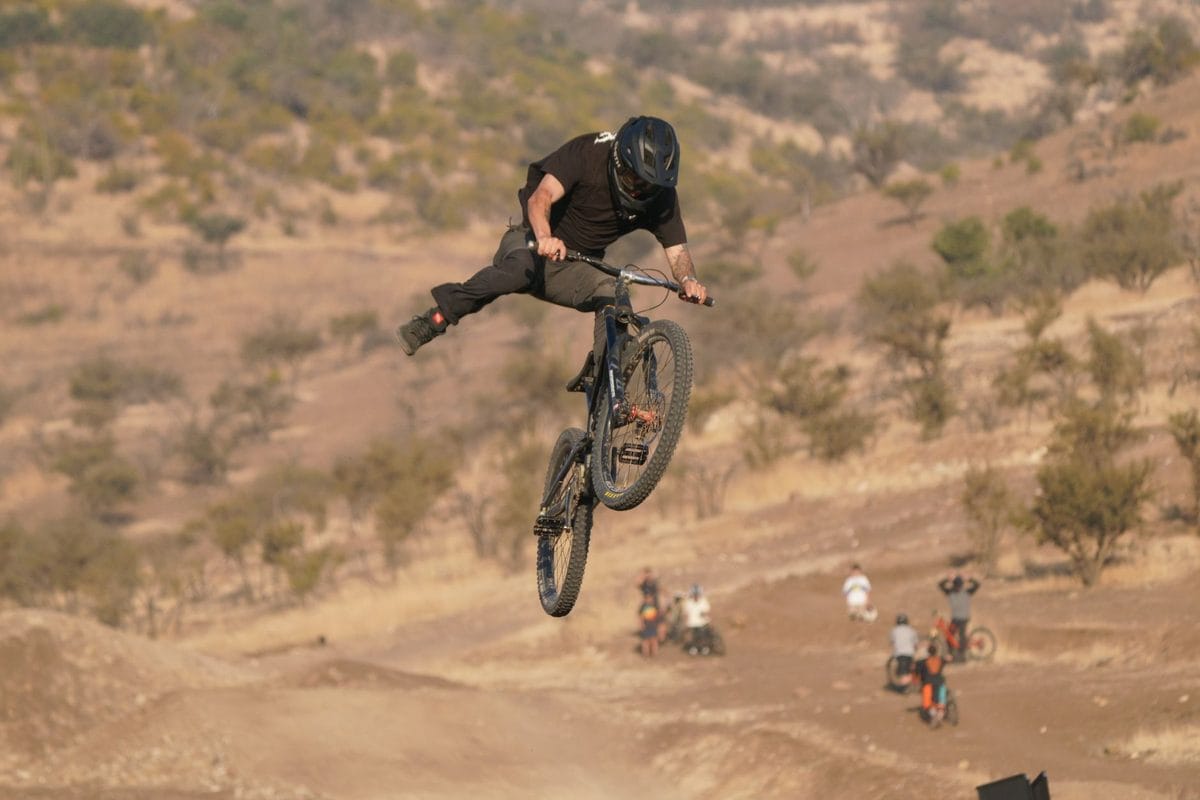
Hayden Zablotny dropped in at last year's Red Bull Rampage, posted a zero on his first run, and then came back down the same mountain for a 96.00 with seven landed tricks. That swing made him the first newcomer to win the men's title since 2008, and it is the best reason to clear Thursday and Saturday this week, because the 2026 edition puts a taller hillside under a format that already punishes caution. The women's final is on Thursday, 8 October, and the men's final follows on Saturday, 10 October, both near Virgin, Utah. For the 25th anniversary Red Bull has gone back to the original 2001 site on Kolob Terrace Road, where the contest started and stayed through 2004. Here is what that changes, how a run is actually scored, and when to be in front of a screen.
A Hillside With a Start Gate a Third Higher
The start gate on this mountain sits roughly a third higher than it did when Wade Simmons won the first Rampage here in 2001.
Red Bull puts the venue at about 90 acres, with a vertical drop of 678 feet (206.5 metres), the longest of any Rampage site. Read that number carefully, because it measures the whole course from gate to finish and not any single drop, so don't picture a 200-metre cliff; riders get down by linking chutes, ridgelines and gaps they have dug themselves. Simmons took that first title with a score of 78.4, which tells you how far the scores have climbed since. Cam Zink made his competition debut on this same hill in 2003, has since won the event twice, and at 40 is back in the 2026 field. Rider reaction since scope day has been consistent: Kristen Van Horne told Pinkbike the zone is "pretty insane", with lots of line choice and some really exposed, steep areas, while Reed Boggs called it a fresh canvas "with a few restrictions". Boggs's video description doesn't say what those restrictions are, so Thursday's women's final gives viewers their first look at finished lines in competition. Treat it as the free preview for Saturday.
How a Run Is Judged, and Why a Zero Is Survivable
Every rider gets two runs on finals day, the better score counts, and a panel marks each run from 1 to 100 on four criteria: difficulty of the line, tricks and style, fluidity and control, and amplitude. If two riders finish level, the higher combined total of their two runs breaks the tie. That structure is what made Zablotny's comeback possible, since a zero on run one still left him a full run to do the damage. The mountain has no tree line to break the wind, so riders have long faced the same quandary: send it on run one before conditions turn, or bank a safe score and gamble on the second.
Watch the line before the trick. Line choice and degree of difficulty is the first criterion Red Bull lists, and it is the one a casual viewer notices least while waiting for the backflip. A zero is also less forgiving than Zablotny made it look: he needed a 96.00 to recover, which is why a first-run zero makes a good story and a poor plan.
The Dig Is Where the Contest Starts
Nobody rides a prepared course at Rampage, because the riders build their own. Each one gets two helpers, hand tools only, no outside material except sandbags , with Red Bull's explainer putting the allowance at 75 per rider,, and roughly a week on the hill to dig and rehearse before finals. That makes the crew as important as the bike, and crews get hurt like anyone else. Thomas Genon, runner-up last year with a 94.35, only digs with people he has ridden with, so they see lines the way he does. In the run-up, one of his two diggers dislocated a shoulder out riding, and Genon asked Brett Rheeder, who won in 2018 and 2022, to take the shovel instead. Rheeder needed a few days to answer, then said yes, so a two-time champion is now building a line for someone else to ride.
Jaxson Riddle shows what shovel work can produce. Away from Rampage, in the hills near St George, Utah, the 24-year-old hand-built a 100-foot (30.5-metre) dirt jump, a job Red Bull says took about a month of packing the dirt, with his team on the shovel for eight to ten hours a day. His first attempt in April 2025 ended in a crash and a fractured talus in his ankle, followed by four months off the bike. He then extended the run-in by 400 feet (122 metres), worked out the speed he needed from the crash footage, and cleared the gap at 47 mph (75 km/h). It is not a Rampage feature, but the same rider won Best Trick at the 2025 event with a heelclicker backflip, a trick borrowed from freestyle motocross.
Who to Watch on Each Day
These are the names worth finding on the start list, among others:
- Hayden Zablotny, 23, defends the men's title.
- Thomas Genon, second in 2025, with Rheeder on his dig crew.
- Tom van Steenbergen, third last year.
- Cam Zink, a two-time champion who first competed on this hillside in 2003, is the oldest rider in the men's field at 40 and still excels on big-mountain terrain.
- Robin Goomes goes for a third straight women's title on Thursday after scoring 89.50 last year, with Hannah Bergemann and Georgia Astle, second and third in 2025, chasing her.
The rookies are the wildcard. Paul Couderc, a Frenchman who finished second at Red Bull Joyride in 2023, tried a caveman drop on the Goblin drop in his submission video, a move in which the rider jumps onto the bike in mid-air, and he did not land it, which says plenty about his approach. Kade Edwards, the 2018 UCI Junior Downhill World Champion, has stepped away from World Cup racing to freeride full-time. Connor Gallart served in the US Coast Guard before choosing bikes over re-enlisting, then moved to Hurricane, Utah, to chase this event. On Thursday, former World Cup downhill racer Mikayla Parton and Natasha Bradley make their debuts in the women's field.
Watching From Home, or From the Hillside
Both broadcasts start at 10:00 am Mountain Time, which is 4:00 pm UTC and 5:00 pm in the UK (BST). Red Bull TV carries the broadcast in every country except the United States, where Red Bull says ESPN+ has exclusive rights. Its pre-event material also points to the Red Bull Bike YouTube channel, so check which stream opens in your country when the broadcast page goes live on Thursday morning.
Going in person is a different commitment, and Red Bull's own advisory calls the venue remote, hot, dangerous and unforgiving. Every guest needs a ticket regardless of age, no tickets are sold at the event, and every attendee signs a waiver on arrival. Spectators stay in designated areas at the base of the course near the finish line, personal motorised vehicles and pets are banned, and food is limited, so you pack water, snacks, sunscreen, extra layers, basic first-aid gear and a headlamp. Unless you already hold a ticket and have the kit to match, watch from home, since the viewing areas sit at the bottom and the top half of each run is far easier to follow on a screen. Leave the drone behind either way: wireless and RF-enabled gear is prohibited on site, and Red Bull says anything unauthorised can be confiscated until the event is over.