Gauley Season 2026: What West Virginia's Six Weekends of Dam-Fed Whitewater Actually Demand From You
Six weekends a year, the Army Corps opens Summersville Dam and turns a flood-control reservoir into one of the hardest commercial whitewater runs in the country. Here's what it actually takes to run it this fall.
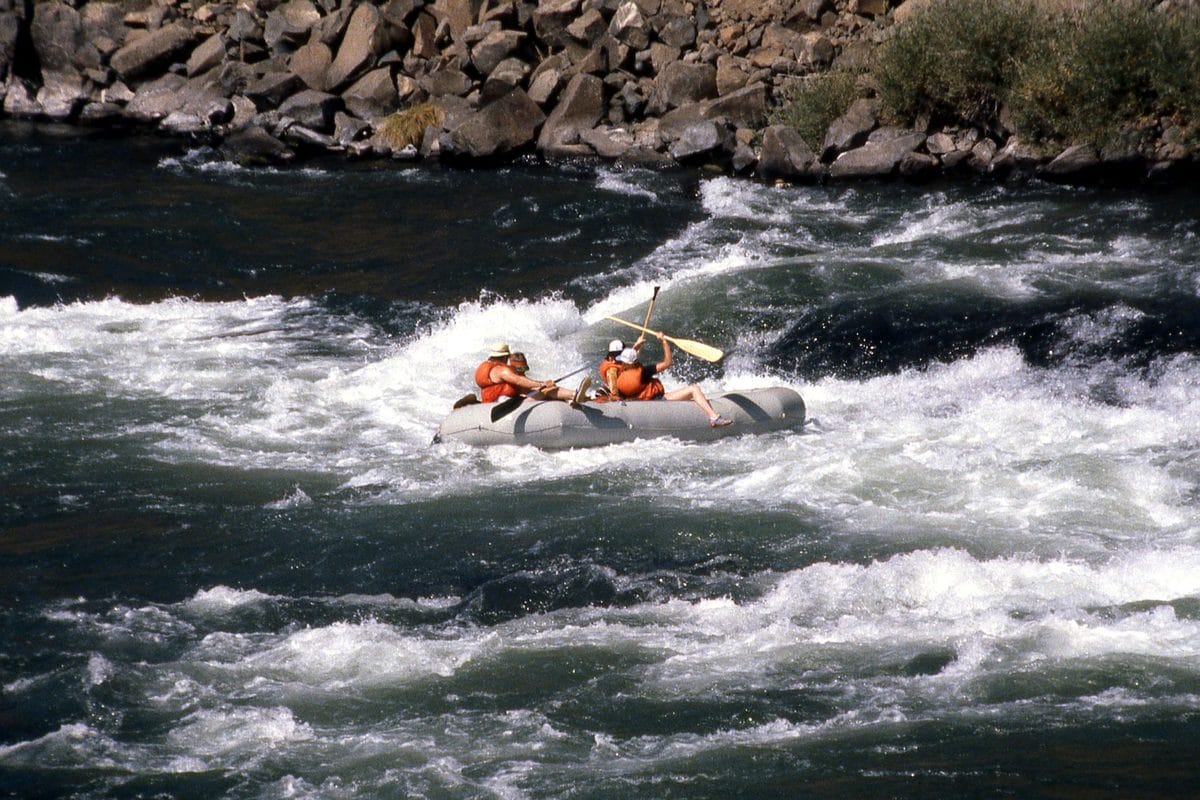
Route 19 backs up outside Summersville most Friday afternoons in September and October, and it isn't a wreck. It's a few hundred rafts, kayaks and pickup trucks with roof racks converging on a dam that spends fifty weeks a year doing nothing more exciting than holding back the Gauley River for flood control. Then, on a schedule set months in advance, the US Army Corps of Engineers opens the gates, and a sleepy reservoir in the Appalachian foothills becomes one of the most concentrated whitewater events in the country. This year's releases started the Friday after Labor Day and run in four-day blocks through mid-October, drawing paddlers from as far as Colorado and Quebec for water that exists nowhere else on this continent in this volume, on this reliable a clock. By late September it's already past opening weekend — locals call the whole six-week run Gauley Season, and the people showing up now are choosing between the busier back half of the schedule and whatever thinner crowds October leaves behind. For a river that only exists as a whitewater run because a flood-control agency decided to lower a reservoir on a fixed calendar, it draws a strangely devoted following — the kind that books vacation time a year out and argues online about which weekend's flow is the biggest. None of that devotion excuses casual planning once you're actually standing at the put-in.
The Dam Doesn't Care About Your Vacation Days
Summersville Dam was built in the 1960s for one job: keeping the Kanawha Valley from flooding. The whitewater is a byproduct, not the mission, and the Corps schedules drawdown releases in fall to lower the reservoir ahead of winter regardless of who shows up to paddle it. Releases typically run Friday through Monday for several consecutive weekends, moving somewhere around 2,500 to 2,800 cubic feet per second through the riverbed — a volume most Eastern rivers never see outside of a flood. Flows drop through the day as the reservoir empties toward its winter pool, so a put-in at 9 a.m. and a put-in at 2 p.m. on the same Saturday can feel like genuinely different rivers.
Checking the actual release numbers before you drive out matters more than checking a general date range. The Corps' Huntington District posts the daily schedule on its water management site, and outfitters post it too, but the two don't always agree on exact cubic-feet figures a week out. Plan around the posted range, not a single number you saw on a forum three days ago.
Upper or Lower — Pick Wrong and You'll Know It Within a Mile
The Gauley splits into two runs with almost nothing in common except the water source. Upper Gauley is roughly ten miles of continuous Class IV-V, the kind of run where American Whitewater and most outfitters require prior whitewater experience before they'll put you in a boat, guided or not. Below its take-out sits the Lower Gauley, Class III-IV — still pushy, still cold, but a legitimate first big-water trip for someone who's paddled Class III elsewhere and wants to feel what a dam release actually does to a river.
Don't book the Upper as your first whitewater trip of any kind. That's not caution for its own sake — it's the actual policy most reputable outfitters already enforce, and the ones who don't enforce it are the ones worth avoiding. If you've never swum a rapid, never flipped a raft, never had a guide yell "high side" at you and meant it, start on the Lower or on an easier river earlier in the season and come back for the Upper once you have a real frame of reference.
Five Rapids, One Reputation
Guides run these lines dozens of times a season and still stop the group for a full briefing before Pillow Rock, every single trip.
That ritual is the tell. The Upper Gauley's identity rests on five named rapids that show up in trip reports going back decades — Insignificant, Pillow Rock, Lost Paddle, Iron Ring and Sweet's Falls — and none of them are technical in the way a low-volume creek run is technical. There's no threading a six-foot slot between boulders here. What makes them hard is scale: the drops are big, the hydraulics recirculate a swimmer for real time, and Lost Paddle in particular is a series of four rapids strung together with almost no recovery pool between them. If an outfitter skips the pre-rapid briefing, or rushes it because the group looks experienced, that's a red flag worth acting on before you get in the boat, not after. Iron Ring earned its name from the rock formation guides use as a landmark for where the current wants to push you into the wall, and knowing the name before you're in the current is not remotely the same as knowing it once you're already committed to the line — more than a few strong swimmers have found that out mid-rapid.
Guided Trip or Private Permit?
Most first-time Gauley paddlers go guided, and for the Upper specifically that's the right call unless you're already running Class V elsewhere on your own gear. Outfitters like ACE Adventure Resort, Class VI River Runners and Cantrell Ultimate Rafting run Upper Gauley trips in the $130–$180 range per person depending on the day and whether it's a weekend or a shoulder-season Friday, with Lower Gauley trips usually $10–$20 cheaper. Private boaters need a free self-issued permit from the National Park Service, available at put-ins, plus their own shuttle logistics, since the Upper's take-out and put-in sit far enough apart that hitching a ride back matters almost as much as reading the water. The permit itself costs nothing, which surprises people used to Western river lotteries with entry fees and waitlists measured in years. What it doesn't do is guarantee you a parking spot at Mason's Branch or Woods Ferry on a peak Saturday. Those fill early, and a 10 a.m. arrival on the last two weekends of the schedule is realistically a 40-minute walk from the nearest open shoulder. Weekday releases, where the schedule includes them, solve the parking problem entirely and are worth rearranging a trip around if your group has any flexibility at all.
What Cold Water in October Actually Requires
Air temperatures in the New River Gorge area still hit the 60s and low 70s through most of Gauley Season, which fools people into underdressing for water that's already dropped into the mid-50s by early October. A wetsuit gets you through September comfortably. By the back half of the schedule, most experienced paddlers and every outfitter worth its permit switch to drysuits, and this is one of the few gear calls where there isn't much of a debate.
- A breathable drysuit — Kokatat's Meridian or NRS's Crux run $700–$950 and are the standard among Gauley regulars, not because cheaper options don't exist but because a seam failure on Lost Paddle is the wrong place to find out your $250 suit wasn't built for this water
- A full-face or standard whitewater helmet rated for the impact this river delivers — Sweet Protection and WRSI both make models in the $150–$220 range that outfitters actually issue their own guides
- A high-flotation PFD, not a lake vest; Astral's Greenjacket or a similar Class V-rated jacket runs around $170–$190
- Neoprene gloves or pogies if your hands cramp in cold water, plus whatever else your particular circulation demands — cheap add-ons, easy to forget, and the reason more than one paddler has lost a roll they'd normally make without thinking
Rental packages through most outfitters bundle the drysuit, helmet and PFD for somewhere around $35–$50 on top of the trip cost, and for a once-a-season trip that's the sensible option rather than buying gear you'll use six days a year.
Booking Around Locals, Not Against Them
Fayetteville and Summersville businesses build a real chunk of their annual revenue around these six weekends, and the towns plan for it with extra staff and outfitter shuttles running until dark. Book your trip on a Saturday if you want the full commercial-outfitter experience with every rapid running at guide-briefed capacity. Book a Friday or the trailing Monday if you'd rather have Pillow Rock mostly to yourself and don't mind a thinner crowd at the takeout.
The one thing that catches people off guard every year is the water temperature gap holding through the entire season, even on the warm days that make a drysuit feel like overkill standing in the parking lot. It isn't. Fifty-something-degree water doesn't care that it's 68 degrees and sunny at the put-in, and the paddlers who learn that the hard way usually learn it in the first ten minutes below Pillow Rock, not on some easier stretch where a mistake costs less.