Bridge Day 2026: The One Saturday You Can Legally BASE Jump the New River Gorge Bridge
Bridge Day returns to West Virginia's New River Gorge Bridge on Saturday, October 17. Here is who can jump, what spectators can bring, how the shuttles work and where the official sources disagree.
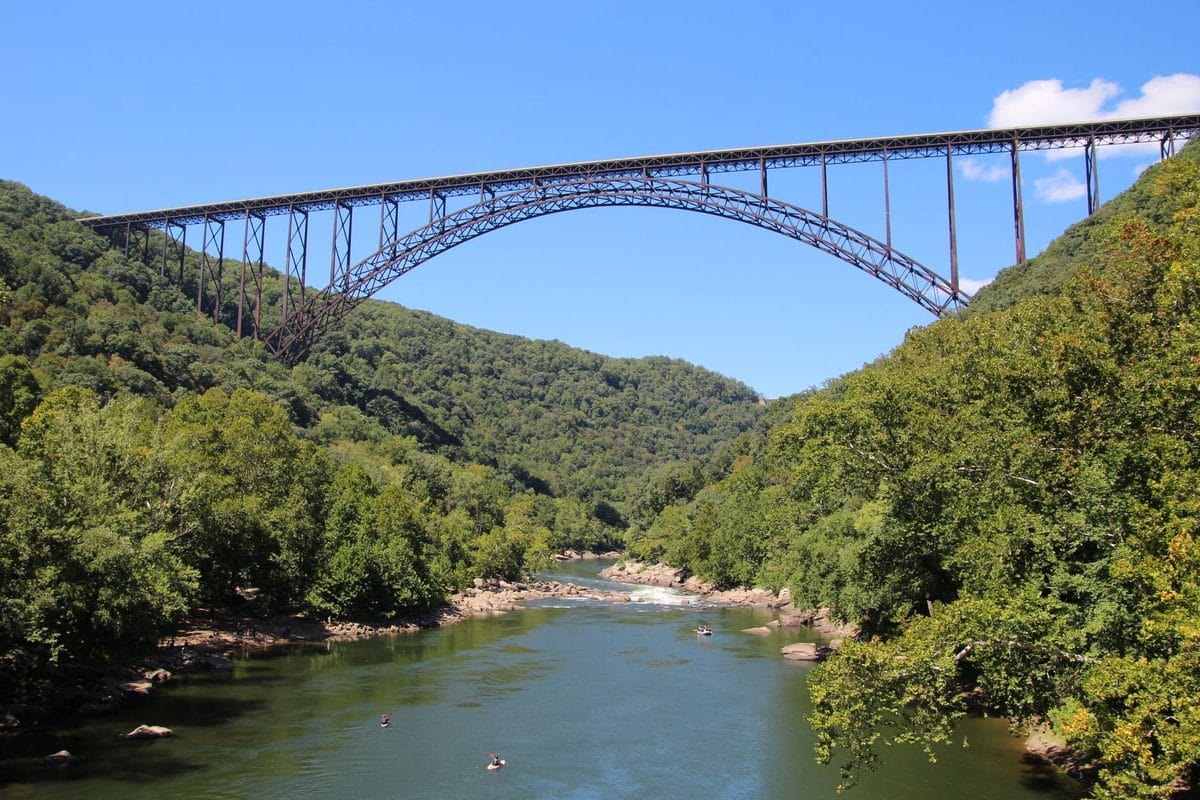
At 7 a.m. on Saturday, October 17, US Route 19 closes to traffic, and for the next ten hours the 3,030-foot New River Gorge Bridge outside Fayetteville, West Virginia, belongs to people on foot. Bridge Day itself runs from 9 a.m. to 3 p.m., and during those hours jumpers leave the bridge rail 876 feet (267 meters) above the river, with a few seconds of freefall before the canopy has to open. The event has taken place on the third Saturday of October since 1980. The 2026 edition is ten days away, registration for jumpers closes on Tuesday, October 13, and the practical details are scattered across several websites that do not always agree with one another. Below is what the official pages, the National Park Service and local reporting confirm, plus the spots where those sources contradict each other, whether you plan to watch, rappel or jump.
One Day, and No Other
Bridge Day is the only day of the year BASE jumping off the New River Gorge Bridge is permitted.
The jumping happens inside New River Gorge National Park and Preserve, where BASE jumping is otherwise prohibited, and the Fayette County Chamber of Commerce organizes the day under a Bridge Day Commission that the West Virginia Legislature created in 1990. The National Park Service dates the bridge to October 1977 and the first official Bridge Day to 1980. The festival has run every year since except 2001, which was cancelled after September 11, and 2020 and 2021, which were lost to COVID-19, according to Wikipedia's event history. Crowd estimates usually land around 100,000 people, and the organizers' own pitch is a jumper leaving the bridge roughly every 30 seconds. WVVA reported on September 28 that more than 300 people are set to jump or rappel this year. Tim Naylor of the Fayette County Chamber described the appeal to the station in plain terms: "There's no noise, no drama, nothing surrounding, it's just you and that open air."
What Last Year Looked Like
The organizers post a short scorecard after each event, and the 2025 figures below are the most recent ones available. They are the best guide to what the 17th will look like.
| 2025 Bridge Day | Total |
|---|---|
| BASE jumpers | 315, from 35 states and 4 countries |
| BASE jumps | 752, plus 16 tandem jumps |
| Rappels | 635, plus 50 ascents |
| High line riders | 132, across Friday and Saturday |
| Bridge Walk participants | 222 |
Divide 752 jumps by 315 jumpers and you get about 2.4 each, which matches the organizers' note that most people make two or three jumps and that as many as ten have been done. How many you manage depends on how many rigs you own and how fast you pack. For a spectator, the useful takeaway is that the action is continuous across six hours, so there is no single moment you have to be in position for.
Who Is Allowed to Jump
The entry bar is 50 prior parachute jumps, skydives or BASE jumps, combined. The official FAQ lists a $95 jump pass, though the registration notice also mentions a late fee, so expect to pay more than that if you sign up now. Registration closes on Tuesday, October 13, and jumpers are expected to be checked in at River Expeditions in Oak Hill by 5 p.m. on Friday, October 16. Miss that window and you may not get a badge; the organizers write that 90 percent of their staff effort goes to the 10 percent of jumpers who register late, show up late, or both. Background checks are not required, and have not been since 2016.
Gear rules are specific. The 2026 notice calls for a 9-foot bridle and a 42-inch pilot chute, and any BASE-specific rig and canopy is approved. A skydiving rig with a free-packed 7-cell canopy is also allowed, though the organizers say they do not necessarily recommend it. Helmets are optional, and everything is inspected at check-in; the official FAQ claims the inspectors catch problems every year that could have killed someone, which is a claim you can weigh as you like.
- First-time Bridge Day jumpers must sign up for a first-jump course; one-day and three-day options are run by Johnny Utah, and the three-day course starts Tuesday, October 13.
- Mike Greer is giving a free packing class on Friday at River Expeditions for newer jumpers.
- Landing is a small target from above, and the organizers say plainly that if you are in doubt you should take the water, because you can repack a wet canopy but not a twisted knee.
Take the water. Rescue crews work the river all day, and a landing area that looks like a postage stamp from 876 feet is a much smaller problem when the alternative is a splash and a short boat ride.
For Everyone Without 50 Jumps
Rappelling is allocated by lottery. Teams are drawn in June, so the 2026 field is already set, and each rappeller must have completed at least a 250-foot descent and carry their own gear. They go down fixed ropes from the catwalk beneath the deck, which is how last year's 635 rappels and 50 ascents happened. If you want a place in a future year, the application goes through the Bridge Day Rappel site, and the group leader submits it for the whole team.
The high line is the one activity that asks for no experience. You ride a 700-foot zipline from the catwalk to Fayette Station Road, and the official page tells you to reserve early. The other option is the guided Bridge Walk, which takes you out on the catwalk for $125 per person. Check-in is on the north side of the bridge, you arrive 15 minutes before your slot, and waivers are completed online beforehand. Do not count on finding open slots this late; call or check the booking page before you plan a trip around it.
Watching From the Ground
Admission is free, and the event goes ahead rain or shine. Do not try to drive to it. Route 19 closes at 7 a.m., commercial traffic is detoured onto I-79 and I-64/77 from 5:30 a.m., and the official shuttle system is the way in: six pickup points, four south of the bridge and two north (Midland Trail High School and Lighthouse Worship Center near Hico). The official page lists slightly different south-side stops in two places, so check the current shuttle map before you go. Shuttles begin at 8:30 a.m. and take cash only, and the fare is printed as $3 in one section of the page and $5 in the FAQ, so carry small bills. The park-and-ride shuttles to the event stop running at 1:30 p.m., though buses keep bringing people back until the end.
The schedule around the jumping is short. The Bridge Day 5K starts at 8:45 a.m., the bridge opens at 9, and the chili cook-off in downtown Fayetteville and the official close both happen at 3 p.m. Route 19 reopens at 5. WVVA reports more than 170 vendors, a number that varies by source (160 on one official page, over 200 on another), plus a professional wrestling show. The rules list is what catches people at the gate, so read it before you pack:
- No dogs, coolers, folding chairs, bicycles, skates, skateboards or wagons.
- No weapons, fireworks, drugs or alcohol, and no drones of any kind.
- Backpacks, tote bags, camera bags and binocular cases are banned. Clear bags and clutches smaller than 5 by 7 inches are allowed, and everything is searched.
- Strollers are another place the sources split: the official FAQ says fold-up strollers are allowed, while the National Park Service says strollers are not permitted on the bridge. Leave yours at home or ask at the gate.
Tickets for the Into the Gorge buses, which take people to the river for a view from below, go on sale each January and sell out quickly, so unless you bought one you are not riding. Walking down is possible, but it is more than four miles one way and you yield the road to motor vehicles. The bus service runs from 9 a.m. to 1:30 p.m., with the last ride out of the gorge around 3:30.
What the Record Says About Risk
BASE jumping is inherently dangerous, and the organizers' own FAQ says so, adding that even the most experienced jumpers get killed. Wikipedia's history of the event records three deaths at Bridge Day, in 1983, 1987 and 2006, and a 2011 wingsuit jumper who failed to open his parachute in time and survived a landing in the river with paralyzing injuries. Over more than four decades and hundreds of jumpers each year, that is a short list, but a short list is not a guarantee, and the 1987 fatality involved a jumper using gear that was not BASE-specific.
The organizers compare the bridge favorably with the Perrine Bridge in Idaho, which they describe as half the height, because you get more time to recover from a bad exit and the water is an accepted landing. That reasoning explains why roughly 100 first-timers show up each year, by the jump organizers' count. It does not change the arithmetic of a fixed object: nothing slows you down for the first few seconds except your own gear, and whatever happens is what happens.
If you are coming in from out of state, the jumpers' own schedule gives Sunday, October 18, over to photos in the lobby at River Expeditions and a morning of whitewater rafting on the river the bridge crosses.