Split Boarding for Snowboarders: Gear and First Tours
Splitboarding costs more than most snowboarders expect. Here's the real gear breakdown and what to do first.
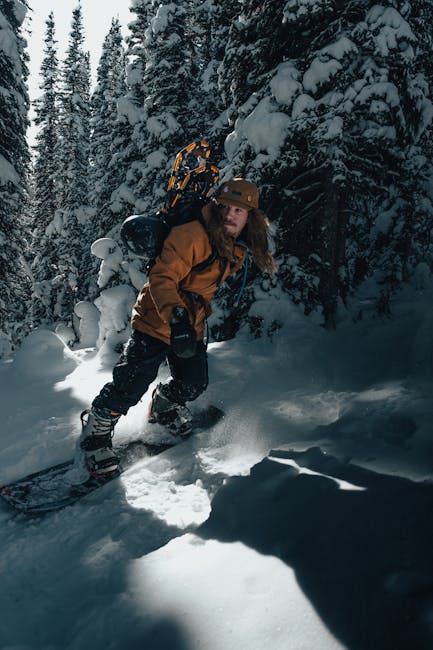
Splitboarding is the snowboarder's answer to backcountry access, and it's become weirdly controversial in the backcountry community. Some argue splitboards are slower than skis on the skin track. Others argue they're the same. The truth is that the gap has narrowed but not closed, and the equipment costs more than most snowboarders expect.
I came to splitboarding after fifteen years of resort snowboarding. The first day on a split, I understood why people gripe. The second season, I stopped griping. If you're a snowboarder thinking about getting into touring, here's what actually matters.
The Hardware Reality
A splitboard costs more than a regular snowboard. A complete splitboard setup (board, bindings, skins, puck mounts) runs $1,200-1,800 new. Used gear is available but specific; a used splitboard without bindings is common, while complete setups go fast.
The board itself is cut into two halves. Special bindings mount to pucks on the deck for touring (heel lift mode) and convert to snowboarding mode by rotating 90 degrees. The skins attach to the bottom of each ski half for grip on the uphill. The whole conversion takes about 5 minutes at the top with practice.
The Jones Stratos, Burton Family Tree Hometown Hero, and Lib Tech Travis Rice Split are all solid entry-level to intermediate splitboards. Prices range $550-850 for the board alone. Bindings like the Spark R&D Arc ST and Karakoram Prime add another $450-650. Skins from Pomoca or Gecko run $150-200.
Cost breakdown
- Board: $550-850
- Bindings: $450-650
- Skins: $150-200
- Avy gear (beacon, shovel, probe): $400-500
- Total: $1,550-2,200 for a complete setup
The Skinning Difference
Splitboarders aren't slower than skiers on the up, but we're slightly different. The gait is wider (splitboard skis are wider than regular backcountry skis), and the foot lift on each stride has to go higher. This makes us slightly less efficient on long approaches.
On moderate terrain, the difference is maybe 10% over a full day. On flat approach roads, splitboarders fall behind. On steep skinning, we're equal or faster because our wider skis give better grip. On traverses with side-hill, splits are actually better because you don't have to convert to descent mode.
The thing that slows splitboarders most isn't the skin track, it's the transitions. Every time you go from touring to riding, you have to undo the split, re-buckle bindings, and adjust stance. Experienced splitters do this in 3-4 minutes. Beginners take 10. On a day with multiple lap loops, those minutes add up.
Terrain Selection for First Tours
Don't pick a splitboarding objective by its summit. Pick it by the terrain. Good first tours have moderate angles (25-35 degrees), minimal mid-slope transitions, and clean fall lines. Avoid terrain that requires traversing, side-hill skinning, or descending through trees on your first tries.
Good first splitboard tours (US): Alta backcountry in Utah, San Juans slackcountry in Colorado, and Crystal Mountain sidecountry in Washington. These have avalanche awareness as a prerequisite but don't throw every technical problem at you at once.
I did my first splitboard tour in the Wasatch on a day I shouldn't have. Too much terrain to cover, too many transitions, too much to learn. I was exhausted by 2pm and made poor decisions on the way down. Pick a short, obvious objective for your first few tours. Don't try to do what your ski partners do.
Avalanche Skills Matter More
Splitboarding puts you in backcountry terrain. You need formal avalanche education before you tour. Level 1 Avalanche course (AIARE in US, similar programs in Europe) is the baseline. This is not optional.
The avalanche risk for splitboarders is identical to skiers, but the rescue scenario is different. A buried snowboarder has to be extracted with their board still attached (the bindings don't release), which can complicate rescues. Know how to handle this with your partners before it matters.
Every splitboarder should carry: avalanche beacon (Mammut Barryvox, BCA Tracker, Arva Evo), shovel (BCA Dozer, BD Transfer), probe (BCA Stealth, G3 Speedtech). Practice with them. A beacon is useless if you don't practice every fall.
Avalanche gear picks
- Mammut Barryvox beacon - $400
- BCA Dozer 2T shovel - $90
- G3 Speedtech 240 probe - $80
- AIARE Level 1 course - $350
Riding Down: The Fun Part
Splitboards ride similar to regular snowboards, with some caveats. The cut creates a slight flex point in the middle of the board, which makes them feel less powerful on landings and less responsive in crust. In powder, they're essentially identical to regular boards of the same shape.
Modern splitboards have closed this gap significantly. A 2024 Jones Stratos rides almost identically to a solid Stratos. If you're a good rider, the split technology won't hold you back. If you're a beginner rider, take lessons; the gear isn't the problem.
The final thing I'll say about splitboarding: it's more work than resort snowboarding. You hike for an hour for one powder run. That trade is either worth it or it isn't. For me, it is. The first time you carve fresh lines in untracked snow with no lift lines, you understand why people drop $2,000 on gear to do it.