Ski Touring for Beginners: What to Learn Before You Leave the Piste
Ski touring looks simple until you realise a 30-degree slope is exactly the angle at which avalanches love to kill. Here's what to learn before you skin your first real line.
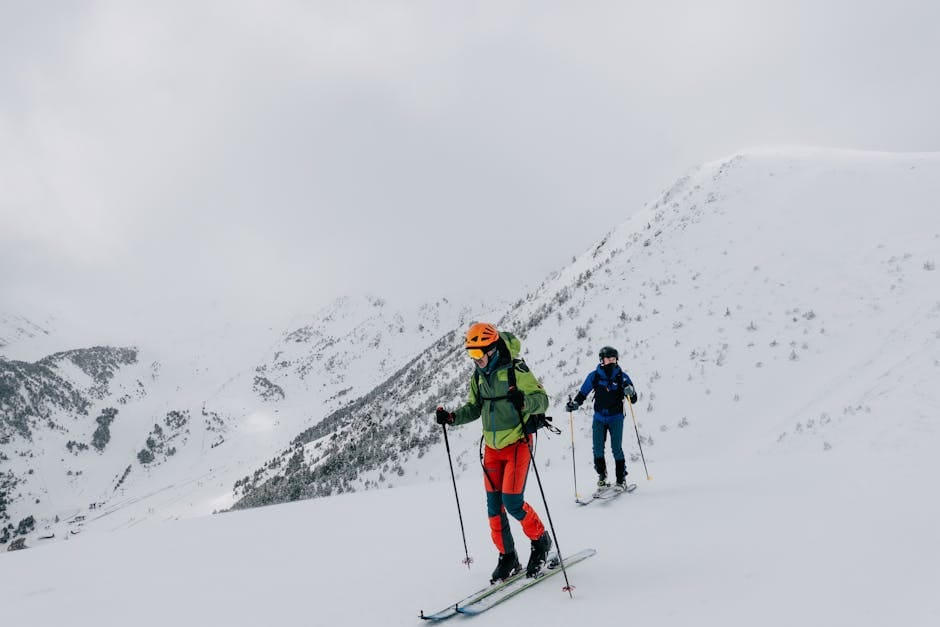
On a Saturday in February you will see social media full of men in their thirties buying touring skis. On the Sunday after the first rising temperature event of the season, you will see a headline. The link between those two facts is what this article is about.
Ski touring — skinning up a mountain and skiing down the other side — is one of the most rewarding winter sports anyone can learn. It also has the highest mortality-per-participant rate of any mountain discipline measured, higher than climbing or mountaineering. The difference between touring being rewarding and touring being dangerous is almost entirely about what you know before you leave the parking lot.
The Order Matters: Education Before Equipment
The right way to get into ski touring is to take an AIARE Level 1 or equivalent course before you buy any gear. This runs 600-900 dollars in North America, roughly 450 euros in the Alps, and covers avalanche terrain identification, snow stability assessment, rescue, and decision-making. Three days. It is the single most important investment you will ever make in this sport.
What happens without it: you buy touring skis because they look good, you follow someone who's been touring twice, and you end up on a 35-degree northeast aspect three days after a storm. You will be lucky 19 times out of 20. That's not good odds for something you do 20 times a winter.
What the Course Actually Teaches
- Reading a slope angle at a glance — getting to within 2-3 degrees without an inclinometer
- Recognising wind-loaded features, sastrugi, and recent avalanche debris
- Using an avalanche transceiver (beacon) to locate a buried partner in under 7 minutes
- Probing technique and shovelling as a systematic process, not frantic digging
- Reading the daily avalanche bulletin and actually using it
- Group decision-making and "FACETS" (familiarity, acceptance, commitment, expert halo, tracks, scarcity)
That last item — the social traps — is what kills experienced skiers more than beginners. Beginners are scared and turn around. Intermediates follow tracks from an earlier group and assume safety. Expert-level skiers get into groupthink. The course will teach you the vocabulary to identify when it's happening to you.
Gear: Buy Once, Cry Once, But Rent First
For your first season, rent the big-ticket items. Most alpine towns have rental shops that offer weekly touring packages with good skis, boots, bindings, skins, a beacon, probe, and shovel for 60-90 euros a day. That's 600 euros for a week of testing — less than a cheap touring setup and you learn what you actually need.
When you buy, the priorities in order:
Beacon, probe, shovel. Non-negotiable. A Mammut Barryvox or BCA Tracker 4 beacon runs 350-450 dollars. The probe should be 280cm or longer (shorter probes don't reach deep burials). The shovel should have a metal blade and a D-handle. Total cost for the safety trio: 550-700 dollars.
Touring boots. This is where the money goes. A good pair of touring boots — Scarpa Maestrale RS, Tecnica Zero G Tour Pro, Salomon MTN Summit — runs 750-900 dollars and will last 6-8 seasons. Ski boot fit is non-negotiable. Work with a bootfitter. Expect to pay 200 dollars extra for punching and shell modifications.
Skis and bindings. Last on the list because you can compromise here. A 100mm-underfoot touring ski from Dynafit, Salomon, or Black Crows covers most conditions. Bindings should be tech (pin) bindings unless you're doing 50/50 resort and touring — then hybrid bindings like the Marker Kingpin or Salomon Shift make sense but weigh more and cost more.
The Uphill Education
Skinning is a skill. People underrate how much technique is involved. The first time out, nobody tells you to shorten your stride on steep pitches, to use kick turns at switchbacks, or to traverse rather than fall line climb. You'll wear yourself out in 90 minutes.
Start on a mellow skin track in-bounds at a ski resort that allows uphill travel — most do with a sticker. Aspen Highlands, Whistler Blackcomb, Crested Butte, and a lot of smaller resorts have good uphill programs. Do ten of these sessions before you head into the backcountry. By session ten you'll be skinning up a 1,200-metre pitch in 80 minutes and you'll understand how much energy you have left for the ski down.
First Routes
Think below-treeline, familiar, slope angles under 30 degrees, solid weather window.
In the European Alps: Arosa-Maran area, Gstaad's Diemtigtal touring routes, or the introductory routes in the Engelberg-Titlis region. All have marked "ski route" lines that aren't avalanche-free but are a graduated introduction.
In North America: Teton Pass sidecountry (with local knowledge), Rogers Pass easier routes like Balu, or any of the supported hut-based programs run by the American Mountain Guides Association. New England offers Mount Washington's Sherburne Trail as a mellow introduction.
In Australia: The Main Range from Thredbo or Charlotte Pass during good winter snowfall years (increasingly rare). Don't underestimate Australian conditions — they are frequently more dangerous than North American conditions because of the rapid weather changes and wetter snow.
The Rule I Live By
If it's the first day I'm back in the backcountry after any break longer than 10 days, I pick a route that's a grade below my comfort level. Skin skills rust. Beacon checks get sloppy. Decision-making under fatigue is worse than you think. A day below your level every time you're returning is how you stay alive for 40 years of touring.
The best touring partner I have is 67 years old. He turned around on a line last March that looked fine to me. Three days later that line ran. He's the best skier I know precisely because he's still alive and still skiing hard at 67. That's the career I'm aiming for.