Ski Mountaineering Skinning Technique That Saves the Day
Skinning technique determines what kind of day you can have in the backcountry. Here's how to skin efficiently and last all day.
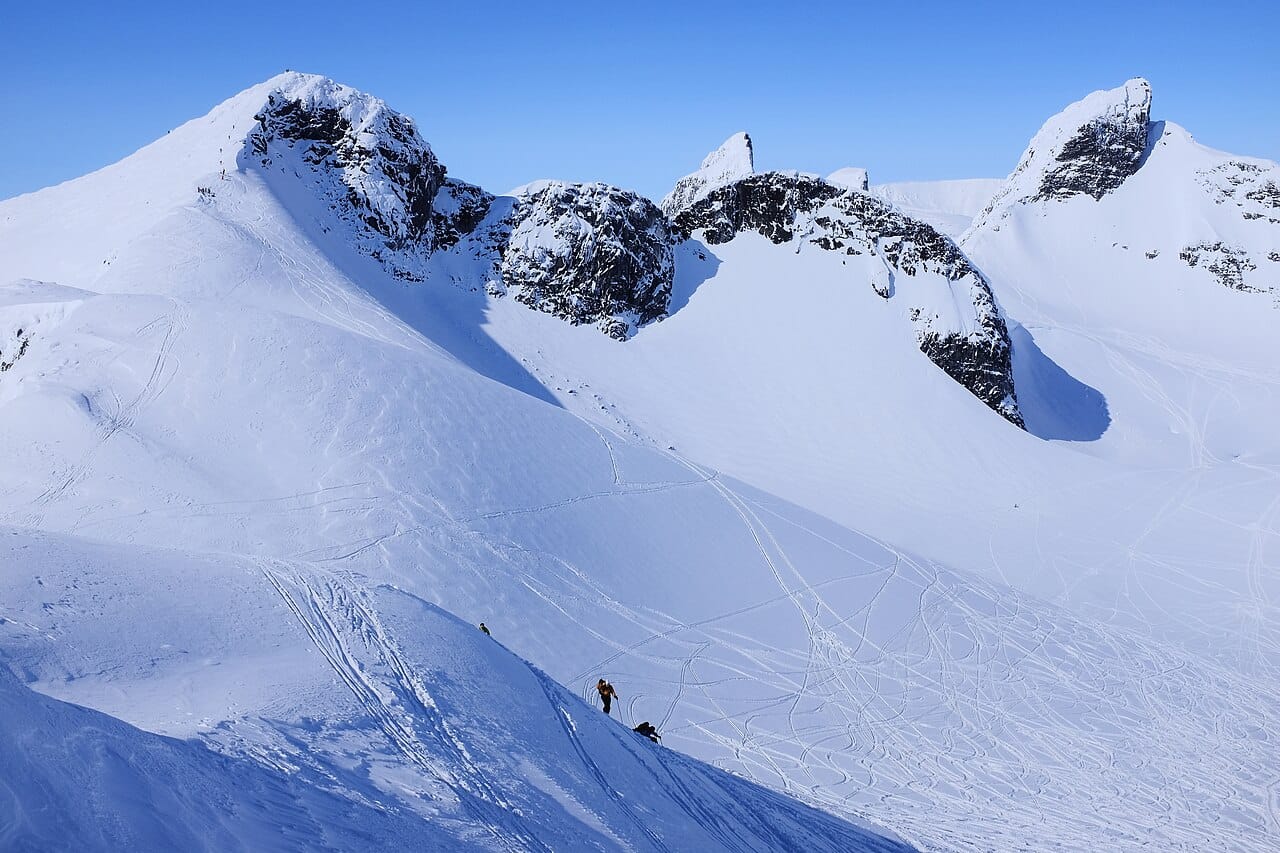
The first time I skinned uphill in serious terrain, I burned through energy in the first hour at a rate that would have left me cooked by mid-day. My partner, who had spent five seasons in the Wasatch and the Tetons, watched me for ten minutes and then gave a single instruction that changed how I move on skis: stop walking, start gliding. The difference between an efficient skinner and an inefficient one is roughly 30 percent on energy expenditure for the same vertical, and the technique gap shows up worst on long days when the inefficient skinner runs out of fuel two hours before the descent.
Ski mountaineering rewards patience with technique more than any other discipline I know. Strong people on heavy gear with bad form get smoked by less fit partners on the same gear with better form. The skill is also bizarrely under-discussed outside of the racing community. Most guidebooks treat skinning as an obstacle on the way to the descent, when in reality it's the discipline that determines what kind of day you can have.
The Glide
Skinning is not walking. The ski stays in contact with the snow throughout the stride, sliding forward without lifting. The forward foot moves into the new position by sliding the ski; the rear foot weights and pushes off without leaving the ground. Watch a strong skin track from below and you see partners moving with what looks like a slow shuffle, almost gliding, with no visible vertical motion in the hips.
Compare that to a walker, who lifts each ski clear of the snow with every step. The walker burns roughly 30 percent more energy for the same vertical, fatigues the hip flexors, and develops calf cramps on long days. The fix is conscious. Slide the ski forward without lifting. Keep the heel on the ski, not floating. The skin will track if it's properly applied. Walking is for boots, not skis.
Pole Use
Most beginners under-use their poles and over-use their legs. The poles should be doing 20 to 30 percent of the propulsion on flatter terrain, more on steeper sections where the leg drive is constrained. Plant the pole at the toe of the forward foot, push past the binding, and finish with the arm extended behind the body before recovering for the next plant.
Pole length matters. Adjustable poles set roughly 5 to 10 cm shorter than your normal alpine touring length give better leverage on uphills, with the option to extend for traverses or descents. Fixed-length poles work, but adjustable poles are worth the modest weight penalty for the flexibility they provide on varied terrain.
Track Setting
The angle of the skin track determines how much energy the day costs. The optimal angle for sustained efficiency is 12 to 15 degrees. Steeper than 18 degrees, the skin track becomes a calf-burner that punishes long pushes. Shallower than 10 degrees, the track adds unnecessary distance and slows progress. Race tracks tend to run 14 to 17 degrees, but those skinners are moving briefly and at maximum effort. For day tours, 12 to 14 degrees is the target.
If you're following a track that's too steep, traverse it. Cut switchbacks across the face of the track to flatten the angle. Most experienced groups will have set the original track at the right angle, but conditions change, refrozen tracks pinch up, and a track that worked yesterday may be brutal today. Reading the track and adjusting is part of the skill.
Kick Turns
The kick turn is where most intermediate skiers lose time and energy. The technique requires sequencing: plant the lower pole and the upper pole on either side of the track, lift the upper ski high, rotate it 180 degrees, and place it pointing the new direction. Then transfer weight onto the new uphill ski, lift the lower ski, rotate it through, and complete the turn.
The error most people make is rushing the weight transfer. The new uphill ski must be flat on the snow with the binding fully engaged before you commit weight. Otherwise the ski slips, the skier slides backward, and the turn unravels. Practice on flat ground first. The motion is awkward at first and natural after about fifty repetitions.
Heel Lifters
Use them. The two- and three-position heel lifters on alpine touring bindings exist because they reduce calf strain on steeper skin tracks. The flat position works for tracks under 10 degrees. The medium lifter handles 10 to 18 degrees. The high lifter is for sustained sections above 18 degrees, which is steeper than ideal but unavoidable in some terrain.
The wrong move is using the high lifter all day on flat tracks because it feels easier in the moment. The high lifter changes the leg geometry in a way that fatigues the quads instead of the calves. On long days, that fatigue compounds. Match the lifter to the terrain, not to convenience.
Pace and Heart Rate
The single biggest determinant of how long you can keep going is whether you're skinning aerobically or anaerobically. The threshold sits roughly at 75 to 85 percent of maximum heart rate, depending on fitness. Above that threshold, you burn glycogen at a rate that empties tanks in 90 minutes. Below it, you burn fat and can keep going for six to ten hours.
The test is simple: can you talk in full sentences while skinning? If yes, you're aerobic. If you're gasping in three-word fragments, you're anaerobic. Slow down until you can talk. Strong skinners on long days move at a pace that often feels embarrassingly slow to less experienced partners, then those same partners run out of fuel at 1 p.m. while the slow skinner is still moving steadily at 4 p.m.
Skin Care
Snow temperature matters more than most beginners realize. Skins that work perfectly at 20°F will glop badly at 32°F, with snow bonding to the plush and turning each ski into a brick. Skin wax applied before the day starts reduces glopping but doesn't eliminate it. The fix during a tour is to scrape the skin clean and reapply wax in the field, or to swap to a colder aspect where the snow stays drier.
Glue degrades faster than most people expect. After 200,000 vertical feet of skinning, most skin glues need refresh or replacement. The sign of failing glue is skins that come off the ski in cold conditions, particularly at transitions. A skin that delaminates in the middle of a steep section is a serious problem. Replace glue before it fails, not after.
One Counter-Point
For day tours under 3,000 vertical feet on moderate terrain, technique gaps don't matter much. A reasonably fit skier on functional gear can muddle through. The technique investment pays off on bigger days, in steeper terrain, and when conditions punish inefficiency. If your touring is mostly resort uphilling and the occasional backcountry day, you can get away with poor form for years. The skills become essential once you start linking objectives that require six or more hours of sustained skinning.
The Recommendation
For one full day, skin with a partner who has the technique you want. Watch their stride, their pole timing, their pacing. Try to match their tempo even when it feels too slow. Bring a watch and check that you can hold conversation. The day will end with you fresher than usual, which is the whole point. Skinning efficiency turns long days from suffer-fests into manageable, even pleasant, days in big terrain. The skill is worth more than any gear upgrade you might be considering this season.