Big Wave Surfing 2026 Mavericks Forecast: Why the November Swell Window Is Already Booked
The big-wave forecasting community has converged on an unusually clear projection for the 2026 Mavericks contest window: November 14-21 is going to deliver. The waiting list of qualified surfers has been finalised for two months. Here's who will be in the water and why this season is different.
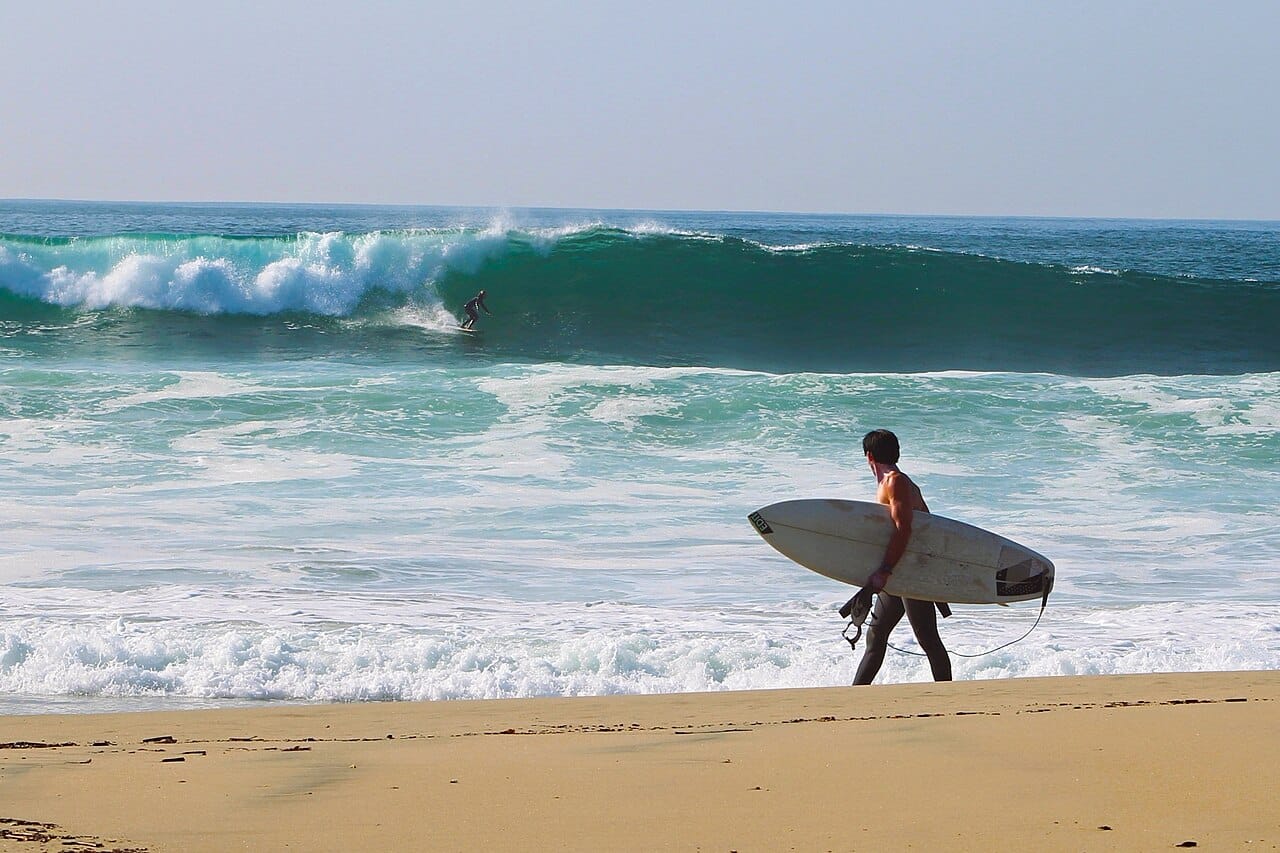
The Mavericks big-wave invitational has had unpredictable contest windows for the past four seasons, with several declared "no holds" winters where the swell conditions never materialised inside the contest window. The 2025-26 winter looked similar through January and February — large swells arrived but not within the legally-required eight-day notice windows. In May 2026, the forecasting community working with the contest organisers has converged on the November 14-21 window for the 2026-27 season with a confidence level higher than any season since 2018.
What is driving the forecast
The Pacific Decadal Oscillation moved into a positive phase in late 2024 and is forecast to stay positive through at least mid-2027. Positive PDO correlates with stronger Aleutian Low activity, which is the energy source for the long-period swells that generate Mavericks-quality waves. The 2018-19 season — which produced the best Mavericks contest of the past decade — was also during a positive PDO phase. The signal is not a guarantee, but it is a meaningful base rate shift.
The contestant list
Twenty-four surfers will compete: a balanced mix of returning veterans (Twiggy Baker, Grant Baker, Pete Mel for any swell over 50 feet) and the next generation that has emerged from the WSL Big Wave Tour qualifying events in Nazaré and Jaws. The headline addition is the women's heat, which was confirmed in March 2026 — Paige Alms, Justine Dupont, and a third spot still being contested between four qualifying riders as of May.
Equipment evolution since the last season
Two changes since the 2024-25 season have measurable impact. The first is the standardisation of the 12-foot range as the most-used board size for sub-60-foot Mavericks days, replacing the longer 13-foot guns that had been dominant since 2019. The shorter board is more manoeuvrable on the steep drop and forgiving on bottom turns where conditions are slightly off-axis. The second is the broader adoption of impact-rated wetsuits with foam panels at the rib cage and lower back — pioneered by Patagonia for cold-water big-wave use in 2023 and now offered by O'Neill and Rip Curl in updated 2026 lines.
What to watch for during the contest window
The unique signature of a Mavericks-quality wave is the combination of long-period swell (18+ seconds) and a specific wind direction — light easterly offshore, or absolute glass. November in northern California is prone to morning fog clearing by 10am with a sea breeze building from the south by 1pm. If the swell hits with the morning offshore window, the contest will run beautifully. If it hits with the sea breeze, conditions will be marginal at best.
The November 14-21 window is wide enough that at least one of the three to four candidate days inside it should deliver the offshore morning. The forecasting team's confidence reflects that math — multiple opportunities are more reliably bankable than a single high-confidence day.