Highlining in 2026: Walking 100-Metre Lines, the Real Risk and Getting Started
Highlining is what happens when slackliners discover exposure. The real risk profile, the four common failure modes, the festivals to attend and the kit that matters.
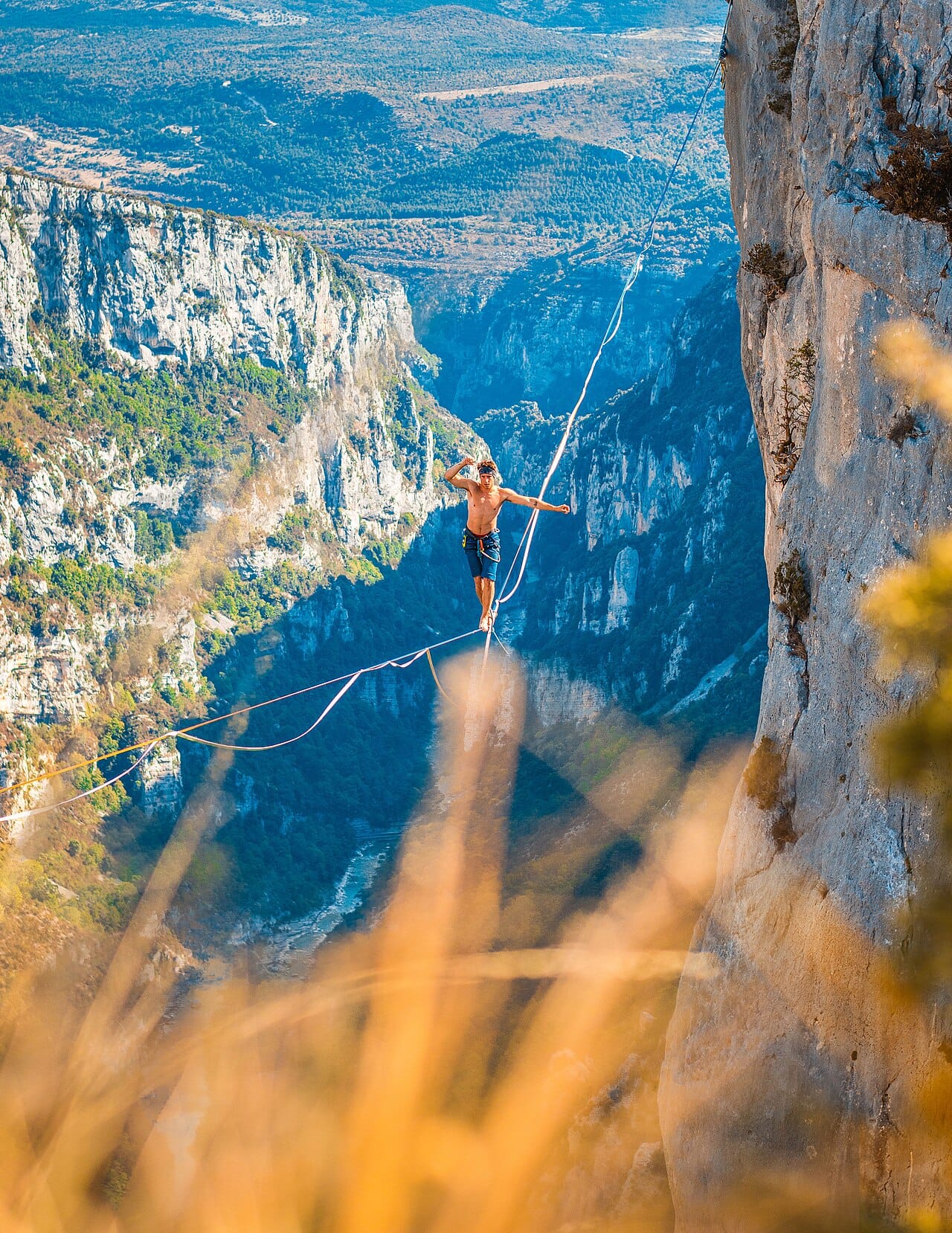
Highlining is what happens when a slackliner discovers exposure. A flat strap of nylon webbing, two anchors hundreds of metres apart, a thousand feet of air below, and a man balancing across it in trail shoes and a leash. The sport has spent twenty years as the obscure cousin of climbing, and in 2026 it is, very quietly, the fastest-growing discipline in the global vertical sports community. Festival entries are tripling year on year, the World Highline Series has corporate sponsors, and the average new highliner is no longer a dirtbag climber but a man in his thirties who already runs marathons and wants something genuinely new.
What Highlining Actually Is — and Is Not
A highline is a slackline rigged at exposed altitude — typically 30 metres or more above the ground, often hundreds of metres in canyons, between rock spires, or over alpine ridges. The walker wears a climbing harness with a leash that runs from their waist to the line. Falls are caught by the leash within roughly two metres. The sport is not free solo slacklining, which is genuinely lethal and practised by a fraction of a per cent of the community. Anyone selling you the idea that highlining is "death-defying" is selling you a marketing line, not a sport.
The Real Risk Profile
Documented highline fatalities globally over the last decade number in the very low single digits, and almost all of them involved either rigging error or deliberate free-solo attempts. Properly rigged, with a redundant backup line, a tested leash and a competent crew, the sport is statistically safer than climbing or even mountain biking. The catch is that "properly rigged" is not trivial. The four common failure modes:
- Anchor failure. Bolts placed by climbers are rated for static loads. Highline anchors see dynamic peaks of 15-20 kN on falls. Mismatch is the most serious risk in the sport.
- Single-line rigging. A backup line is not optional. Lines have abraded through on sharp edges; the backup catches the walker.
- Leash attachment errors. Wrong knots, twisted leashes, leashes routed through gear loops instead of the harness belay loop. All have happened.
- Cold-soaked webbing in alpine settings. Polyester behaves predictably warm. At minus 10 with frost on the line, it does not. Highliners with alpine experience know to test the line before walking.
The Skills That Actually Carry Over
Climbers convert to highlining easily because the harness work, the rigging vocabulary and the head-for-exposure are already in place. Surfers convert well because the postural balance — small ankle and core micro-corrections rather than big bracing movements — is the same physical skill. Runners and cyclists do not have a head start. They tend to overgrip with their feet, hold their breath, and freeze on the line. Most adapt within a season; some never quite do.
The mental skill is more decisive than the physical one. The first time most men step onto a highline, the body works fine — the problem is the mind, which spends roughly thirty seconds running a very loud "you are going to fall a thousand feet" loop before the rational part of the brain catches up and notices the leash. That loop quietens with reps. The men who quit usually do so before reps four or five, when the loop is still louder than the legs.
How a Man Actually Gets Started
Step 1: Slackline at Ground Level (3-6 months)
Buy a 25-metre slackline kit (£60-£100). Walk it in a park. The skill you are building — relaxed posture, eyes-on-the-anchor, breathing through the wobble — is identical to the skill at altitude, minus the consequences. Most men can walk 25 metres consistently within 3-4 months of practising twice a week.
Step 2: Find a Festival or Workshop (6-12 months)
The community is small and welcoming. The major events — Petzl Highline Meet, the German Highline Festival, the Hunlen Falls Highline Festival in Canada — run beginner workshops where experienced riggers set up the line, supply the gear and walk you through your first highline crossing under direct supervision. This is the only sensible way to enter the sport. Self-rigging without mentorship is how the rare accidents happen.
Step 3: Build a Local Crew (12+ months)
Highlining alone is technically possible and culturally rejected. The sport is rigged, walked and de-rigged by teams of three to six. Men who try to enter the sport solo, with bought gear and YouTube as their teacher, do not last and do not get invited to the festivals where the actual learning happens.
The Gear That Matters
The line itself is roughly £200-£400 for a tubular polyester webbing of the right length. The leash is £80-£120 (Balance Community and Slackline Industries are the consensus options). Bolts, hangers, slings, brake systems and rigging plates run £400-£800 for a competent kit. A quality climbing harness, which most men entering the sport already own, completes the setup. You can be properly equipped for £900-£1,500.
What the Sport Actually Gives You
Highliners describe the experience consistently: an extreme quietening of the mind, an extended flow state under controlled fear, and a recalibration of what counts as exposure in everyday life that lasts months after a major line. It is not an adrenaline sport in the conventional sense. The men who stick with it past their first season are not adrenaline seekers — they are men who have found that twenty minutes on a 100-metre line resets their nervous system more thoroughly than a year of meditation. Whether that is your reason to start matters less than the small, careful, ground-level work that has to come first.