Rope Management for Single and Double Rope Systems
The difference between managing single and double ropes is subtle but consequential. Here's what actually matters.
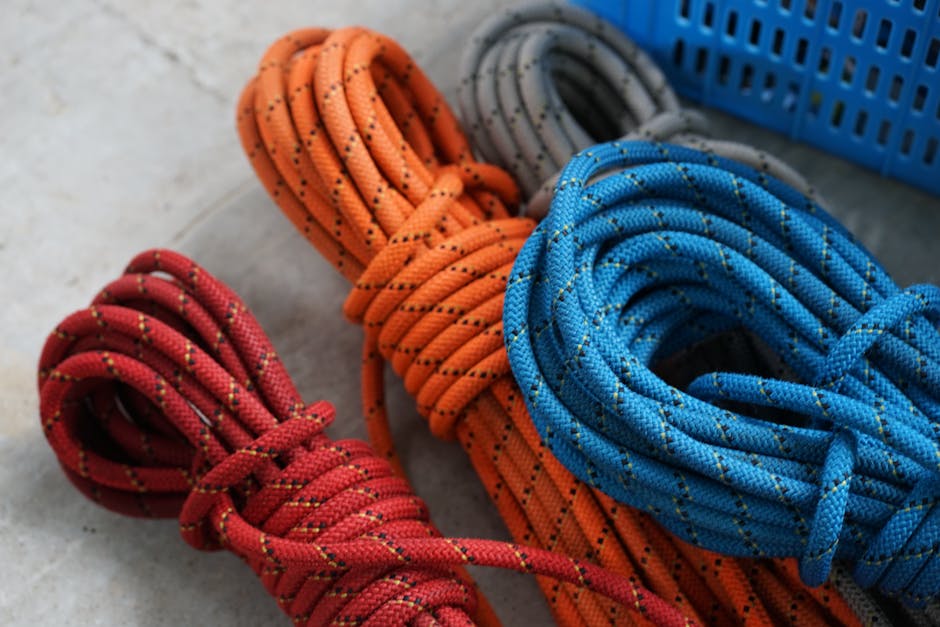
Ask ten trad climbers how they manage rope drag on a wandering pitch and you'll get ten different answers, most of them wrong. Rope management isn't talked about much because it's unglamorous and situational, but it's the thing that separates climbers who finish routes efficiently from climbers who get benighted on 5.8 pitches they should have done in an hour.
I've done single-rope trad for years and recently moved into double-rope alpine climbing. The learning curve surprised me. Techniques that worked for sport and single-rope trad actively hurt you on mixed alpine terrain. Here's what I've pieced together about managing ropes in different systems.
The Single Rope System
The single rope is the default for most sport, single-pitch trad, and straight-forward multipitch. A 60m or 70m rope in 9.4-9.8mm is standard. The advantages are simplicity, lower cost, and faster belaying. You only manage one rope.
The problem with single ropes is drag. On a wandering pitch, every piece of protection you clip creates friction. By the time you're 40m out, the rope can drag like a boat anchor. This is where alpine draws come in. A regular 15cm quickdraw creates a sharp bend in the rope at every bolt. An alpine draw (a 60cm sling with two carabiners) lets the rope run more or less straight through each placement. The difference on a typical multipitch is enormous.
My rule: any protection piece that's off the direct line of the climb gets an alpine draw. Pieces on the fall line can take short draws. This costs nothing in weight and saves you significant pump on long pitches.
Single-rope rules of thumb
- Use at least 6 alpine draws on any wandering multipitch
- Extend the first piece of every pitch (anchor piece gets long extension)
- A 60m rope is enough for 95% of multipitch in the world
- Don't buy a 70m for "just in case" unless you climb big wall
Double Ropes (Half Ropes) and When to Use Them
Double ropes are two thin ropes (typically 8.0-8.6mm) climbed simultaneously. You clip one rope into the pieces on the left of your line, and the other into pieces on the right. This lets you protect wandering routes without creating rope drag. It also gives you redundancy if one rope cuts on a sharp edge.
The downside is complexity. Belaying two ropes simultaneously requires a tube-style device (ATC Guide or similar) and good technique. Rappelling with double ropes is nice because you can rap the full 60m instead of half. But managing both ropes at the belay without tangles takes practice.
Use double ropes when: the route wanders significantly, you need full-length rappels, the route has sharp edges that could cut a single rope, or you're on alpine terrain where redundancy matters. Don't use double ropes for straight-up sport routes; it's overkill and slower.
Twin Ropes (The Least Common)
Twin ropes are rarely used anymore. They're two thin ropes (7.5-8.0mm) that are always clipped together into every piece. This gives you rope strength at a lighter weight than a single rope while still offering redundancy. The downside is rope drag - you get the drag of a single rope without the flexibility of doubles.
I've never bought twins and don't recommend them. Doubles do the same job better. The only use case is European ice climbing where twins are still traditional. For rock or alpine climbing, skip twins.
Belaying Techniques for Each System
Single rope: use a tube-style device or a Grigri for standard belaying. On multipitch, a Grigri is slower but safer for belaying a leader. A tube with a backup knot works for experienced partners.
Double ropes: you need a tube device (not a Grigri). The technique is to feed both ropes but clip each rope only to the correct pieces. The leader has to communicate which rope to clip to which piece. This takes a couple of routes to get smooth at, and new partnerships struggle with it the first day.
One common mistake: belaying on doubles with both ropes locked off the same way. If the leader falls, you want both ropes to catch the fall evenly. Practice this at a crag before doing it in a serious setting.
Belay device picks
- Petzl Grigri - single rope, sport, multipitch (slow)
- BD ATC Guide - versatile tube, doubles capable
- Petzl Reverso - similar to ATC Guide, lighter
- Edelrid Giga Jul - single rope with assisted braking, newer option
Anchor Building and Rope Flow
The anchor is where rope management either works or falls apart. When you build an anchor, think about rope flow. Where will the rope come up from below? Where will the second climber clip in? Where will the next leader's rope run from?
On a hanging belay, stack the rope below you in neat loops that won't tangle. On a ledge, you can flake it out on the rock. Never let the rope dangle in a jumble. At best, it's ugly and slow. At worst, it feeds into a crack and eats half an hour before you can free it.
For multi-pitch trad, I use a cordelette to equalize three pieces into a master point, then clip the rope or a daisy chain through a locking carabiner at the master point. This is simple and fast. For alpine multi-pitch with a terrain belay, I often use a sliding-X with limiter knots. The goal is always: fast to build, clear for the next pitch, and strong enough to catch a leader fall.