Patagonia Trekking: Logistics and the W-Circuit vs O-Circuit
The W and O circuits share trails but are different trips. Here's how to choose between them.
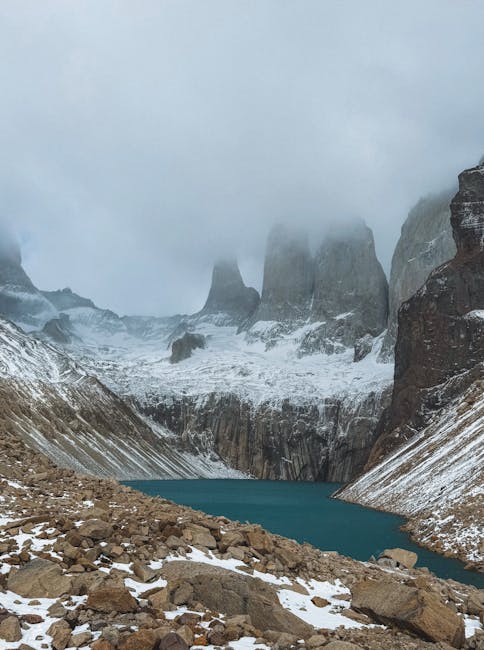
Patagonia trekking isn't like trekking anywhere else in the world. The weather can destroy your plan on any given day. The logistics are more complex than people expect. The trails are world-class but the infrastructure is spotty. If you go into a Patagonia trek expecting it to be like the Alps or the Rockies, you'll be miserable.
I've done both the W-Circuit and the full O-Circuit in Torres del Paine. They're completely different trips despite sharing most of the trail. Choosing between them depends on how much time you have and how much adventure you want. Here's the breakdown.
The W-Circuit
The W-Circuit is the famous one. It's 80km long, takes 4-5 days, and covers the three main valleys of Torres del Paine: Ascencio (Torres), Frances, and Grey. You start at the east end, hike to the Torres base, work your way west through the French Valley, and finish at the Grey Glacier.
The advantage of the W: you see the three best viewpoints in the park without committing to the full circuit. The refugios along the route (Torres, Francés, Paine Grande, Grey) let you stay in dorm beds or carry less gear by using meal service. You can do the W with a 30L pack if you're using refugios.
The disadvantage: crowds. Especially in January-February peak season, the W is busy. Trail intersections have queues. Refugios book out 3-6 months in advance. You'll share the Torres viewpoint with 100 other hikers at sunrise.
W-Circuit itinerary (5 days)
- Day 1: Hotel Las Torres to Refugio Chileno - 11km, 4hrs
- Day 2: Chileno to Refugio Francés - 19km, 7hrs (via Torres base)
- Day 3: Francés to Paine Grande - 16km, 6hrs (via French Valley)
- Day 4: Paine Grande to Refugio Grey - 11km, 4hrs
- Day 5: Grey back to Paine Grande and catamaran out - 16km
The O-Circuit
The O-Circuit (sometimes called the Paine Circuit) adds the northern section of the park that the W skips. It's 110km total over 8-10 days. You do the W-Circuit portion plus a 60km loop around the back of the Paine massif.
The "back section" of the O is the real adventure. John Gardner Pass crosses 1,200m and gives you a view of the entire Grey Glacier from above. The trails are rougher, the campsites more primitive, and the weather more serious. You'll pass through Seron, Dickson, Los Perros, and up to the pass.
The payoff: you'll see maybe one-fifth as many people on the back section as on the W. You get true wilderness feel with condors overhead and no sign of infrastructure for days. The John Gardner Pass view alone justifies the extra days.
The challenge: the back section is more committing. If weather turns badly, your options for retreat are limited. You need to carry more food. Campsites are smaller and can fill. You need to be comfortable with self-sufficient trekking.
O-Circuit itinerary (9 days)
- Days 1-2: Start at Laguna Amarga, hike to Seron and Dickson
- Day 3: Dickson to Los Perros - 13km
- Day 4: Los Perros over John Gardner Pass to Grey - 15km, hardest day
- Days 5-9: Grey to Paine Grande to W portions
Logistics and Bookings
Both circuits require advance booking in peak season (December-March). The CONAF campsites and the Vertice/Fantastico refugios are all bookable online 4-6 months ahead. Don't show up without reservations; you'll be turned away.
You'll need: a flight to Punta Arenas (3.5 hours south from Santiago), a 4-hour bus to Puerto Natales, another 2-hour bus to the park, and catamaran tickets for the Grey Lake crossing (booked separately). Budget 2-3 days of travel on each end of the trek.
Accommodation in Puerto Natales: budget options (dorms) from $25/night, mid-range hotels $80-150/night. It's worth spending an extra day in Puerto Natales to buy any gear you're missing and to acclimate to the cold.
Weather and Season
Patagonia weather is famous for being extreme and unpredictable. Summer (December-February) is the main season, with temperatures of 5-15°C during the day. You'll see sun, rain, wind, and sometimes all three in a single hour. Pack for hypothermia conditions even in January.
Wind is the main weather feature. The Paine area can see 100km/h winds, especially on ridge sections and at passes. A wind-resistant tent (not ultralight) is essential if camping. Don't try to pitch a tarp in Patagonia wind. I've seen tarps torn off the ground at 2am.
March and early April offer the best weather trade-off: fewer crowds, cooler nights, and still reasonable daylight. Many Patagonia veterans prefer March for this reason. May onwards starts getting snowy and cold enough that most routes close.
Gear for Patagonia Trekking
The core gear differences from other trekking: a shell layer that actually works, a tent that handles wind, and a warm sleeping bag. Don't skimp on any of these.
Good shell: Arc'teryx Beta AR, Rab Kangri GTX, or similar. Three-layer Gore-Tex Pro level. Don't bring a rain jacket from a summer hiking trip. Patagonia weather will embarrass it.
Tent: Hilleberg Nallo 2 or Big Agnes Copper Spur HV2. Wind-rated tents only. A 1kg ultralight tent will break in Patagonia wind.
Sleeping bag: 20-30°F rating is sufficient, but make sure it's synthetic or treated down (hydrophobic). Wet cold is the enemy. A down bag that gets soaked loses 90% of its insulation value.
W vs O: How to Choose
Pick the W if: you have 6-8 days total (including travel), you want infrastructure (refugios and meals), you've never been to Patagonia before, or you're traveling with someone who wants comfort.
Pick the O if: you have 10-12 days total, you've done serious trekking before, you want genuine wilderness, or you're physically fit and prepared for self-sufficient travel.
Both are world-class experiences. Neither is better than the other. The right answer depends on what you want from your trip. If in doubt, the W gives 80% of the value for 60% of the effort. The O gives 100% for 110%.