How to Choose a Paragliding School Without Getting Ripped Off
Most paragliding deaths involve pilots who were undertrained by schools cutting corners. Here's how to vet a school before you pay for your P2.
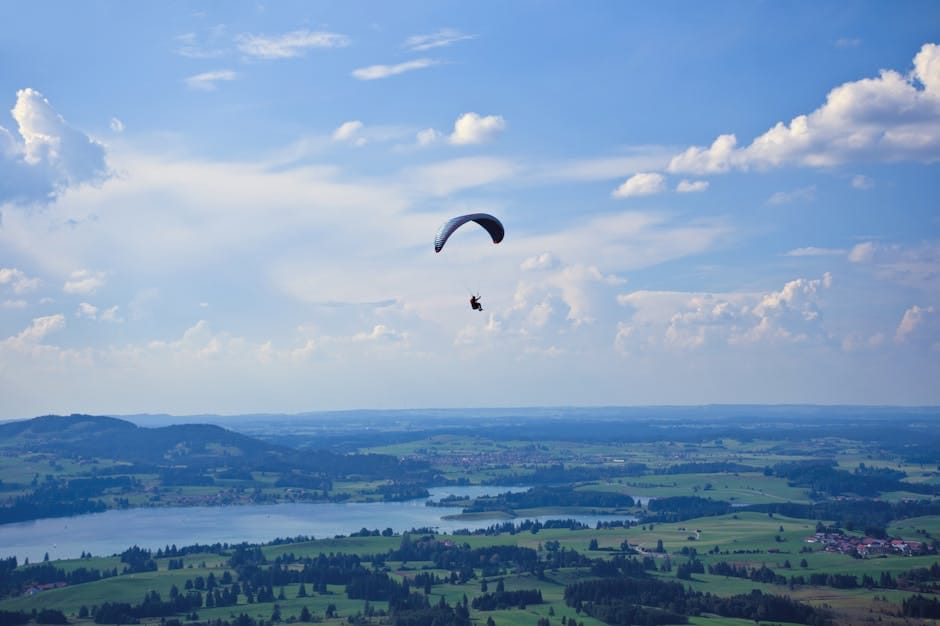
Paragliding is the sport that appears most reasonable in marketing and is most dangerous in practice. The pitch is seductive: run off a hill with a large piece of fabric, soar on thermals, be free. The reality involves physics that do not forgive weak training. Most paragliding fatalities are pilots with 20-200 hours of flight time — the dangerous middle, where confidence exceeds judgement.
Almost every preventable accident I've seen or read about was shaped by training. The pilot either paid a school that glossed over fundamentals, or was rushed through certification because the weather window favoured progression over safety. Choosing the right school is the single biggest decision in your paragliding life.
What Certification Actually Means
USHPA (US), APPI (International), BHPA (UK), FAI-CIVL, and various national bodies issue ratings. P1, P2, P3, P4 in the US system; Para Pro Stage 1-5 in the European APPI system. These are real benchmarks when administered by a real school. They are meaningless when the school is a box-ticker.
P2 is the "novice" rating — you've done around 35-45 flights, you can launch, soar, and land safely in mellow conditions, and you can recognise when conditions exceed your ability. That last point is the one most often faked.
The Questions You Ask a School Before Signing Up
How many hours of ground handling do students do before their first high flight? The right answer is at least 8-12 hours, ideally 15. Anyone who tells you "we'll have you flying on day one" is trading your safety for a good Instagram moment.
What's your instructor-to-student ratio for high flights? The right answer is 1:2 or 1:3 max. A school doing one-on-one cost more and is worth it. A school doing 1:6 is a sausage factory.
What's your refusal rate? A good school will send students home with their deposit if conditions are unsafe. Ask: "In your last 100 scheduled training days, how many did you cancel or relocate for conditions?" The right answer is 15-30 percent. A school that says "we fly every day" is flying in unsafe conditions.
How many students have you rated P2 in the last 12 months? A small school rating 8-15 new P2s a year is probably doing it right. A school rating 80+ is volume-focused. That's not automatic disqualification, but it's a red flag to investigate further.
Red Flags in the First Visit
Ask to watch a training day before signing up. If the school says no, leave. The good schools welcome observers because their process stands up to scrutiny.
Red flag: students doing high flights in their first week. The progression from bunny slope to high flight should take most people 5-8 training days. If the school is pushing day-3 high flights, they're taking shortcuts.
Red flag: no radio communication with instructors during flight. Radios are standard. Not using them is a clue the school is running thin.
Red flag: instructors who don't test wind conditions before each flight. The good ones check windmeters, ribbons, local pilots, cloud development, and the forecast every 45 minutes.
Red flag: old gear with hard landings on it. Training wings take a pounding. If the school's wings look like they've been dropped on rocks, they have been, and the wings are slower and less responsive than they should be.
Green Flags
- Instructors who talk openly about accidents — their own, their students', the community's
- A "ground school" day before anyone touches a wing, covering aerodynamics, meteorology, and decision-making
- Written tests on meteorology and rules before rating
- A named chief instructor with 10+ years of experience and a real history
- Rental equipment that's fewer than 3 years old with documented inspection
- A clear post-P2 mentorship program — the riskiest phase is months 6-24 after certification
The Price Question
A full P2 program in the US costs $2,500-$3,500. In the European Alps, 2,000-2,800 euros. In Australia, $3,000-$4,500. In South America (Medellin, Valle de Bravo, Roldanillo), $1,500-$2,500 including accommodation.
Paragliding training is not a market where you save money. The $1,500 school is cutting costs somewhere. Maybe it's instructor-to-student ratio. Maybe it's gear age. Maybe it's how they rush through conditions they shouldn't train in. You will pay for that saving, and the currency is not always money.
The Location Question
Different schools suit different learning speeds.
Concentrated courses in places like Valle de Bravo (Mexico), Roldanillo (Colombia), or Ölüdeniz (Turkey) pack a P2 into 10-14 days. If you're a fast learner and can't train weekly for 6 months, this works. The downside is intensity — you're making judgement decisions while tired on day 8 of 14, which is how accidents happen.
Weekend schools in your home area stretch the P2 over 4-6 months. This gives more time for the lessons to settle, more varied conditions, and lets you quit gracefully if you realise paragliding isn't for you.
The best combination: concentrated start at a reputable school in good consistent conditions (say, 8 days in Roldanillo), then finish the rating at a home-area school over 3-4 months of weekend training. That's roughly 4,500 dollars total and produces P2 pilots with actual skill.
Equipment After P2 — Do Not Buy a Wing During Training
A school-provided EN-A wing is what you should fly during training and for your first 50+ flights after P2. Buying a wing before you know what you need is a classic mistake.
Most reputable schools sell off their used EN-A wings after 2-3 seasons. A 3-year-old Ozone Mojo 6, BGD Adam 2, or Gin Yeti 5 with certified inspection runs $1,800-$2,400 and is exactly what you need for your first year post-P2. Do not move to an EN-B or "high B" wing until you have 150 hours of airtime, period.
The Thing You Don't See in Brochures
You will be scared. Not once — frequently. The men who become safe pilots are the ones who respect that fear and train it. The ones who suppress it or push past it early are the ones who end up in the accident statistics.
A good school will never tell you your fear is foolish. A bad school will rush you past it. The difference between those two environments is the difference between a 40-year flying career and a 200-hour career that ends badly.
The instructors I trust told me, at various points, that I wasn't ready for a particular flight. Those moments stick in my memory more than the flights did. That's a school worth paying for.