Kitesurfing Progression: From First Lessons to Riding Waves
Kitesurfing seduces men with its hero highlights. The reality is a multi-year progression where most dropouts quit in month three. Here's how to not be one of them.
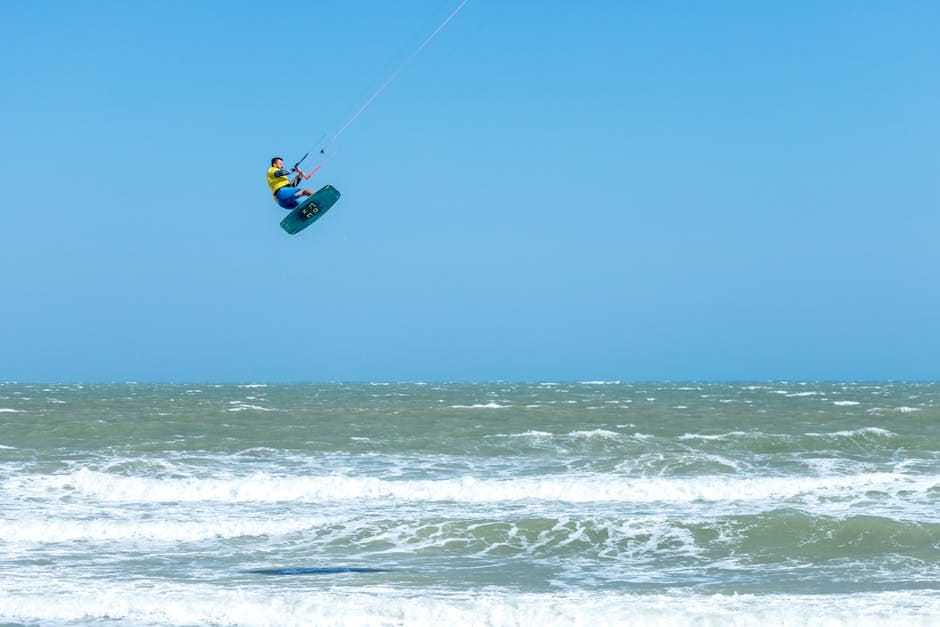
Kitesurfing has the steepest learning curve of any mainstream water sport. More men buy kitesurfing gear in their first year than ever use it competently. The dropout rate around month three is famously high — roughly 40% of first-year learners never progress past the 'trying to stay upwind' stage and quit out of frustration.
Men who stick it out and become competent kitesurfers have a few things in common. They took proper lessons, they ate humble pie on the beginner stages, they bought appropriate gear rather than aspirational gear, and they put in water time when conditions weren't perfect.
The Staged Progression
Kitesurfing skill is genuinely stages. Each stage takes roughly the hours listed — and the critical point is that no amount of kite time at stage 1 counts toward stage 4. You have to progress through them in order.
Stage 1: Kite Control (6-12 hours on land)
Flying a training kite (usually 2-3m) on the beach. Learning wind window, power zones, and flag-out safety. This is boring. Do it anyway. Men who skip it and jump straight to water lessons invariably end up back on land doing it with a different kite.
Stage 2: Water Relaunch and Body Dragging (8-12 hours water)
Learning to relaunch a kite that's crashed in water, body dragging upwind, and self-rescue. This is where lessons matter most. A $150-200/hour kitesurfing lesson in Tarifa, Hood River, or Cape Hatteras with a certified instructor teaches you self-rescue in conditions where doing it wrong means you lose your kite to the horizon.
Stage 3: First Rides and Waterstart (15-25 hours water)
Putting it together. Holding a waterstart, riding 100 metres, crashing, repeating. You will be bad. Everyone is bad in this stage. The key metric: can you get back upwind after a crash without walking up the beach? When yes, you've graduated.
Stage 4: Riding Upwind Consistently (25-40 hours water)
Now you can ride to where you want to go, ride back, and crash infrequently. You're a kitesurfer. But you're a beginner kitesurfer.
Stage 5: Tricks and Jumps (40-80 hours water)
Small jumps, 180 spins, transitions. Most first-year learners spend their whole first year in stages 3-4 and tip over into stage 5 in year two.
Stage 6: Strapless Wave Riding (80+ hours water)
The discipline most men want to end up at. Strapless surfboards ridden on waves. Requires wave-reading skills, strapless-specific technique, and the ability to self-rescue in surf. Most men who reach this stage are in year 3-4 of their kitesurfing journey.
Gear Selection by Stage
Do not buy gear before stage 3. Rent, demo, or take packages through schools. The kite that works for a beginner is almost never the kite you want long-term.
Beginner Kite (Stage 3-4)
A 9-12m four-line bow or hybrid kite. Ozone Catalyst, Cabrinha Switchblade (entry-level), Duotone Evo, or North Reach. New $1,200-1,800. Used 2021-2023 models from $500-900 are a better value for a first purchase.
Get one quiver kite first. 11m for an 85 kg rider. That covers wind from 15-22 knots, which is most coastal kiting wind in most places. Add a second kite (7-8m for high wind) when you're riding 3+ times a week.
Beginner Board (Stage 3-4)
A twin tip (symmetrical, looks like a wakeboard) measuring 140-146 cm for an 85 kg rider. Cabrinha Spectrum, Ocean Rodeo Origin, or Duotone Spike. New $500-700. Used $250-400.
Go slightly larger than you think you need. Big boards relaunch easier from water, hold an edge better, and ride upwind more forgivingly.
Intermediate Upgrade (Stage 4-5)
A second kite (bookending the first — 7m if your first is 11m, or 13m if you bought 9m), and a slightly smaller twin tip (135-140 cm). This gets you into more wind ranges and a higher-performing board. Budget $1,500-2,500 for the upgrade.
Wave-Ready Kit (Stage 6)
A surfboard shaped for kitesurfing (a strapless kite surfboard) plus a direction-specific kite. Fone Mitu Pro, Slingshot Celeritas, or Naish Skater. $750-1,100 new for the board. A delta kite like the Fone Bandit or Slingshot Rally gets better wave response than a bow.
Where to Learn
Certain spots are famously good for kitesurfing progression:
- Tarifa, Spain — reliable wind, many schools, multiple spots in 10 km of coastline
- Dakhla, Morocco — shallow lagoon, wind almost every day from April-October
- Cabarete, Dominican Republic — learning-friendly conditions, cheap accommodation
- Hood River, Oregon — river kiting, reliable summer thermals
- Cape Hatteras, North Carolina — strong East Coast wind, good schools, huge shallow sound
- La Ventana, Mexico — winter-season reliability for North American kiters
A 7-10 day trip to a spot like Tarifa or Dakhla compresses what would be months of weekend learning at a marginal spot into a focused block. Most men who progress fastest from stage 1 to stage 4 do a dedicated trip for this purpose.
School Selection
IKO-certified schools are the international standard. VDWS (German) and BKSA (British) are equivalent national certifications. Any school worth paying should have one of these three attached.
Questions to ask before booking: what's your instructor-to-student ratio (1:2 ideal, 1:4 max)? Do you use radio helmets? How long are your lessons (2-3 hours standard)? Do you teach self-rescue from day one?
A bad school will push you through stages too fast. A good school will hold you at each stage until you're genuinely competent at it.
Fitness and Injury Prevention
Kitesurfing is less cardiovascular than it looks. It's more about sustained muscular endurance — trunk, shoulders, grip. Men who show up fit for the sport do the following:
- Dead hang sets 3 times per week, 3-4 sets building to 60-90 seconds
- Ski erg or rowing machine, 30 minutes continuous, 3 times per week — builds shoulder-dominant aerobic capacity
- Single-leg balance work on a balance board, 5 minutes per day — transfers directly to strapless riding later
The injuries that end kitesurfing careers: shoulder dislocations from getting yanked by an over-powered kite. Lower back disc issues from hard landings. Wrist fractures from falling on outstretched hands.
Prevent the first by flag-out before you're over-powered. Prevent the second by landing jumps correctly — absorb with knees and hips, not your back. Prevent the third by practising falling without bracing with your hands.
When You're Ready for Waves
The jump from flat-water to waves is significant. You need to be able to ride strapless on a twin tip at minimum before you try wave surfboards. You need basic surf etiquette — right of way, not dropping in on other surfers, reading sets.
Start at a mellow wave spot (chest to head-high, long period, clean wave shape). Mauritius's One Eye is famous, but better for intermediate wave riders. Dakhla's outside reefs are accessible. Cape Hatteras's Pea Island gives clean progression waves.
Strapless technique differs from twin-tip kitesurfing in subtle but important ways. Get at least 3 lessons specifically in strapless kite technique before you spend serious time on a wave board. The foot positioning, turning technique, and kite handling all shift.
The Patience That Sticks
Kitesurfing rewards men who stay humble about their progression. I know riders who reached stage 6 in 18 months by dedicating 2 months to each sub-stage. I know riders who forced themselves into wave riding at 50 hours of water time and ate so many boards that they quit.
The fast path through the stages is actually the slow path through the early stages. Spend your hours in stage 2 learning genuinely solid kite control. Stage 3-4 should feel competent, not brave. By the time you hit stage 5, the tricks will come faster than they would if you'd rushed.
This is not just my opinion. Every senior kiter I know echoes it. They all wish they'd been more patient at the start.