Bikepacking the Great Divide: A Realistic 60-Day Plan
The Great Divide is 4,400 km of gravel and dirt from Banff to the Mexican border. Here's how to actually ride it without the trip falling apart in Wyoming.
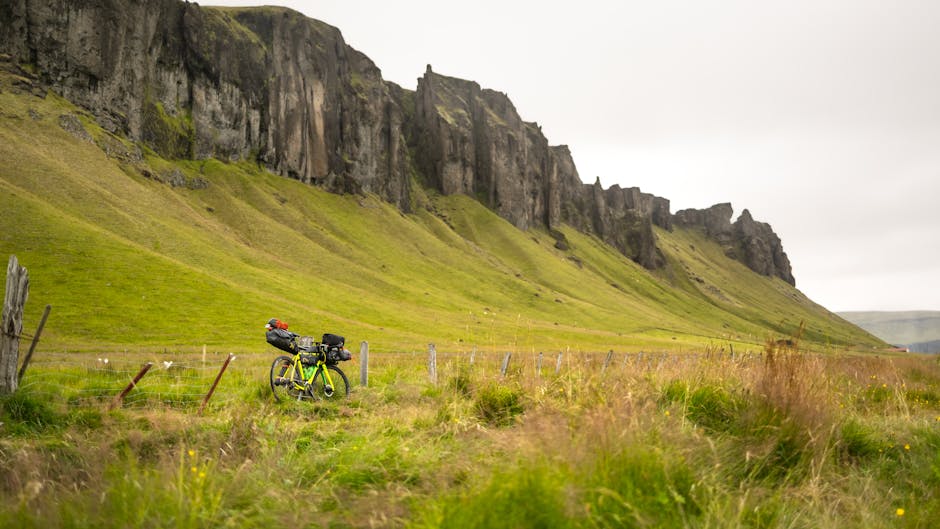
Somewhere on day 23, usually in the Great Divide Basin of Wyoming, riders quit. The crack in the plan shows up 2,100 km from the border in a landscape that looks like nothing — high sagebrush plains, wind, flat light, and the realisation that you signed up for another 2,300 km of the same. Most who quit don't do it in Wyoming, but the doubt starts there. The riders who finish are the ones whose plan survives that moment.
The Great Divide Mountain Bike Route (GDMBR) is 4,418 km from Banff, Alberta to Antelope Wells, New Mexico. It crosses the Continental Divide more than 30 times, climbs 61,000 metres cumulatively, and passes through some of the emptiest country in North America. This is a plan for riding it in 60 days as a tourist, not racing it in 14 days as a self-supported elite.
Why 60 Days Is the Right Target
The famous Tour Divide race finishes in 14-20 days. That's a different sport. Tourists do the route in 55-80 days. 60 days at a conservative 75 km per day average leaves buffer for rest days, weather, and mechanicals. 45 days is possible but requires 100 km days in crosswinds and 90% efficiency. Skip that bar unless you've done multi-week bikepacking trips.
The pace math: 10 riding days per week, averaging 75-80 km, two rest days in towns, weather buffer. Over 60 days, you'll do 50 riding days and 10 rest/weather days. That absorbs 3-4 bad-weather events and 1-2 mechanical delays.
Sectioning the Route
Think of the route as six sections of roughly 10 days each.
Section 1: Banff to Eureka, Montana (750 km, 10 days). Lush, wet, forested. The Flathead Valley is the most remote section of the whole route. Grizzly country — know bear protocol.
Section 2: Eureka to Butte (650 km, 9 days). Classic Montana. Rolling gravel, small towns, excellent food.
Section 3: Butte to Rawlins, Wyoming (790 km, 10 days). Transition from Rockies to Basin. High-altitude cols (3,240m Union Pass), then the Great Divide Basin.
Section 4: Rawlins to Steamboat Springs (650 km, 8 days). Back into mountains. The Basin is behind you; Colorado high country is here.
Section 5: Steamboat to Abiquiu, New Mexico (750 km, 10 days). Colorado high passes, then descent into the Chama Basin. Aspen groves, elk.
Section 6: Abiquiu to Antelope Wells (828 km, 11 days). High desert, heat, the psychological finish. The Gila Wilderness section is magnificent. The final 100 km from Hachita is surreal — flat, straight, and ending at a tiny border crossing that feels like no arrival at all.
Planning Per Section
Maps and GPS: Adventure Cycling Association sells the route in 6 paper map sections. The digital route file is on Ride with GPS and Gaia GPS. Carry both formats; phones fail.
Resupply: towns with full grocery 40-220 km apart in the northern half, 100-350 km apart in Wyoming and southern sections. Plan food based on the longest gap in each section, with a day of buffer.
Gear That Survives 60 Days
The Bike
A hardtail mountain bike or rugged gravel bike with 2.1-2.4" tyres. The Salsa Cutthroat, Specialized Diverge Comp Carbon, Surly Krampus, and Tumbleweed Stargazer are all proven on the route. The Cutthroat is the most popular specific bike for the GDMBR.
Tyre choice: 2.1" WTB Resolute or 2.2" Maxxis Rambler on a gravel bike, 2.4" Maxxis Ikon on a hardtail. Tubeless mandatory. Carry 2 spare tubes and plugs anyway.
Bags and Capacity
Frame bag, seat bag, handlebar roll, top tube bag. Additional Salsa Anything cages on the fork for water storage in the dry sections. Total carrying capacity needs to handle 4 litres of water and 4-5 days of food in the longest gaps.
Brand: Revelate Designs bags have dominated the scene for years because they hold up. A 60-day trip will wear out cheap bags by day 30.
Electronics
Garmin Edge 1040 Solar or iPhone with solar panel. Anker 25,600mAh battery bank. Garmin inReach Mini 2 for emergency comms — the Wyoming Basin and Gila Wilderness both have 50+ km no-cell zones.
Fueling a 60-Day Effort
Caloric requirement: 5,000-7,000 per day riding days. You will eat more than you've ever eaten. Convenience store diet works but you need to supplement.
Carry: dried beans or lentils (5 minutes to cook), tortillas, salami, peanut butter, honey packets, instant oats, Nido (whole milk powder), dried fruit. Avoid: dehydrated "adventure" meals (expensive), anything requiring 15+ minutes of cooking.
Most riders lose 3-6 kg across the trip even eating constantly. Don't fight it — lean into it by eating every 90 minutes while riding.
Water
The Great Divide Basin is 300 km where water sources are unreliable. You need to carry 4-5 litres through this section at minimum. Other sections have streams every 15-30 km.
Sawyer Squeeze filter and Aquatabs are the standard. Learn to identify cattle tanks and wells marked on Adventure Cycling maps — they're your lifelines in the Basin.
Weather and Timing
The window is 90-100 days between high-altitude snowmelt (late June in Montana) and first snow in Colorado (mid-to-late September). Most riders start early July going southbound. Going northbound from New Mexico in April-May is possible but the snow in Colorado will shift your schedule unpredictably.
Wildfire smoke has become a real planning consideration. The 2021-2024 seasons all had multi-week smoke events that closed sections or made riding dangerous. Have a backup plan for re-routing if a fire closes a section of trail.
Mental Game
Day 1 is exciting. Day 15 is a groove. Day 23 is the first real low. Day 35 you've accepted the new normal. Day 50 you just want to finish.
Rest days in towns matter. Fargo, Steamboat, Salida, and Silver City are all genuinely nice towns where a day off rebuilds morale. Take them. Clean your bike. Wash your kit. Eat two meals. Sleep in a real bed.
Solo vs. group: most riders do this solo or with one partner. A group of 3+ is logistically hard because pace differences emerge and become frictions. If you're going with one partner, have a conversation before day one about what you'll do if your paces split.
The Budget
For 60 days: food 60 x $40 = $2,400. Lodging 15 nights x $80 = $1,200 (many nights you'll camp). Flights to Banff and from El Paso = $800. Gear amortisation = $2,000-5,000 depending on what you already own. Total realistic budget = $6,500-10,000 for a 60-day trip with moderate comfort.
The Great Divide isn't about hardship for hardship's sake. It's about the arc of a 60-day journey across a continent's spine, through empty country, under your own power. That's a rare thing in 2026. It's worth doing once.