Freediving in 2026: Why the Real Danger Isn't the Depth, It's the Final Ten Feet to the Surface
Freediving has no engine, no rope and no tank — just one breath and a body that will happily lie to you about how much air is left. Here's what getting into it properly actually looks like.
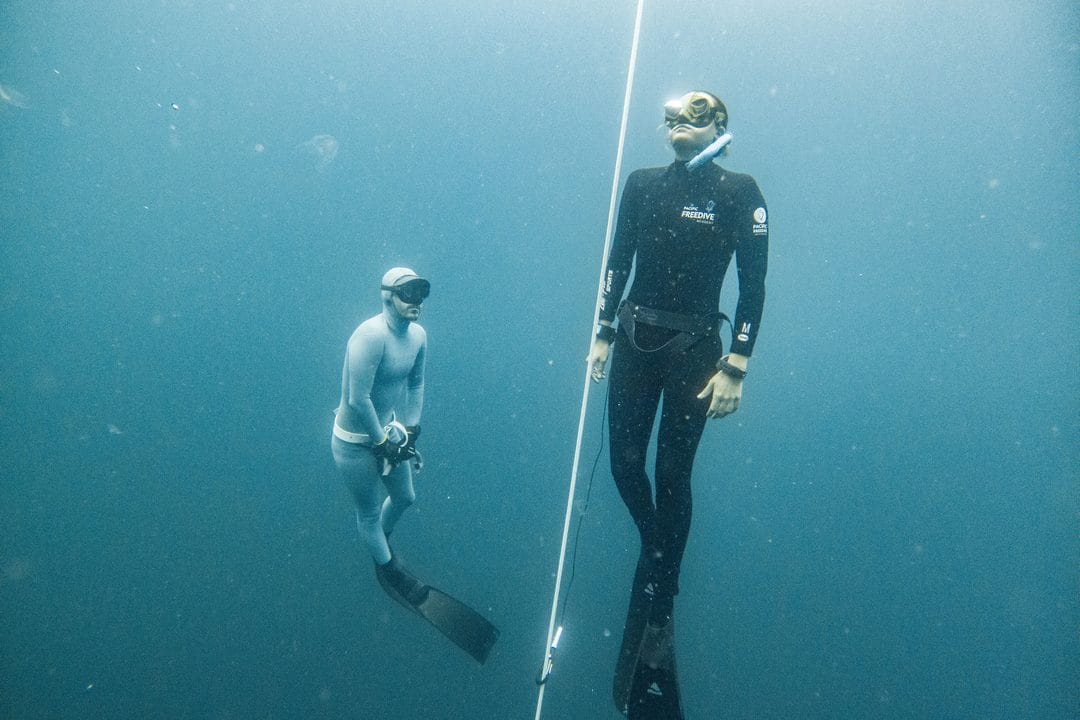
Somewhere off the coast of Dahab, in the Red Sea sinkhole every freediver simply calls the Blue Hole, a diver drops through 20 metres of clear water without a single bubble following him down. No regulator, no tank, no hiss of compressed air — just a wetsuit, a pair of long fins, and roughly ninety seconds of breath he took at the surface. He touches a plate at depth, turns, and starts kicking back up. The last five metres are the ones that matter, the point where the body, starved of oxygen and flooded with the false calm that comes just before a blackout, sometimes simply switches off.
Freediving is the extreme sport that looks the least extreme on Instagram and is, by several measures, one of the more dangerous ones on a per-participant basis once you get past the beginner pool sessions. There's no engine to fail, no rope to snap, no avalanche warning to ignore. The only equipment that can really let you down is the one you were born with, and it fails silently, without cramping or panic, which is exactly what makes it worth understanding properly before you ever step off a boat.
The Sport Is Simple. The Physiology Underneath It Is Not.
At its core, freediving is breath-hold diving — descending on a single inhale and returning to the surface before you need another. Competitive freediving splits into recognised disciplines: static apnea (STA), where you float face-down and simply hold your breath as long as possible; dynamic apnea (DYN), covering distance underwater in a pool; and the depth disciplines — constant weight (CWT), free immersion (FIM), and the no-limits category that uses a weighted sled to descend and a lift bag to return. Croatian freediver Budimir Šobat holds the men's static apnea world record at 24 minutes and 37 seconds, set in 2021, which gives some sense of what a trained mammalian dive reflex can actually do to a human body when it's given time to adapt.
What most beginners don't expect is how much of freediving happens above the water. Real training starts with breathing exercises, CO2 tolerance tables, and a deliberate slowing of the heart rate before you even get your face wet — the mammalian dive reflex, the same reflex that makes newborns instinctively hold their breath underwater, kicks in within seconds of cold water hitting the face and drops heart rate by 10 to 25 percent almost immediately. Recreational divers rarely need to chase competitive numbers. A solid AIDA 2-star diver, six months into regular pool and open-water sessions, might comfortably hold a breath for two and a half to three minutes on land and reach depths of 16 to 20 metres in the sea — already enough to see reef structures most snorkellers never get close to.
Shallow Water Blackout — the Danger That Doesn't Announce Itself
Here's the part that separates freediving from almost every other extreme sport on this list: the moment of failure feels like nothing.
Shallow water blackout happens when carbon dioxide levels — the trigger that normally makes you desperate to breathe — get artificially suppressed through hyperventilation or repeated deep dives, while oxygen keeps dropping in the background undetected. The diver doesn't feel the alarm bells because the body's early-warning system has been tricked. Consciousness goes at somewhere around 1 to 5 metres from the surface, almost always on the ascent, because that's where pressure drops fastest and the partial pressure of oxygen in the lungs collapses hardest. This is exactly why the sport's central safety rule exists, and why every certified freediver repeats it like scripture: never dive alone, and never let a buddy's head reach the surface without a hand under their armpit and eyes on their face for the next 30 seconds. Blackouts on the surface, with a trained buddy present who follows the "one up, one down" rotation and knows basic rescue breathing, are almost always survivable. Blackouts with no buddy present are how freediving fatalities actually happen, and the diver rarely remembers a thing about it afterwards.
None of this means freediving is reckless by nature — competitive freediving under AIDA or CMAS supervision, with safety divers stationed at depth and a strict one-up-one-down protocol, has a strong safety record precisely because the risk is well understood and built into every rule. The real danger sits with self-taught divers who train alone, hyperventilate before a dive to push their time, or push depth progression faster than their body's CO2 tolerance actually allows.
Getting Certified: What a Proper Course Actually Costs
Skip YouTube tutorials. Freediving is one of the few extreme sports where a weekend certification genuinely changes your risk profile, because it teaches equalisation technique, rescue protocol, and CO2/O2 tables you won't reliably work out on your own.
AIDA International remains the most widely recognised certifying body, alongside Molchanovs Freediving (formerly Molchanovs Wave), the school built around world-record holder Alexey Molchanov and his mother Natalia. A beginner AIDA 1-star or Molchanovs Wave 1 course in the UK typically runs £250 to £350 for two to three days, covering pool sessions, static and dynamic apnea basics, and one or two open-water dives to depths around 10 to 12 metres. Move up to AIDA 2-star or Wave 2 and you're looking at £350 to £450, unlocking depths to roughly 20 metres with proper equalisation training — the point where most recreational divers happily stay for years. PADI also runs its own Freediver and Advanced Freediver line, priced similarly and widely available through dive centres that already run scuba courses. Every reputable course also includes a medical questionnaire before you get near open water, screening for conditions like uncontrolled asthma or a history of fainting that raises blackout risk. Instructors take that screening seriously enough that a handful of divers get redirected toward pool-only sessions each year, which frustrates people in the moment but has almost certainly kept a few of them alive.
Choose AIDA or Molchanovs over a random unaffiliated "taster session" advertised on social media. The certified courses build in the CO2 tables, the buddy protocols and the medical screening that a two-hour taster simply skips, and that gap is exactly where inexperienced divers get into trouble.
The Kit That Actually Matters
Freediving gear is deliberately minimal compared to scuba, but the few pieces you do need are not interchangeable with snorkelling kit bought on a whim. The right gear also changes how efficiently you burn the one lungful of air you're carrying, which matters more here than in almost any other watersport.
- A low-volume mask — scuba masks have too much internal air space to equalise efficiently at depth, which wastes precious lung volume on every dive
- Long, soft-blade fins (fibreglass or carbon, from brands like Cressi, Omer or C4) that convert leg effort into forward glide rather than burning oxygen on wasted kicks
- A 3mm to 5mm open-cell wetsuit, smooth-skin on the outside for reduced drag, and genuinely difficult to put on without lubricant spray the first few times — nobody tells you this and it catches everyone out
- A weight belt with rubber (not nylon) webbing, so it doesn't slip when the wetsuit compresses under pressure
- A neck-mounted lanyard for depth diving, which is non-negotiable in open water with any current, since it's the line a safety diver uses to pull an unresponsive diver up
Budget roughly £600 to £900 for a full starter kit bought new — mask, fins, wetsuit, weight belt and lanyard — though buying the wetsuit and fins second-hand from a club member who's upgrading is common practice and can knock £200 or more off that figure without any real compromise on safety. Renting a full kit from a dive centre for your first course is worth doing regardless of budget, since fin stiffness and mask fit are genuinely personal and no two divers ever seem to agree on the same setup.
Training the Breath-Hold Without Guesswork
CO2 tables are the backbone of dry training: a structured sequence of breath-holds with shrinking recovery intervals between them, designed to raise your tolerance to rising carbon dioxide rather than your raw oxygen capacity. O2 tables work the opposite direction, keeping recovery time fixed while breath-hold duration increases, training the body to function further into oxygen deprivation. Apps like STAmina or a printed table from your instructor make this straightforward to follow, and most divers see meaningful gains in breath-hold time within four to six weeks of two or three sessions a week.
The mistake almost every beginner makes is hyperventilating before a static breath-hold, taking rapid, deep breaths to "load up on oxygen." It does the opposite of what people think — it strips CO2 out of the blood without meaningfully raising oxygen stores, delaying the urge to breathe without delaying the actual drop in oxygen. That combination is precisely the mechanism behind shallow water blackout, so any instructor worth their certification will drill one calm, relaxed exhale-inhale cycle instead, never more.
Where to Actually Train in the UK
Vobster Quay in Somerset is the default answer for most of England — a flooded quarry with staged platforms down to 40 metres, used constantly by British Freediving Association (BFA) clubs for depth progression in genuinely controlled conditions. The National Diving and Activity Centre in Chepstow, just over the Welsh border, offers similar depth training with the added novelty of a sunken bus and helicopter for divers who fancy something to look at on the way down. For open-water sea diving once you're certified, the south coast around Swanage and Chesil Beach draws regular BFA meet-ups through spring and summer, though visibility rarely matches the Red Sea or the Bahamas — expect 3 to 8 metres on a good day rather than the 20-metre-plus clarity that makes Dahab's Blue Hole a bucket-list destination for a reason.
The People Chasing the Actual Limits
New Zealander William Trubridge built an entire competition, Vertical Blue, around a 202-metre blue hole in the Bahamas, and has held multiple constant-weight-no-fins world records diving there. Alexey Molchanov currently holds the men's constant weight world record past the 130-metre mark, a depth at which the human lung compresses to roughly a quarter of its surface volume. On the women's side, Italian freediver Alessia Zecchini has spent years trading constant-weight records with Japan's Sayuri Kinoshita, both regularly diving past 100 metres on a single breath. Watching footage of any of them is unsettling the first time — no thrashing, no visible strain, just a slow, near-motionless drop into water that gets darker with every ten metres, right up until they turn around.
That stillness is the entire point, and it's also the hardest thing for a beginner to actually learn. Every instinct from ordinary life says fight, kick, push — and every metre of depth in freediving rewards the opposite. Get that part right, respect the buddy rule without exception, and the sport hands you something almost no other adventure activity can: total silence, at depth, powered by nothing but your own lungs.