How to Climb Your First Mountain: A Complete Beginner's Roadmap
Most first-timers skip the unglamorous work — aerobic base, weighted hiking, navigation — and pay for it above 3,000 metres. Here's the plan I wish I'd had.
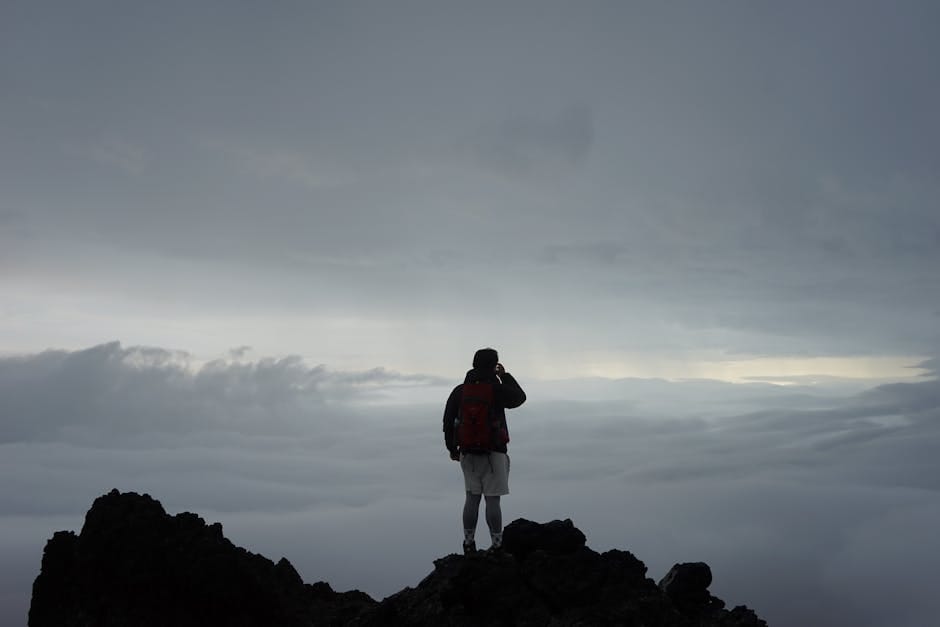
The forecast shifted 24 hours before you were due on the ridge. Most beginners don't know when to call it — and that's the stat that kills people. Your first mountain isn't a photo opportunity; it's a decision tree with weather, fitness, and judgement as the branches.
Before anyone starts talking about harnesses and crampons, settle the basic question: what counts as "your first mountain"? I'm not talking about a walk-up like Ben Nevis on a blue-sky Saturday. I mean something with altitude, exposure, and consequences — Mount Baker, Dent du Géant's approach, Mount Kosciuszko's shoulder routes, or a PD-graded classic in the Alps. Anything less and the lessons don't stick.
The 12-Month Framework
Twelve months sounds excessive until you realise most first attempts fail on fitness, not skill. The human aerobic system responds slowly. You can buy a $700 pair of La Sportiva Nepal Evo boots tomorrow; you can't buy a VO2 max of 48.
Months 1-4: aerobic base. Hike three times a week, one of them weighted (12 kg to start, working toward 18 kg). Run easy for 40 minutes twice. Avoid high-intensity intervals in this phase — you're building mitochondria, not race fitness.
Months 5-8: altitude rehearsal. Find a local route with 900-1,200 metres of continuous gain and repeat it. In the Sierra, Half Dome's approach works. In Australia, Mount Bogong's Staircase Spur. Add rope work with a qualified guide at least twice during this phase.
The Skills That Matter Most
- Self-arrest with an ice axe — on real snow, with a real slide, under someone who knows what they're doing
- Crampon technique on 30-40 degree snow, including French technique for traverses
- Basic navigation: compass, 1:25,000 map reading, altimeter cross-checking
- Tying in with a swiss seat or harness, belaying, and Munter hitch as a backup
- Recognising avalanche terrain — even on supposedly "non-technical" routes
The self-arrest skill is the one most beginners fake. They watch YouTube, practise on a grassy slope, and think it translates. It doesn't. Snow behaves differently at every temperature. The first time you actually need an arrest, you'll be surprised at how little time you have — maybe a second and a half — to react before you're moving too fast to stop.
Gear: What to Spend On and What to Rent
Boots and a sleeping bag are the two items I'd buy outright. Boots because they need to fit your feet precisely and need thousands of kilometres of break-in. Bags because a quality 0°C-rated bag from Mountain Hardwear or Feathered Friends will last 15 years and saves you from being cold on every trip.
Rent or borrow: ice axe, crampons, harness, technical rope, helmet. You'll figure out your preferences after three or four trips. Buying gear on day one means you'll be fussing with equipment instead of learning mountains.
Arc'teryx Alpha SV shells are magnificent and roughly $900. A Patagonia Triolet at $550 does 90 percent of the same work. For a first season, buy the Triolet. Save the Alpha money for training, a guide, or a flight to better terrain.
A Hard Opinion on Guides
Hire one. Your first alpine route should be guided — not because you can't technically pull it off, but because a guide will teach you how to read terrain in a way that no book ever will. A day rate with a UIAGM guide in Chamonix runs 450-600 euros. Split between two clients, that's 300 euros for a day of calibrated learning. Spread that over a 40-year climbing life and it's the best per-hour investment you'll make.
Choosing Your Route
Here's what not to pick: anything that requires roping up at altitude on your first trip. Anything above 4,500 metres. Anything with committing descents. Anything advertised as "easy" by someone who climbs 5.12.
Good first-mountain candidates: Mount Baker's Easton Glacier route (non-technical glacier, 3,286 metres, classic Pacific Northwest); the Allalinhorn Hohsaas route (PD, short day from the cable car, real glacier travel); Mount Kosciuszko via Thredbo plus a Main Range traverse for weather exposure without altitude; Mount Washburn or Mount Baden-Powell as "shakedown" peaks before the real thing.
The most overlooked factor is descent. Beginners obsess about the summit; experienced climbers respect the descent, because most accidents happen on the way down. A 30-degree snow descent is harder than a 30-degree snow ascent — your kick steps don't hold as well going down, and fatigue compounds every mistake.
Weather and Timing
There's no substitute for local forecasts. In the Alps, MeteoSwiss and Météo-France are more reliable than any app. In the US, NOAA point forecasts beat anything your phone shows you. In Australia, the BOM mountain weather forecast is the single source. Use three-day windows, and if any of the three days shows a rising trend in wind or drop in pressure, you're working with a shorter weather window than you think.
I've turned back twice on mountains where the forecast looked acceptable. Both times I was right to. You'll rarely regret walking away; you'll definitely regret pushing through bad weather. The mountain is not going anywhere.
What Happens on the Day
You'll be tired. You'll question why you're doing this. The altitude will feel worse than you expected, even at modest heights. Your appetite will vanish. These things are normal.
The summit is often anticlimactic. You'll spend ten minutes up there, take two photos, and turn around. That's not a failure of the experience — that's the experience. The meaning of the climb accumulates in the months of preparation, the hours of the approach, the minutes of technical ground. The summit is just where you turn around.
After the First One
Write down what worked and what didn't within 48 hours. Memory degrades faster than you think. Were your boots warm enough? Did you drink enough? Did the rope work feel rehearsed or improvised? The goal of your first mountain is to make your second one safer.
And then go do the second one. Progression in the mountains is cumulative, non-linear, and specific. A person who's climbed ten mountains is dramatically safer than someone who's climbed two — not because the skills are different, but because the pattern recognition is.