Ice Climbing Canada: Your First Trip to the Rockies or Quebec
Canadian ice is one of the great climbing experiences. It's also unforgiving. Here's how to do your first trip without becoming a statistic.
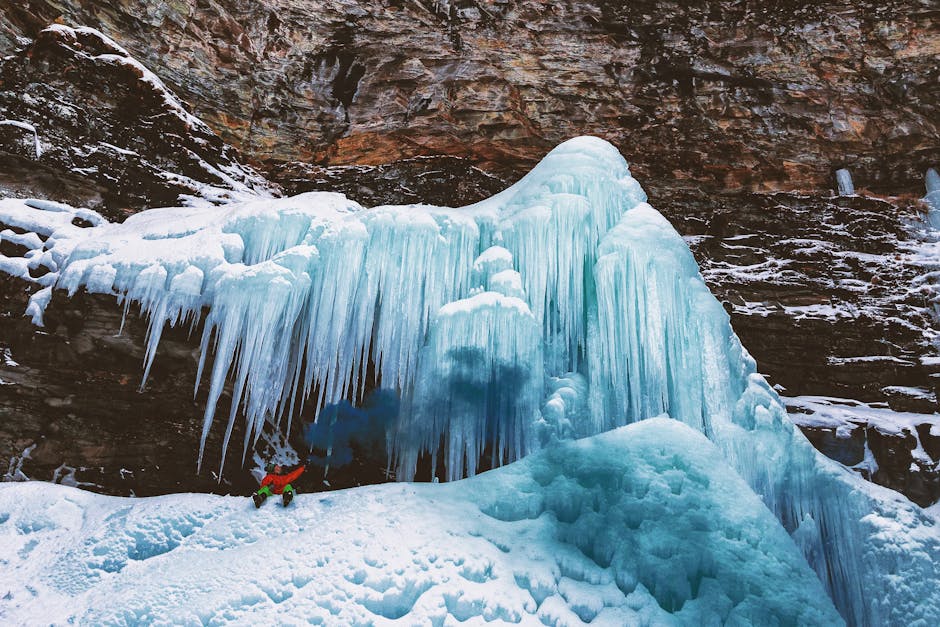
Canadian ice has a particular reputation. World-class routes, long seasons, and a climbing community that treats beginners well when they show up prepared and treats them harshly when they don't. That second condition is what this article is about. You can learn to ice climb safely in Canada if you do it the right way. You can also get hurt very fast if you don't.
Where to Go for a First Trip
Two main regions: the Canadian Rockies around Canmore and Banff, and the Gaspé Peninsula in Quebec. They're different experiences. Pick based on what you're optimising for.
Canadian Rockies — Canmore and Banff
The classic. This is where most American and European climbers go for their first Canadian trip. The Icefields Parkway between Banff and Jasper is lined with waterfall ice climbs across a 230 km stretch. Grade distribution is generous: WI3 to WI7, with the strongest concentration between WI3 and WI5.
Base yourself in Canmore. Accommodation options run from budget ($90 per night at the Canmore Hostel) to mid-range ($160-220 at chain hotels). Restaurants are excellent. The climbing scene is organised, with climbing gyms that let you find partners easily.
Typical first-week progression: two days at Weeping Wall or Junkyards for lead climbing practice on WI3-4, one day on a longer classic like Louise Falls or Polar Circus, one rest day, two days pushing into WI4+ territory.
Quebec — Gaspé
Less famous, arguably better for beginners. Climbs are shorter, crags are more concentrated, and the Quebec ice-climbing community is famously welcoming. Pomme d'Or (a 150-metre WI4+/5 classic) is the crown jewel. Dozens of single-pitch WI3-4 routes provide an ideal learning environment.
The complication: Gaspé is remote. The nearest major airport is Moncton (1,300 km from the main climbing areas). Most climbers fly into Quebec City and drive 8 hours. That's a lot of logistics for a 5-day trip.
For first-timers with weekend budgets, Pomme d'Or itself is probably not the goal. Stay in Mont-Saint-Pierre or Saint-Anne-des-Monts and climb the Chutes Neigette, the Alouette Glacier, and the dozens of approach-intensive but short classic routes.
Gear — Rent First, Buy Second
A full ice rack runs close to $3,000 in Canadian dollars if you buy new. For your first trip, rent.
Most climbing shops in Canmore, Banff, and Quebec City rent the full kit: tools, crampons, harness, helmet, and boots. A week runs $350-450. That's cheaper than buying gear you'll discover you don't love.
What you should own: climbing pants and shell (whatever you use for alpine climbing), gloves (at least 3 pairs — one for the belay, one for leading, one as backup), a 60-metre single rope or 2x half ropes, a locking carabiner collection, and clothing.
When You're Ready to Buy
Tools: Black Diamond Viper or Petzl Quark for the first pair. Both are versatile enough for WI3-5 with leashed or leashless climbing. $340-380 per tool, so $700-800 for a pair. The Petzl Ergonomic Nomic or the BD Reactor come into play at WI5-6, where the more aggressive curvature helps on steep sections.
Crampons: Petzl Dartwin or Black Diamond Sabretooth Pro. Steel construction, fully clip-on. $240-280. The Dartwin is a tiny bit lighter; the Sabretooth is a bit more robust.
Boots: La Sportiva Nepal Evo or Scarpa Phantom Tech. Rigid enough for technical ice, warm enough for -15°C belays. $650-900. If you're considering only ice climbing (no alpine), the Phantom Tech is lighter and better suited. If you want a boot that doubles for alpine climbing in summer, the Nepal Evo is more versatile.
Guides — Essential for Your First Trip
An ACMG or IFMGA guide in the Rockies runs $600-750 per day for a 1-on-1 or $350-400 per person for a 1-on-2. That's not cheap, but a guided day will teach you more ice-climbing technique than a week of trial and error.
For your first trip, budget for 3 guided days out of 7: one pure technique day, one multi-pitch day, one harder-grade push day. That's roughly $1,300-1,500 in guide fees, which is the best money you'll spend on the sport.
Guide recommendations: Yamnuska Mountain Adventures and Girth Hitch Guiding in Canmore have excellent reputations. For Quebec, contact Face Nord in the Charlevoix region — most of their guides are bilingual and deeply knowledgeable about Gaspé.
Partners After the Guide
Once you've done 3 guided days and feel competent at WI3-4 leading, you can safely climb with an experienced partner. The Canmore climbing community uses Mountain Project's partner board and several Facebook groups. A capable WI5+ climber will often partner with a WI3 climber for easier routes if the day doesn't stress either of them.
Reading Ice Conditions
Ice quality changes daily. The Rockies have an excellent conditions report at gravsports.com that updates through the season — use it religiously. Quebec reports are more informal; ask at the ice climbing shop in Quebec City (Climbing Center du Parc) the day you fly in.
What to look for:
- Good ice is grey to slightly blue, with small dimples showing recent freeze-thaw
- White ice — aerated, lots of air bubbles — is softer and breaks more easily under tools
- Rotten ice is yellow or has visible cracks or running water — avoid
- Pillars that sit free-standing require a separate conversation; they're often climbable but the risk calculus is higher
Temperatures matter more than precipitation. Stable temperatures between -18°C and -5°C produce the best ice. Temperature swings — two days at -25°C followed by a day at -2°C — create stress cracks that can propagate on impact. Some of the worst ice-climbing accidents happen during warming trends.
The Routes Worth Doing on a First Trip
Canadian Rockies, in order of difficulty:
- Junkyards (WI3, multi-pitch practice zone)
- Louise Falls (WI4, classic pillar)
- Cascade Falls (WI3, long and moderate)
- Professor's Falls (WI4+, sustained and beautiful)
- Polar Circus (WI5, the big-day experience)
Professor's Falls is worth special mention. At WI4+ it's challenging but accessible, the rock architecture is exceptional, and the route is long enough (4-5 pitches) to feel like a real objective.
Quebec, in order:
- Chutes Neigette (WI3-4, variable, practice-friendly)
- Charlevoix single-pitch classics
- Pomme d'Or (WI4+/5 — save this for a return trip)
Safety Practices That Keep You Alive
Ice climbing has specific risks beyond general mountain risk. Three that are often underappreciated:
Screws: trust the rock-quality pick on screws. Two good screws at a mid-pitch stance are worth more than three marginal screws higher up. Learn to read screw quality — a good screw is 10cm+ with the bite-grade ice producing hexagonal swarf as you thread.
Avalanche: approaches to Canadian Rockies ice climbs cross avalanche terrain frequently. Check the daily bulletin at avalanche.ca. Carry a beacon, probe, and shovel. Skip ice climbs that involve approach slopes of 30-40 degrees on dangerous-condition days.
Hypothermia: belaying a second on a cold winter day at -15°C is cold work. Bring a puffy jacket, puffy pants for the belay, and hot tea. Climbers who die on ice often die of cold-impaired judgement as much as accidents.
A Realistic Budget
For a 7-day first trip from the US to Canmore:
- Flight: $450
- Accommodation: $900 (budget) to $1,500 (nicer)
- Car rental: $450
- Food: $500
- Gear rental (1 week): $400
- Guide (3 days): $1,400
Total: $4,100-4,700. That's a real trip, but not an extravagant one. Group trips (2-3 climbers sharing a vehicle and accommodation) drop per-person costs to $3,200-3,800. Worth every dollar for anyone serious about the sport.