Enduro Mountain Biking: How to Train for Your First Race Season
An enduro race weekend isn't just mountain biking with numbers. The discipline demands specific fitness, tactics, and durability that most weekend riders underestimate.
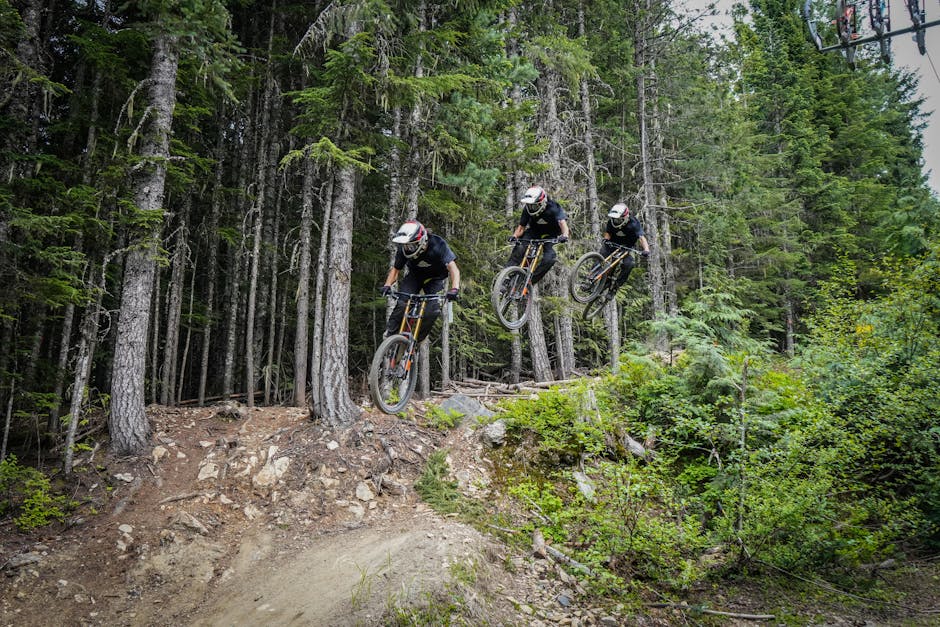
Enduro racing is the discipline that killed 90s-style cross-country and downhill as separate sports. It combines them. You ride up and down, you race only the descents, you do 4-7 stages in a day, and you figure out that mountain bike racing at this level is a different universe from your group ride on Sunday. First-time enduro racers learn this the hard way.
This is a plan for someone who has been mountain biking for 3+ years, rides 4+ hours a week, and wants to race their first enduro season seriously. Not podium-seriously — just not-embarrassing seriously. The bar is lower than you think and higher than you think, both.
The Discipline in 2026
The Enduro World Cup (EWS) ran its first season under UCI governance and settled into a format of 4-6 timed descent stages per race day, totalling 25-45 minutes of race time per rider across liaisons (transitions) that can add 2-5 hours to the day. Regional enduro series mirror this format.
Stages are generally 3-8 minutes each. They include fast flowy sections, steep techy sections, and often a final rock garden or root network that separates the top 10 from the top 40. Racers ride as individuals against the clock — no mass starts.
Points you need to internalise:
- The race-weekend fatigue is massive. You will do 2,000-4,000 metres of climbing per day while only timing the descents.
- Gear repair happens between stages. Tubeless sealant failures, broken derailleur hangers, and snapped chains are common.
- Mental recovery between stages is a skill. You have 30-90 minutes between each race run, and you need to stay primed.
The Training Calendar
A 20-week build for your first race season (assuming a March season start):
Weeks 1-6: Base and Skills
Six hours of riding per week. Focus on volume, not intensity. Add one dedicated skills session per week: cornering drills, jumping practice, technical slow-riding on awkward terrain. These are the skills that win enduro races, not your FTP.
A specific skills drill worth doing: find a rooty or rocky section 30 metres long. Ride it back-to-back 8 times. The first two runs you'll be surviving. By run six you'll be picking different lines. By run eight you'll know the section well enough to start picking faster lines. That pattern — riding the same section repeatedly — is how you develop technical speed.
Weeks 7-12: Specific Intensity
Volume climbs to 8-10 hours per week. Two sessions per week add specific intensity.
- One session of 5-8 minute efforts at race pace on descents (stage-length simulation), with a full hour of climbing between each simulation
- One session of hill climbing intervals — 8 x 3 minutes hard uphill, to build the capacity to handle the liaisons
- One long ride with race-length descents and realistic liaison climbs
The hill intervals are the ones beginners skip. Liaison climbing fatigues your legs before the descent — if you can't pedal hard for hours and still descend at 95%, you'll lose 8-15 seconds per stage to racers who can.
Weeks 13-18: Peak and Race Prep
Volume holds at 8-10 hours but content shifts toward race-specific work.
Do a local warm-up race or two in weeks 13-15. Nothing replaces the experience of a stopwatch on your back. You will learn more in one local race than in five weekend rides.
Taper begins in week 18. Volume drops to 5-6 hours. Keep intensity in, remove volume.
Weeks 19-20: Race Weekends
Pre-race: 2 days of complete rest or easy spinning. Race day: warm-up lap, stage inspection, race.
The Gear That Matters
The Bike
A modern enduro bike has 160-170mm of front travel, 150-165mm rear, 29" wheels (or mullet), and weighs 14-15.5 kg in size large. 2026 models worth considering:
- Specialized Stumpjumper EVO — adjustable geometry, top-tier descender, capable enduro platform
- Santa Cruz Megatower — pure enduro bike, more travel than needed for most racers, confidence-building
- Yeti SB160 — best-in-class corner performance, excellent for East Coast / tech courses
- Trek Slash — strong all-rounder, bulletproof warranty if you break a frame mid-season
The correct bike for you is the one you already own, modified if necessary. An enduro race season is not the time to be learning a new bike.
The Upgrades Worth Making
- Tyres — a good tyre combination is often the difference between a podium and a crash. Maxxis Assegai (front) and Maxxis DHR II (rear) in the DoubleDown casing is the standard race tyre pairing. $100-120 per tyre.
- Brakes — if your brakes fade on long descents, replace them. SRAM Code RSC or Shimano XT M8120 both work. Don't race with pads that are less than 50% remaining.
- Suspension setup — get a professional setup before the season. A 1-hour session with a suspension tuner runs $150-250 and often saves you seconds across 5 stages.
- Dropper post — if your dropper doesn't return cleanly, replace it. A dropper that fails halfway through a descent kills your flow.
Protective Gear
Full-face helmets are mandatory for most events — a Bell Super DH, Giro Tyrant, or Fox Rampage Comp convertible. $270-550. Don't economise here.
Knee pads: Fox Launch Pro or G-Form Pro X3, $80-130. Wear them on every race stage, every time.
Elbow pads: Fox Launch or G-Form Pro. $60-90. Wear them.
Neck brace: debated in enduro — most racers don't wear one, some do. I don't.
Race Day Tactics
Most first-timers lose minutes on small mistakes. Here's how to avoid them.
Course inspection on day one: ride every stage at 60-70% pace, noting mandatory moves, crux sections, and bailout lines. Take mental photos of corner entries and exits.
Between stages: eat 50-80 grams of carbohydrate within 15 minutes of finishing a stage. Hydrate aggressively. Mentally replay the stage you just rode and identify one thing to improve on the next run.
During stages: "race lines, not hero lines." The fastest line is usually the one that holds the most speed through the exit, not the one that enters fastest. If you're not sure which line is faster, the conservative line is almost always within 2-3 seconds of the hero line and has a tenth the crash risk.
End of day: stretch, eat, sleep. Tomorrow's stages require recovery tonight.
The Mental Game
Your biggest competitor in your first season is your own head. You'll crash on stage 2 and ride stage 3 scared. You'll push too hard on a committing feature and clip a rock. You'll see the rider in front of you dismount a jump you've been nervous about, and you'll stop trying to land it yourself.
A useful frame: you're not racing the other riders. You're racing your own ceiling on the bike. First-season enduro racers who try to chase the top 10 DNF at a 40% rate. First-season racers who try to maximise their own execution finish 85% of races and have a great season.
A Realistic First Season
Race 4-6 events across the year. Start with local or regional races. Build up to a national-level event by mid-season. End your season with a skills camp, not a race — the off-season is when you do the foundational skills work that lets next year's race season be a step better.
Results are not the goal. The goal is learning to ride fast at consequence. If you finish mid-pack in your age group with zero crashes and all 6 stages clean, that's a better result than a podium with a broken frame.
The podium will come later if you want it. The learning happens now.