Crag Selection: How to Pick Climbing Destinations That Match Your Level
Most climbers either pick above or below their ability when planning trips. Here's a framework for choosing crags that actually match where you are.
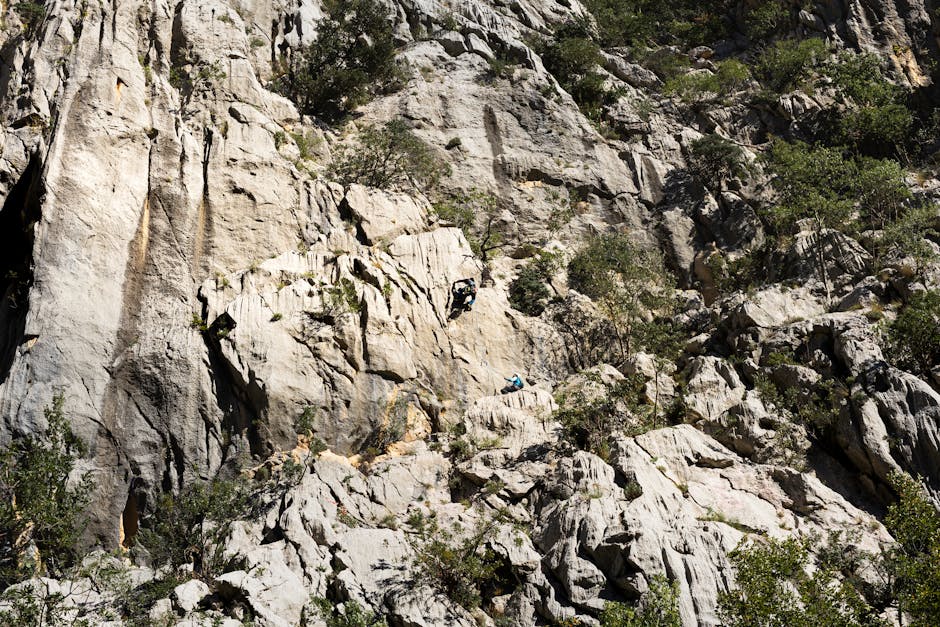
The wrong crag turns a climbing trip into an expensive demoralising grind. A 6b climber at Siurana spends the week frustrated by steep, pocketed routes that demand 7a power-endurance. An 8a climber in Ten Sleep gets bored on 7c limestone vertical that they flash too easily. Most trips fail because the rock style and grade distribution didn't match the climber's actual ability.
The framework below tells you how to pick a destination that matches your level. It's about three things: the density of routes at your grade, the style match between the crag and your strengths, and the progression opportunity at the crag.
Step 1: Know Your Actual Level
This sounds obvious. It isn't. Most climbers confuse their best grade with their comfort grade. Your best grade is what you can redpoint with effort. Your comfort grade is what you can onsight relaxed, climb multiple times in a day without pumping out, and enjoy rather than battle.
For crag selection, your comfort grade matters more than your best grade. A typical climber's onsight grade is two letters below their redpoint grade. An 8a redpoint climber typically onsights 7b+. A 6c redpoint climber typically onsights 6a+.
Count your route pyramid, not your ticklist:
- Onsight grade: 10+ routes done this year
- Comfort redpoint: 10+ routes done this year with no more than 4 sessions
- Personal redpoint: 1-3 routes done in the last 12 months
- Project grade: what you're currently working on
A destination trip should target the comfort redpoint grade as its middle. If your comfort redpoint is 6c, pick a crag with strong 6b-7a density. If 7a, pick one with 6c-7b density. This gives you warmups, goal climbs, and progression all in one area.
Step 2: Rock Style Matching
Climbers develop styles. A French limestone climber has different skills than a Colorado sandstone climber. Pick destinations that play to (but gently challenge) your style.
Limestone Sport Style
Vertical to slightly overhung. Pockets, crimps, tufas. Technical footwork required. European classic rock.
Destinations: Kalymnos (Greece), Céüse (France), Siurana (Spain), El Chorro (Spain), Verdon Gorge (France, trad-heavy), Gorges du Tarn (France), Rodellar (Spain, steep).
Sandstone Sport Style
Varies enormously. Utah's desert sandstone is crack-oriented trad. Meteora in Greece is featured conglomerate. Australian sandstone (Blue Mountains) is vertical and featured.
Destinations: Red River Gorge (Kentucky), Moe's Valley (Utah, sport), Blue Mountains (Australia), Adršpach (Czech Republic, traditional).
Granite Style
Slab, cracks, steep faces. Physical. Requires jamming technique for cracks, strong core for steep faces.
Destinations: Yosemite (California, big walls and cragging), Chamonix (France, alpine granite), Squamish (British Columbia), Cadarese (Italy), The Needles (California).
Conglomerate Style
Pocket-intensive, rounded holds, unique movement. A niche style worth learning.
Destinations: Montserrat (Spain), Leonidio (Greece), Riglos (Spain).
Step 3: Pyramid Match
A crag has a grade pyramid — the distribution of routes across grades. Your ideal destination matches your own pyramid.
If you climb 6c comfortably with an occasional 7a push, look for a crag with:
- 30+ routes in 6a-6b (warmups, bad-day options)
- 30+ routes in 6b+-6c+ (core session)
- 15+ routes in 7a-7a+ (projects)
If a crag has mostly 7b+ and above, you'll be frustrated and won't climb as many pitches.
Good Pyramid Matches by Grade
Climbing mostly 6a-6b: Kalymnos, El Chorro, Crimea, North Wales limestone. Wide warmup zones, many classics at the level, progression to 6c+.
Climbing mostly 6c-7a: Siurana, Riglos, Chulilla, Red River Gorge. The sweet spot for most intermediate climbers.
Climbing mostly 7a-7c: Céüse, Rodellar, Margalef, Leonidio. Strong density at the grade, classic hard routes within reach.
Climbing 8a+: Oliana (Spain), Flatanger (Norway), Red River Gorge roof routes. Limited crags at this level.
Step 4: Progression Factor
A good trip crag gives you something to push for. Pick a destination where a grade you haven't done yet exists in quality abundance.
If you've climbed 6c+, a trip to Siurana with its dense 6c/7a field makes sense — you'll do multiple 7a attempts and likely tick your first.
If you've climbed 7b, a trip to Margalef gives you 7b/7c projects on the same walls as your warmups.
Progression isn't mandatory — a pure fun trip to a crag you know well has its own value. But most climbers on a 2-week trip want to leave with at least one grade improvement.
Secondary Factors That Matter
Approach Time
On a two-week trip you'll climb 10-12 days. Approach time multiplies. A crag with 20-minute approaches gives you 9 extra hours of climbing over the trip compared to a crag with 45-minute approaches.
Kalymnos and Chulilla have short approaches. Frankenjura has short approaches. Margalef has long approaches. Siurana has long approaches. These matter.
Weather Reliability
A rainy trip ruins the whole calculation. Pick destinations with established weather windows.
- Kalymnos: reliable October-early December, mid-March to late May
- Leonidio: same window as Kalymnos
- Red River Gorge: October-November peak, April-May strong
- Céüse: June-September (mountain crag, cold outside summer)
- Chulilla: October-April (Spanish winter sun crag)
- Siurana: spring and autumn windows similar to Chulilla
Logistics
A complicated destination eats into your climbing time. Rodellar is spectacular but reaching it from international airports is a four-hour drive. Kalymnos requires a ferry from Kos. Leonidio is four hours from Athens.
For a short 7-day trip, pick destinations with simpler logistics. For a 14-day+ trip, invest the logistics for a better crag.
My Recommendations by Climber Type
A 6a climber on first international trip: Kalymnos. Highest density of quality routes at the level, easy logistics, friendly community.
A 6c climber building to 7a: Siurana. Best pyramid match in Europe for this grade transition.
A 7a climber: Leonidio (tough, physical) or El Chorro (varied, warmer). Both deliver in the grade range.
A 7b+ climber: Margalef for pockets, Oliana for steep endurance, or Rodellar for cave-style training.
An 8a climber: Flatanger in Norway for the classic 8a-9a field, or Céüse for classic hard limestone.
The Mistake Most Climbers Make
Picking a crag because they saw a famous ascent there. Every climber has read about Adam Ondra at Flatanger or Chris Sharma at Oliana. Those crags are full of routes 1-2 letter grades harder than most climbers can touch. The warmups at Oliana are 7a. If you climb 6c, your whole session is desperate.
Pick the crag for your level. The famous crags will still be there later, when you're stronger.