How to Choose Climbing Shoes for Different Rock Types
Granite, limestone, and sandstone each demand a different shoe. Here's how to match the rubber to the rock.
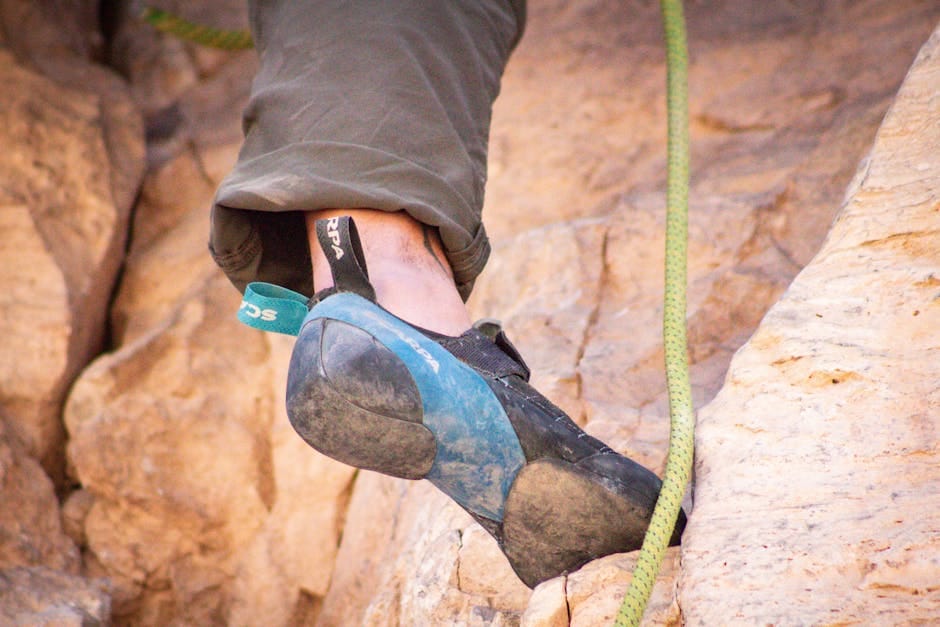
The climbing shoe you wear on granite crack in Squamish should not be the same shoe you wear on overhanging limestone in Kalymnos. Plenty of climbers ignore this and get away with it up to about 5.11. Above that, the rock starts demanding specifics, and a shoe that's fine for gym projecting will slow your progress outside.
There's a real cost to having the wrong shoe under you. Too soft, and your feet pump on long edging pitches until you're standing on jelly. Too stiff, and you miss the feel required to trust a small smear. I've watched strong climbers bail off routes they should own because they picked the wrong pair that morning. The shoe matters more than most people admit.
Granite and Why Stiffness Wins
Granite is edgy, featured, and often vertical. The holds aren't usually small, but they reward precise foot placement on crystals and dikes. A stiff shoe like the La Sportiva TC Pro or the Scarpa Maestro gives you a platform to stand on without your forefoot collapsing. For long alpine granite or multi-pitch trad, stiffness isn't optional; it's survival.
Crack climbing is a different problem entirely. You want a flat-lasted, stiff shoe that can be jammed into a crack without torturing your foot. The TC Pro dominates this category because of its high-top design and stiff midsole. Don't wear aggressive downturned shoes in cracks. You'll hate it and your feet will rotate out sideways when the crack flares.
I spent three days on granite in Tuolumne in September with a pair of brand-new Katana Laces. The shoes are great for short sport routes, but for long Sierra granite they pumped my feet on every pitch. The lesson was obvious: don't bring sport shoes to an alpine party.
Specific granite picks
- La Sportiva TC Pro - best all-around granite shoe, stiff, lasts forever, $210
- Scarpa Maestro Mid - soft rubber for smears, stiff enough to edge, $195
- Evolv Defy - cheap training shoe that works on low-angle granite, $90
Limestone and the Case for Aggressive Downturn
Limestone, particularly overhanging pocketed limestone, rewards a totally different shoe. In Kalymnos or Margalef, you'll spend most of your time on pockets and small edges with your toes curled downward. An aggressive downturned shoe like the Solution Comp or the Scarpa Instinct VS puts your power where you need it. The heel cup needs to be snug for heel hooks, which you'll be doing constantly.
Here's something I think is underappreciated: shoe rubber matters more on limestone than anywhere else. Vibram XS Grip2 is stickier than XS Edge, but it wears faster. On a limestone trip where you're climbing multiple days in a row, bring two pairs if you can afford it. Rotating shoes extends the life of each pair and gives your feet a break.
The shoes that work on vertical limestone are different from those that work on steep limestone. A vertical shoe needs stiffness to edge. A steep shoe needs sensitivity to pull on tiny footholds and hook heels. If you climb one style more than the other, buy for that style.
Limestone-specific picks
- La Sportiva Solution Comp - aggressive, precise, great heel, $205
- Scarpa Instinct VS - iconic for good reason, $195
- Five Ten Hiangle - softer, great for gym-to-crag crossover, $175
Sandstone, Smearing, and Soft Rubber
Sandstone, especially the stuff you find in Red Rocks or Fontainebleau, demands a soft, smear-friendly shoe. The rock is featured but slopey, and edges crumble when you stand on them hard. You can't edge the way you do on granite. You have to trust the rubber. The La Sportiva Solution (not the Comp) with XS Grip2 is purpose-built for this kind of climbing.
Bouldering on sandstone is where soft, low-profile shoes like the Scarpa Drago or the La Sportiva No-Edge Skwama excel. You want your toes to conform to the slopers and your rubber to bite. Don't wear these shoes on long routes. Your feet will be destroyed.
Fontainebleau deserves its own mention. The rock is friction-dependent, the holds are rounded and psychological, and you'll slip off easy boulders if you don't trust your feet. Bring shoes that have at least 70% rubber life left. Old, glazed shoes won't stick.
The Gym Shoe Problem
Most people buy climbing shoes based on what works in the gym and then get frustrated when those shoes don't translate outdoors. Gym holds are textured and forgiving. Outdoor rock is not. A shoe that feels sticky in the gym might feel slippery on limestone because the rubber is too hard. The opposite happens too: a soft shoe that works on polished gym volumes can feel vague on granite edges.
If you climb 80% outside, buy your shoes for outside. If you climb 80% inside, don't spend $200 on a pair of shoes you'll grind down on plastic in six months. A $90 Evolv Defy is fine for gym sessions, and you can save your good shoes for real rock.
The final truth is that no single shoe does everything. Most serious climbers have three to five pairs for different problems. That sounds excessive until you notice how much more confident you are on each climb when your feet match the rock underneath them.