Cave Diving: The Extreme Sport With Zero Room for Panic
In open water, panic costs you a bad afternoon. In a cave, the ceiling is rock, the exit is behind you, and panic is the thing that kills experienced divers.
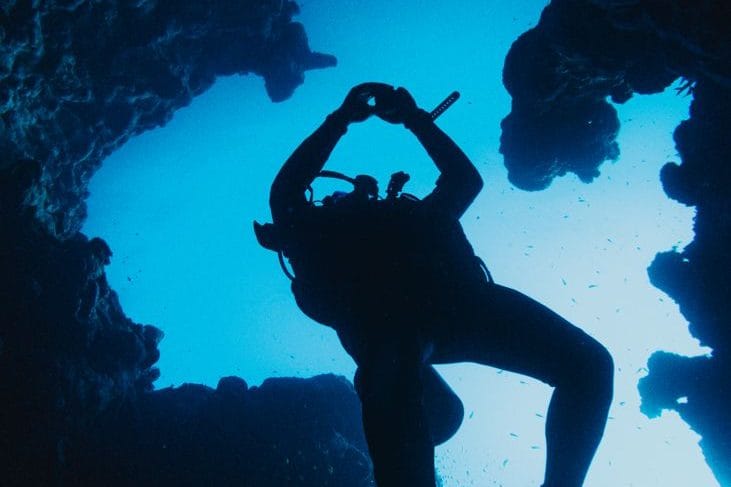
The Sport That Kills Excellent Divers, Not Beginners
Open-water scuba has a built-in safety valve: if something goes wrong, you point your fins at the sky and you surface. Cave diving removes that valve entirely. There is a rock ceiling between you and the atmosphere, sometimes for a hundred feet, sometimes for thousands, and the only way out is back the way you came, following a guideline in water that can turn from gin-clear to zero visibility in under a second. The divers who die doing this are rarely novices who wandered in over their heads. Most fatality analyses of cave diving accidents point to certified, experienced divers who broke one of a handful of well-known rules — often more than one at once, and often on a dive that looked, right up until it didn't, exactly like the dozens before it.
That distinction matters because it changes what training actually has to teach. It's not teaching people to be brave. It's teaching a very specific kind of paranoia — one that treats every dive as the one where something goes wrong, because eventually, statistically, it will.
The Gear Load Is Different From Anything in Recreational Diving
A recreational diver carries one tank and one regulator. A cave diver carries a minimum of two independent tanks with two independent regulators, because a single equipment failure a thousand feet into a cave system cannot be allowed to become a single point of failure for the diver's air supply. Redundancy runs through everything: a primary light and at least two backups, since darkness in an overhead environment isn't an inconvenience, it's an emergency. Brands like Halcyon and DiveRite dominate cave-specific configurations because their sidemount and backplate systems are built around exactly this redundancy, not bolted onto a recreational setup as an afterthought.
The guideline reel is arguably the single most important piece of equipment in the entire kit. It gets tied off at the cave entrance and run continuously to wherever the dive turns around, giving divers a physical, tactile path back to the surface even in total darkness. Losing the line in zero visibility is one of the leading causes of cave diving deaths, which is why line-following drills, done blind, with a mask blacked out, are a mandatory and repeated part of every serious training curriculum.
The Rule of Thirds Isn't a Suggestion
Cave divers plan every dive around the rule of thirds: one third of the breathing gas to go in, one third to come back out, and one third held in reserve for an emergency — theirs or a dive buddy's. Burn through the first third and the dive is over, full stop, regardless of how close the objective looked or how good the visibility was on the way in. Turning around at the halfway point of your air, rather than pushing for one more chamber or one more spectacular formation, is the discipline that separates cave divers who retire with thousands of dives logged from the ones who become case studies.
Ignore that rule once and get away with it, and the temptation is to treat the margin as negotiable. It isn't.
Silt-Outs: When the Cave Disappears Around You
Many cave floors are lined with fine silt that has settled undisturbed for centuries, and one careless fin kick can turn fifty feet of visibility into zero in under two seconds. Divers train to swim with a modified frog kick specifically to avoid this, keeping their fins angled away from the silt layer below them, but even careful divers get caught in a silt-out eventually — usually from another diver's mistake, not their own. When it happens, the guideline becomes the only usable sense; divers train to follow it hand-over-hand by touch alone, reading directional markers on the line by feel, because a flashlight is worthless in water the color and consistency of chocolate milk.
The Training Path, and Why Nobody Skips Steps
Certification runs in stages for a reason. Cavern diving comes first, keeping divers within sight of natural light and a direct swim to the surface. Intro to Cave extends the range but still limits penetration distance and gas planning complexity. Full Cave certification, typically through agencies like the NSS-CDS or IANTD, is where divers finally train for the real scenarios — lost line, lost light, out-of-air buddy sharing gas through a single regulator, navigating a silt-out on memory and touch.
- Cavern: daylight zone, no decompression obligation, direct ascent always possible
- Intro to Cave: limited penetration, single guideline, basic gas management
- Full Cave: unlimited penetration within training limits, multiple line placements, full emergency drills — this is the certification that actually opens up the sport
- Advanced/technical extensions for deep or extended-range systems, and for the small number of divers who move into exploration diving proper
Nobody serious in this sport recommends shortcutting the sequence, and the agencies that once allowed it have mostly closed that door after watching where it led.
Where People Actually Do This
The cenotes around Tulum and the broader Yucatán Peninsula in Mexico host some of the most-dived cave systems on the planet, with water so clear that early sections can feel deceptively like a swimming pool with a ceiling. North Florida's spring systems — Ginnie Springs and Peacock Springs among the best known — are where much of American cave-diving training actually happens, close enough to major cities that divers can train on weekends without flying internationally. Mount Gambier in South Australia offers a very different flavor: cold, dark limestone sinkholes that demand drysuit skills on top of everything else. None of these locations forgive complacency, and none of them are found on a typical dive-shop signup sheet — every one requires the specific certification for that site, checked at the gate, not assumed from a diver's general resume.
What This Actually Costs
Full Cave certification through a reputable instructor runs $1,200 to $2,000 depending on location and how many dives are included, on top of gear that easily clears $3,000 once redundant tanks, regulators, lights, and a proper harness system are accounted for. That's before travel to Mexico or Florida, and before the ongoing cost of staying current — cave diving skills degrade fast without regular practice, and most instructors recommend logging dives monthly, not annually, to keep the emergency drills genuinely reflexive rather than remembered in theory.
Skip the certification and dive anyway, using recreational training in an overhead environment it was never designed for, and the odds shift dramatically against you. This is one corner of extreme sports where the gatekeeping isn't bureaucratic overreach. It's the only thing standing between a good diver and becoming a statistic in someone else's safety briefing.
How the Risk Actually Compares
Cave diving gets lumped in with BASE jumping and free solo climbing in casual conversation, but the actual risk profile is different in an important way: nearly every documented cave diving fatality traces back to a specific, identifiable rule violation -- running the line wrong, ignoring the rule of thirds, diving beyond training limits, or diving without a line at all in a system that requires one. That's not true of every extreme sport, where risk can come from an unpredictable rockfall or a gust of wind nobody could have planned around. Cave diving's danger is unusually procedural, which is either reassuring or unsettling depending on how much you trust yourself to follow a checklist under two hundred feet of rock with your heart rate climbing.
That's precisely why the training culture around this sport is so rigid, and why the instructors who run it have little patience for divers who treat the rules as guidelines rather than the entire reason the sport has a survivable safety record at all.