Canyoneering: How to Drop Into a Slot Canyon Without Getting in Over Your Head
A grounded entry guide to canyoneering for US men: what it really is, the honest risk math, how to start without wasting money, and what the gear actually costs.
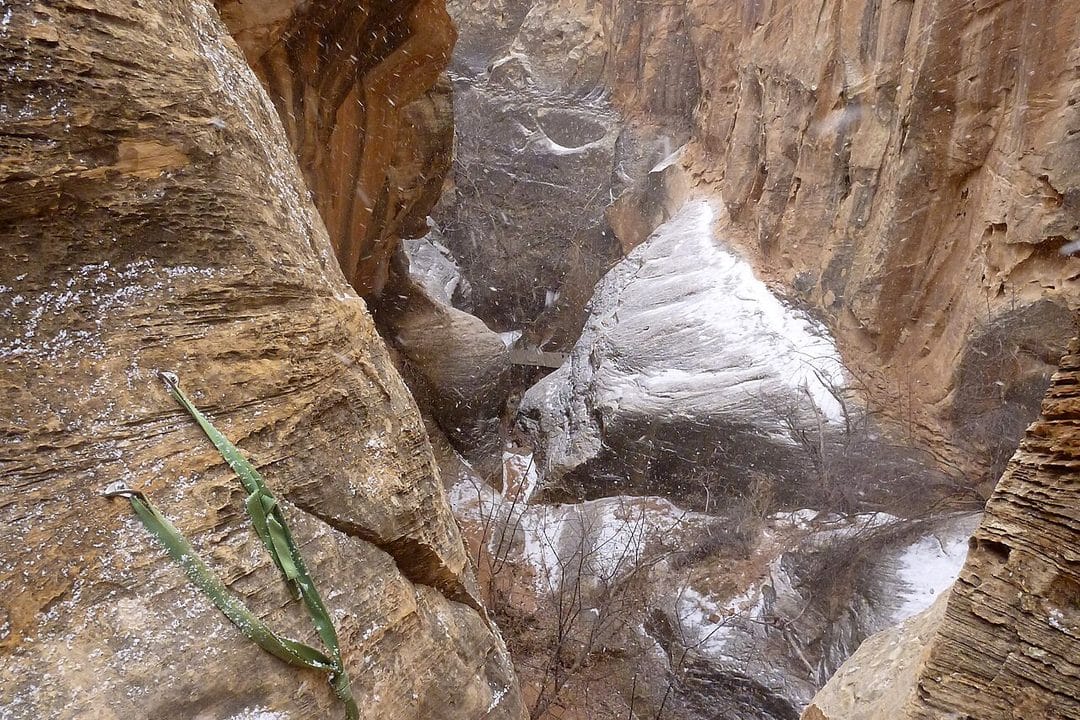
The first time you clip into a rope above a slot canyon and lean back over the edge, your body tells you a very old lie: that the rock behind you is solid ground and the empty air in front is death. Both are wrong. The rope is the thing keeping you alive, and the canyon below — a corridor of sandstone polished smooth by ten thousand years of flash floods — is exactly where you want to be. Canyoneering is the sport of getting down into that corridor on purpose, and over the last few years it has quietly become one of the most accessible ways for an American man to do something genuinely committing without first spending three seasons learning to lead-climb.
People confuse it with caving, with climbing, with that one video of a guy sliding down a waterfall in Utah. It is a little of each. You walk, you scramble, you rappel, you wade, sometimes you swim through water cold enough to take your breath away, and occasionally you jump into a pool you can't see the bottom of. The pull isn't adrenaline for its own sake. It's that a slot canyon is a place most people will never stand in, and the only entry fee is a willingness to trust a rope and read moving water.
What canyoneering actually is, minus the hype
Strip away the GoPro footage and the sport is simple to describe. You enter a drainage at the top, follow it downhill as the walls close in, and descend a series of drops — some you downclimb, some you rappel — until the canyon opens back out and spits you onto a trail or a riverbank. A typical technical canyon in Zion or the San Rafael Swell might involve six to fifteen rappels, the tallest maybe 120 feet, plus stretches of wading and the occasional mandatory swim through a pothole.
The discipline splits roughly into three flavors, and knowing which one you're signing up for matters more than any gear choice. Dry canyons are mostly rappelling and downclimbing over sandstone with no significant water — the gentlest entry point. Wet, non-flowing canyons add pools and potholes you have to swim or climb out of, which is where a wetsuit stops being optional. Then there are aquatic canyons with actual moving water and waterfalls, the kind common in the Pacific Northwest and parts of Colorado, where the water itself becomes the main hazard. A beginner has no business in that third category, and a good guide will keep you out of it.
Geographically, the United States is almost unfairly well supplied. Southern Utah is the global capital — Zion's Subway and Orderville, the Escalante drainages, the North Wash slots near Hanksville. Arizona has Antelope and its quieter, less-famous cousins. Colorado offers the steeper, wetter stuff around Ouray. If you live anywhere in the West, there's a canyon within a half-day drive that will humble you.
The honest risk conversation
Here's the part the highlight reels skip. The single deadliest thing in canyoneering is not a rope failure or a long fall — it's water arriving when you don't expect it. A flash flood can fill a slot canyon with a churning wall of debris-laden water in minutes, generated by a thunderstorm you can't even see because it's happening ten miles upstream over a different watershed. In August 1997, eleven hikers died in Antelope Canyon when a storm that never touched them sent a flood down the slot. That event is still the reason every serious canyoneer checks the regional forecast, not just the local one, and treats a 30 percent afternoon thunderstorm chance as a reason to pick a different objective.
The second real hazard is the keeper pothole — a deep, smooth-walled basin of water with overhanging lips you can't climb out of unaided. People have died of hypothermia trapped in them, unable to escape while their partners watched. Getting out of a keeper takes specific technique and gear: a weighted "potshot" sandbag to throw over the far lip, partner-assisted stacking, sometimes a hook on a collapsible pole. It's one of the first advanced skills worth learning once you're past the basics.
And then there's the mundane stuff that actually injures most people: a rolled ankle three miles into a remote canyon, a rappel device threaded wrong, a rock kicked loose onto the person below. None of it is dramatic. All of it is preventable with attention. The sport rewards the careful and quietly punishes the casual, which is exactly why it suits a certain kind of person — someone who finds the methodical safety routine as satisfying as the descent itself.
How to start without dying or wasting money
Don't buy a rope and watch YouTube. I want to be blunt about this, because the internet makes self-teaching look reasonable and in this sport it's how people get hurt. The single best first move is a one-day guided trip with an outfitter in Zion or Moab. Expect to pay somewhere around $150 to $250 per person for a half-day, more for a full technical canyon with a small group ratio. Outfits like Zion Adventures and various Moab-based guides run beginner descents constantly through the warm months, and a half-day on a real rappel with a guide watching your hands teaches you more than a month of videos ever will.
If you want to build actual competence rather than just collect an experience, take a formal course. The American Canyoneering Association and a number of independent guide services run multi-day skills clinics covering anchors, rappelling, ascending a stuck rope, and basic self-rescue. A two-day course runs roughly $300 to $500. That's the threshold where you go from "I did a canyon once" to "I can join a competent group and not be a liability" — which is the real goal, because canyoneering is a partner sport. You don't do this alone.
The progression that works looks like this:
- One guided descent first, to find out whether you even enjoy hanging on a rope over a drop.
- A formal skills course, ideally two days, before you ever rig your own anchor.
- Then a stretch — often a full season — of joining experienced groups on easy-to-moderate dry canyons, learning the regional beta and how a real party actually moves.
- Only after that, trips with peers at your own level, on canyons well within your ability, with a conservative weather call every single time.
Skipping straight to that last step is exactly how the accident reports read.
The gear, and what it really costs
Canyoneering gear is cheaper than climbing and far cheaper than, say, paragliding, which is part of why the sport keeps growing. For your first guided trips you need nothing — the outfitter supplies the technical kit. Once you commit, a personal starter setup is reasonable.
The harness is your first purchase, and you don't want a standard climbing harness. Canyoneering shreds gear against sandstone and soaks it in grit, so a purpose-built harness with a replaceable seat protector — the Imlay Canyon Gear models are the de facto standard at around $150 — earns its price the first time you butt-slide down forty feet of rock. A canyon-specific rappel device matters too: the Petzl Pirana or an aluminum eight-style device gives you the friction control you need on a stiff, often wet rope, and runs $30 to $60.
Footwear is where people cheap out and regret it. You want shoes that drain, grip wet sandstone, and survive constant abrasion. Dedicated canyoneering shoes from Imlay or a sticky-rubber approach shoe will run $100 to $160, and this is not where to save money — wet sandstone under a smooth sole is genuinely dangerous. Add a wetsuit for anything but bone-dry canyons; a 3mm or 5mm runs $100 to $250, and in a cold Utah pothole it's the difference between an adventure and the early stages of hypothermia.
Round out the kit with a few locking carabiners, a length of webbing for backup anchors, and a dedicated canyoneering rope — static or low-stretch, abrasion-resistant, often 200 feet for $150 to $250. All in, a competent personal setup lands somewhere around $700 to $1,000, spread over a season as you figure out what you actually use. Compared to most things a man chases for a hit of risk, that's a bargain.
Is it for you?
Canyoneering rewards a specific temperament. If your idea of a good day involves a problem to solve slowly and correctly — rig the anchor, check the partner, read the water, commit — it'll dig its hooks into you fast. If you mostly want speed and noise, you'll probably find the careful pace tedious and should go ride something with an engine instead. There's no shame in either; they're just different appetites.
What I'll say without hedging: of all the committing outdoor sports a beginner can realistically enter in a single season, this one offers the best ratio of awe to actual danger — provided you respect the water and never, ever go in with a storm in the forecast. The canyons have been there for ten thousand years. They're not going anywhere, and neither is the flood that carved them. Learn to read both, and the corridor opens up.