Big Wave Surfing: What It Actually Takes to Paddle Into a 20-Foot Wave
The hard part of big wave surfing isn't the ride. It's everything that happens months earlier, nowhere near the ocean.
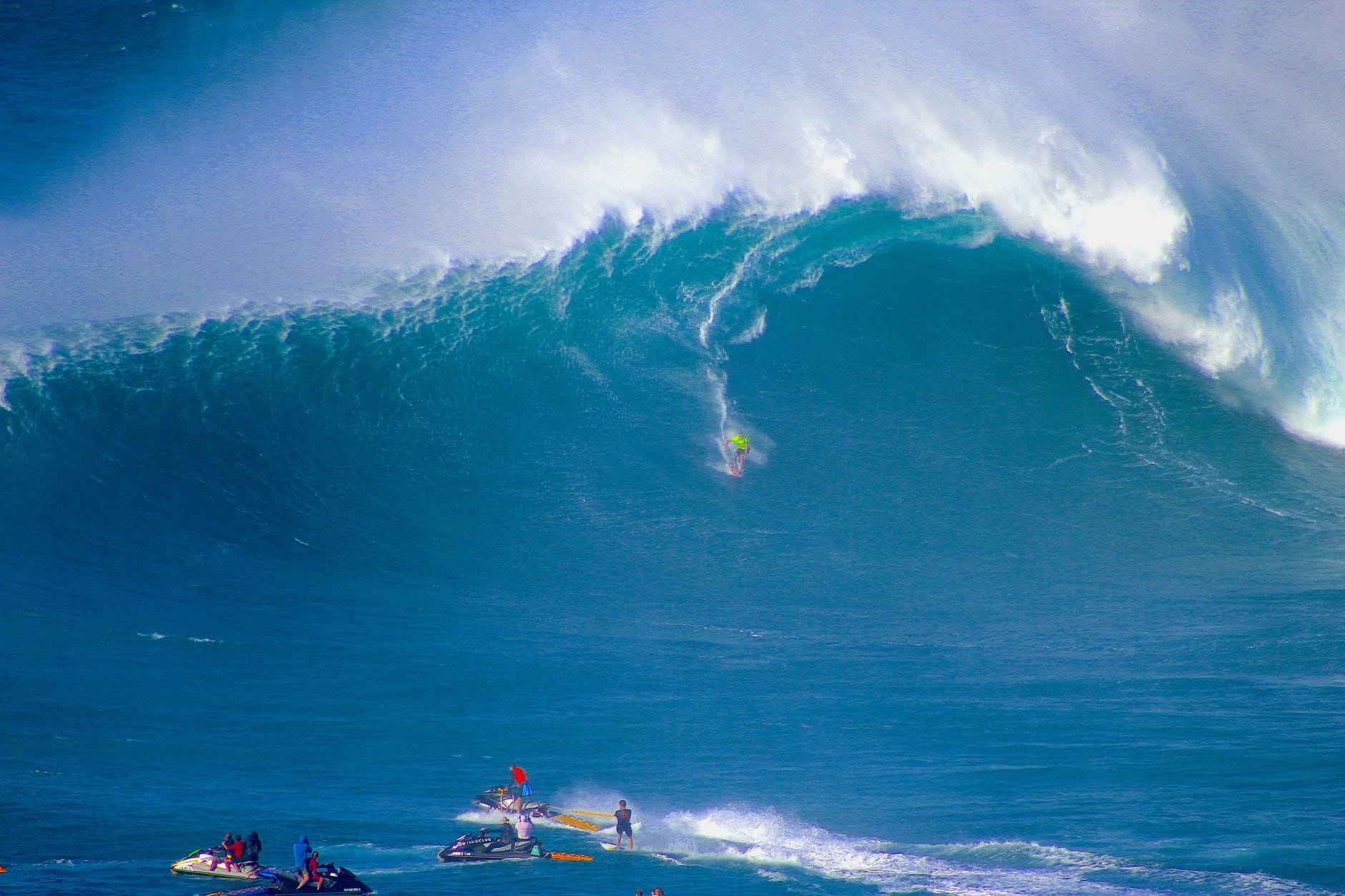
There's a moment at Jaws or Nazaré, maybe eight seconds before a big wave surfer drops in, where the wave hasn't fully stood up yet and the surfer is still paddling — arms burning, board barely planing — toward a wall of water that's about to become twenty feet of moving weight. Turn around at that moment and you're committed to something that will either be the best thirty seconds of your year or the reason a jet ski crew is scanning whitewater for a body. Most people watching the footage assume the hard part is the ride. It isn't. The hard part happened months earlier, and it happened nowhere near the ocean.
Big wave surfing looks like pure nerve from the outside, and the footage sells that story because it's the exciting part. What actually gets someone safely into and out of a 20-foot-plus wave is a stack of unglamorous preparation most casual surfers never build, and skipping any layer of it is exactly how people end up on the injury reports that surface every winter from Mavericks, Jaws, and Nazaré.
The Breath-Hold Number That Actually Matters
Forget the two-minute static breath-holds people post on Instagram — those measure something almost irrelevant to what happens in a wipeout. What matters is dynamic apnea under physical duress: can you function, not just survive, while your body is being tumbled and your oxygen is dropping and adrenaline is burning through it twice as fast as a calm pool session would. Big wave surfers train for this specifically, usually with a certified freediving instructor, building toward comfortable holds in the 3–4 minute range under calm conditions, which typically translates to a functional 45–60 seconds of composure during an actual multi-wave hold-down. That gap between the pool number and the real number is the whole point of the training. Nobody gets tumbled by one wave and comes up clean at big-wave venues — the standard scenario is a two-wave hold-down, sometimes three, because the sets keep coming while you're still underwater from the first one.
Equipment: Boards, Leashes, and the Inflation Vest That Changed the Sport
Big wave boards run 8 to 10 feet, sometimes longer for genuine outer-reef swells, because paddle speed into a fast-moving wave face is a function of length and volume, not paddling strength alone — a shorter board simply can't get you into position in time no matter how fit you are. Guns are shaped narrower and thinner in the tail than a standard shortboard to hold a line at speed without chattering. The equipment that actually changed survival rates over the last decade is the inflatable impact vest, popularized by riders like Shane Dorian after a string of near-drownings at Mavericks in the early 2010s. These vests use a CO2 cartridge, manually triggered, to add buoyancy during a hold-down and pull a surfer to the surface faster than swimming alone would manage. They're not optional at serious venues anymore — most big wave crews treat them the way a climber treats a harness, and a wipeout without one is a categorically different risk than a wipeout with one.
Reading a Swell Before You Ever Paddle Out
Surf forecasting for big wave venues goes well beyond checking a wave-height number on an app. Swell period matters more than height — a 20-second period swell at 15 feet carries dramatically more energy and moves faster than a 12-second period swell at the same reported height, and that energy difference changes everything about how the wave breaks and how much force is behind a wipeout. Wind direction and timing relative to tide matter almost as much; an offshore wind holding up the wave face gives a rideable, if terrifying, wave, while an onshore chop on the same swell turns the same spot into something closer to a washing machine. Local knowledge is not a courtesy here — it's a safety requirement. Every big wave break has its own idiosyncrasies about where the channel is, where the impact zone sits, and where a swimmer or board gets pulled if things go wrong, and that knowledge takes seasons to build, not a single forecast check.
The Support Crew Nobody Puts on the Highlight Reel
Modern big wave surfing runs on a safety infrastructure that didn't exist twenty years ago: jet ski rescue teams positioned in the channel, spotters watching from the cliff or boat, and increasingly, dedicated water safety personnel whose only job that day is pulling surfers out of trouble, not riding waves themselves. This isn't a solo sport anymore, whatever the footage suggests. Solo big wave surfing without a ski team on standby is a decision most professionals stopped making after enough close calls made the math obvious. If you're building toward this from a strong intermediate level, the honest advice is: don't paddle out anywhere serious without a ski team in the water, full stop, no matter how confident you feel on the day.
Where to Actually Start
Nobody goes from shortboarding at their local beach break to paddling into Jaws in one season, and the surfers who try usually get a hard, occasionally dangerous lesson about the gap between confidence and readiness. The realistic progression runs through mid-size reef breaks in the 6–10 foot range for a full season or two, building wave knowledge and paddle fitness specific to bigger surf, before anyone credible suggests moving up to genuine big-wave venues. Ocean swim fitness matters as much as surf-specific training — regular 1,000+ meter ocean swims build the cardiovascular base and comfort in open water that a pool simply can't replicate, especially the part where you're swimming in whitewater and current rather than a calm lane.
What Draws People to This
Ask any big wave surfer why they do it and you'll get some version of the same answer: it's the only place left where the ocean makes every decision for you, instantly, with no negotiation. There's no clock to beat and no opponent to outthink — just a wave that's already decided what's about to happen and thirty seconds to find out if your preparation matches the moment. That's not a rush anyone gets from a controlled environment, and it's exactly why the people who do this seriously keep coming back, season after season, to the same handful of reefs and points around the world that produce waves worth the risk.
The Injuries Nobody Talks About Until They Happen
Leg and shoulder injuries dominate the highlight-reel wipeouts, but the quieter risk is barotrauma — ear and sinus damage from repeated deep hold-downs and rapid pressure changes, which accumulates over a career rather than announcing itself in a single dramatic moment. A significant number of veteran big wave surfers deal with chronic ear problems by their late thirties, the kind that don't show up on any injury report because there's no single incident to point to. It's worth naming honestly: this sport has a cumulative cost that the adrenaline footage never shows, and anyone building a long career in it needs a relationship with an ENT specialist who understands surf-specific barotrauma, not just a general practitioner. Lung barotrauma from underwater lung expansion injuries is rarer but more serious, and it's part of why the inflation vest protocol includes training on how to ascend during a hold-down rather than fighting straight up against the surface tension of whitewater, which increases pressure differential risk.
Where the Sport Is Actually Heading
Tow-in surfing, using a jet ski to whip a rider into waves too fast to paddle into, dominated big wave culture in the early 2000s at spots like Jaws before paddle surfing made a deliberate comeback around 2010, driven partly by athletes wanting the purer physical challenge and partly by a cultural shift that started valuing paddle-in accomplishments more highly again. Both disciplines coexist now depending on the wave and the day — some swells at Nazaré are genuinely too fast and too big to paddle into safely, which keeps tow-in relevant even as paddle surfing gets most of the cultural respect. Forecasting technology has also changed who can realistically chase these swells. Surfline's LOLA forecasting model and buoy networks that didn't exist twenty years ago now give riders days of advance notice on major swells, which is part of why the sport has professionalized as fast as it has — the guesswork that used to filter out all but the most locally dialed-in surfers has been replaced by data anyone with a subscription can read, even if reading the data still doesn't replace years of paddling out at the actual spot.