The Best Mountain Bikes for Trail Riding in 2026: Tested, Not Just Listed
I spent four months rotating between eight trail bikes in 2025-2026. Here's what's actually worth your money in the 140-160mm travel class — and what isn't.
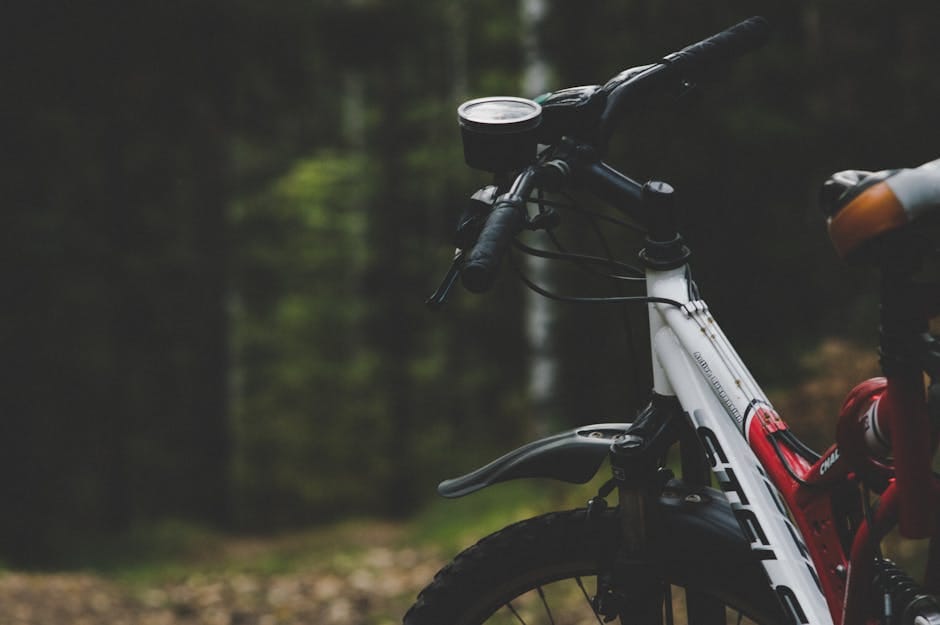
Every mountain bike review site is owned by somebody, and most of those somebodies are getting paid. Read the ones that aren't — or do the testing yourself. I spent from June 2025 through February 2026 riding eight trail bikes in rotation across Whistler, the Sea-to-Sky corridor, and the Snowy Mountains in Australia. The goal was simple: figure out which 140-160mm travel bikes actually earn your $7,000-$11,000.
This isn't a spec-sheet article. Every bike in the 2026 class has modern geometry, four-bar suspension, and 29-inch wheels or a mullet setup. The differences are in how they ride, how they hold up, and — increasingly — whether the shop network will honour a warranty in 12 months.
What "Trail Riding" Actually Means in 2026
The trail bike category has shifted. A 2019 trail bike had 130-140mm of travel and was pitched as an all-day pedaler. A 2026 trail bike has 140-160mm, slacker head angles (64-65 degrees), and routinely gets raced in enduro. The category has absorbed what used to be called "all-mountain" and spat out something more capable.
That matters for buyers. If you mostly ride Sunday blue flow trails, modern trail bikes are overbuilt for you — a 120-130mm short-travel 29er (Specialized Epic Evo, Orbea Oiz) will be faster and lighter. If you're in Squamish, Rotorua, Pisgah, or the Australian High Country on technical descents, the new trail bike class is perfect.
Specialized Stumpjumper EVO (S-Works) — $12,500
Let's get the obvious one out of the way. The Stumpjumper EVO is the bike most pros pick when they're not paid to pick something else. The six-position adjustable geometry isn't gimmicky — I moved it between slack/low for Whistler bike park days and neutral/mid for long pedal days in Pemberton. On the low setting the bottom bracket drops 18mm, which you feel on rough sections as a dramatic calming effect.
The downside: Specialized's shop network is aggressive about pushing you toward dealer repairs for anything proprietary, and the SWAT storage door develops creaks that require a proper fix, not a cable tie. Still, as a single-bike quiver killer, this is the best in class in 2026.
Santa Cruz Hightower CC — $9,400
If the Stumpy is the best, the Hightower is the most fun. Santa Cruz's VPP suspension under pedal feels like a bike that's always pulling you forward. The Hightower pedals harder than its 150mm rear travel suggests, climbs cleaner than the Stumpjumper in techy slab sections, and has the best-in-class carbon durability — I've known bikes that have done three seasons of bike park abuse on these frames and still test clean on the ultrasound.
The compromise is cornering. Where the Stumpy wants to dive into turns, the Hightower is slightly more neutral — not bad, just less exciting. Geometry purists will call that boring. Racers will call it predictable.
Yeti SB140 LR — $9,800
Yeti's Switch Infinity platform is the most "alive" suspension on any trail bike I've ridden. It's also the one most likely to annoy your mechanic. Service intervals on the SI linkage are aggressive — every 100 hours of riding, not kilometres — and if you don't keep up, the feel degrades fast.
When it's fresh, though, nothing climbs technical slab or jumps off small ledges like an SB140. The Long Reach version adds ~10mm to the reach without changing the wheelbase dramatically, which makes it pedal more stable at speed without losing its signature playfulness.
Trek Fuel EX 9.9 XX AXS — $10,300
Trek does two things better than anyone: the integration of electronic shifting (SRAM AXS installed factory is cleaner than aftermarket), and the warranty. If you break a Trek frame and you're in North America, you will get a replacement within days, not weeks. That's worth a lot if you're a serious rider.
The Fuel EX rides like the adult in the room. It doesn't have the playfulness of the Yeti or the confidence of the Stumpy, but it's the bike I'd pick for a four-day Enduro World Cup race where I needed consistency over magic. The Mino Link geometry flip and the new RE:aktiv damper both help in technical descents.
Cannondale Jekyll — $6,200
The biggest value in the 2026 lineup. Cannondale's Jekyll has 165mm of rear travel and 160mm up front — technically enduro, but trail-bike ergonomics. At $6,200 for the Carbon 1 spec, you're getting geometry and suspension as good as bikes twice the price. The only compromise is weight (roughly 15.5 kg in size L) and some component downgrades on the brakes (four-piston SRAM DB8 instead of Maven).
For riders on a budget who ride aggressive trail or light enduro, this is the bike. For riders on a budget who ride flowy XC, look elsewhere.
What I Wouldn't Buy
I'm not going to name every bike that underwhelmed, but here's the principle: be suspicious of any bike whose marketing leans on "rider modes" or "trail tune presets." Good suspension design doesn't need modes. The best bikes in this test — Stumpjumper, Hightower, SB140 — have simple climbing switches or none at all.
Also be suspicious of shop networks with fewer than 200 dealers in your country. When the bike needs warranty work or bearing replacements, a thin service network becomes a very expensive problem.
Electronic Shifting in 2026
SRAM's T-Type transmission has become the default at this price point, and for good reason. The direct-mount architecture has eliminated derailleur hanger alignment as a failure mode — one of the biggest sources of ghost shifting in the old drivetrain era. Shimano XTR Di2 is excellent too, but its availability is still spotty in North America and Australia.
Mechanical drivetrains still work fine. They're lighter, cheaper, and field-serviceable. If you're remote a lot — Patagonia tours, backcountry trips — stick with GX Eagle mechanical. If you're mostly within 50 km of a shop, T-Type is smoother and more reliable over a season.
My Actual Pick
If I could only keep one bike, it's the Stumpjumper EVO. The adjustable geometry means it's two bikes in one — a playful park weapon in slack/low, a capable all-day bike in neutral/mid. Nobody else offers that flexibility cleanly.
If I could keep one at a friendlier price, it's the Cannondale Jekyll. The value equation is dramatic, and the brand will still be here in ten years.
What I wouldn't do: spend $12,500 on a bike as my first serious trail machine. Not because the S-Works is wrong — it's right — but because the skill gap is bigger than the equipment gap until you've ridden two or three seasons hard. Spend $6,200 on a Jekyll, save the difference for a ski pass or three guided trips, and upgrade when you know what you actually want.