Avalanche Safety for Backcountry Skiers: A Beyond-the-Basics Guide
You took your Level 1 course three years ago and you still turn around on days you shouldn't. Here's the guide for skiers who know the basics and need to get better at decisions.
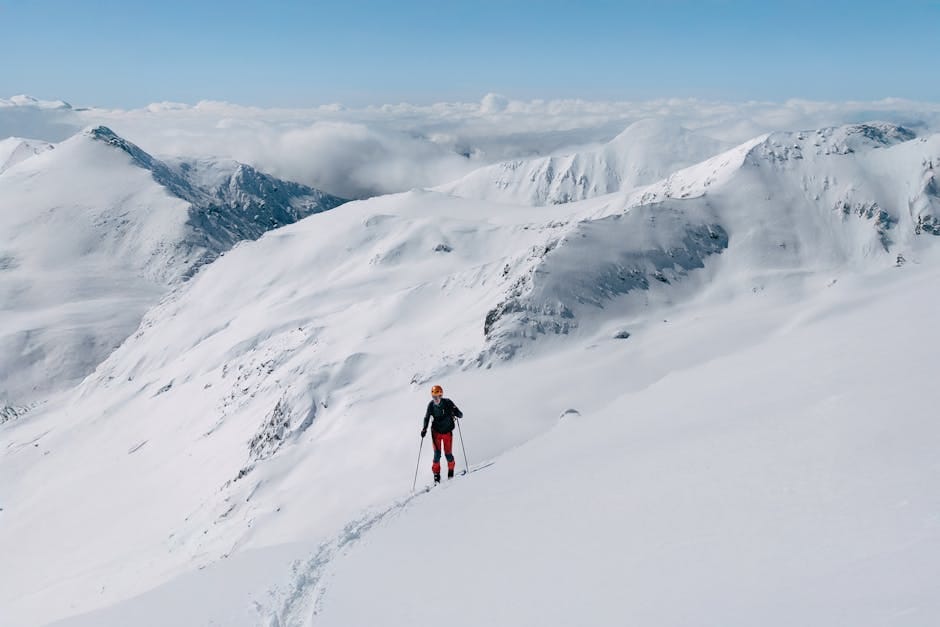
You've done your AIARE Level 1 or the equivalent. You own a beacon, a probe, and a shovel. You read the daily bulletin before trips. You can identify a 30-degree slope without an inclinometer. You still have close calls. That's normal. The basics keep you from making obvious mistakes. They don't teach you how to make correct decisions when the terrain is complicated and the stakes are high.
This is not an introduction to avalanche safety. If you don't have a beacon and you haven't taken an AIARE 1 or APPI equivalent, stop reading and go take the course. This article is for skiers who know the basics and keep making small mistakes that could become big ones.
The Failure Modes That Kill Experienced Skiers
Avalanche fatality statistics in North America tell a consistent story. The typical victim is 28-45 years old, with 5-15 years of backcountry experience, on familiar terrain, in a group of 2-4, on a day where the bulletin read "considerable" or higher. The victim usually made the call to enter the terrain.
These are not novices dying. These are men who've gotten away with it dozens of times. Their luck ran out on day 42 of doing marginal terrain assessment on marginal days.
Heuristic Traps (The Human Factors)
Research by Ian McCammon has consistently identified six human-factor traps. Most fatal decisions involve at least two of these:
- Familiarity — "We've skied this line before without issues."
- Acceptance — "I don't want to be the one to call it off."
- Commitment — "We drove 4 hours to get here."
- Expert Halo — "Sarah's done more touring than any of us."
- Tracks — "Another group already skied this."
- Scarcity — "This is our only day of the season."
Recognising these in yourself is the skill. Most men will tell you they never fall for these. Most men are wrong.
Terrain Reading Beyond Slope Angle
A Level 1 course teaches you that avalanches occur mostly on slopes between 30 and 45 degrees, with the peak around 37-39. That's necessary but not sufficient.
Terrain Features That Amplify Risk
Convex rolls: the slope angle changes from less steep to steeper. Wind-loaded features accumulate here, and the change in angle creates tension that can trigger under rider weight.
Terrain traps: gullies, tree wells, and cliffs below slopes. A small slide on a 25-degree slope above a gully can produce a deep burial. A larger slide into a cliff band means blunt-force trauma before burial.
Wind features: cornices, lee-side loaded slopes. Snow behaviour on wind-loaded aspects differs dramatically from the bulletin's "general" aspect forecast.
Triggers from below: "remote trigger" avalanches happen when a skier on a less-steep slope triggers a steeper slope above. Your position matters, not just where you're standing.
Aspect Reading
Learn to read aspect with an inclinometer and a compass. A smartphone compass is not accurate enough for detailed aspect reading. Use a Brunton or Silva compass in the field.
Aspect changes behaviour dramatically. A single day can produce stable conditions on north-facing slopes and unstable conditions on south-facing slopes, based on solar radiation and wind effects.
Sun-affected aspects (south through west in Northern Hemisphere winter) are where afternoon instability develops. A tour that started on a shaded aspect should not end on a sun-affected one without recalibrating.
Daily Routine That Saves Lives
The skill of safe backcountry travel is largely a routine. Here's what I do and what the best partners I know do:
Morning
Read the bulletin out loud with the partner(s). Discuss the problem type: storm snow, wind slab, persistent slab, wet snow. Each has different terrain implications.
Plan three options: first choice, second choice (less exposed), bail-out (no exposed terrain). Pick which first before leaving the car.
Beacon check at the trailhead. Every time. Not "we'll do it at the top."
En Route
Stop at key decision points and ask: does what I'm seeing match the bulletin? Is it worse? Is it better? Most days the observations will match. On the days they don't, downgrade to option 2 or 3.
Test slopes early. Small test slopes (short pitches of similar aspect) at low consequence can reveal instability before you're committed.
Group position discipline. Only one person on an exposed slope at a time. Stop at safe spots. Don't follow the leader into a terrain trap because "that's where they stopped."
Before Skiing Each Descent
Re-evaluate. The conditions at 9 AM differ from the conditions at 1 PM on many days. Solar input, new wind, and temperature change all compound over a morning.
Explicitly name the hazard. "We're on east aspect, wind-loaded, bulletin says considerable for persistent slab. I'm going to traverse above the loaded bowl and descend the gentler ridge." If the hazard statement sounds sketchy when you say it out loud, don't ski it.
Companion Rescue — Where Most Training Falls Short
You took a Level 1 beacon drill. You probed 3 burials in a workshop. You've never done a rescue in real snow with a real burial. Most skiers haven't.
The gap between training-scenario and real-scenario is huge. Practice 4-6 times per season under realistic conditions: after skinning 800 metres, in cold wind, with multiple burials, in variable snow. Use a partner who actually hides the beacon, not a designated "victim" trail.
Shovelling — The Bottleneck
Most burial survival is lost in the shovelling phase. Statistics show beacons find buried people in 4-7 minutes. Shovelling them out takes 7-20 minutes if done wrong, 4-8 if done right.
The Strategic Shovelling method: dig downhill of the burial, making a ramp to access the victim from below. Don't dig straight down to the beacon signal — you'll dig 2 metres of snow and compact the victim.
Rotate shovelers every 90 seconds. Maintain a V-shaped hole 1.5x the length of the victim. Assign one person to airway management as soon as you reach the head.
Gear That Matters Beyond the Kit
The basic kit (beacon, probe, shovel) is what everyone carries. The next-tier items that save lives:
Avalanche airbag pack: reduces burial depth and orientation. BCA Float, Mammut Barryvox, or Black Diamond JetForce at $900-1,400. Worth it if you ski high-consequence terrain regularly.
AvaLung (Black Diamond, $150): lets you breathe through your pack while buried. Extends survival time in case of burial.
Cold weather gear: a puffy jacket, insulated pants, mittens. Most avalanche deaths include a secondary factor of hypothermia for the survivors during the search and rescue.
Communication: Garmin inReach Mini 2 or similar. Call-out to SAR within minutes of a burial, not hours.
Training Beyond Level 1
A Level 2 course is the natural next step. AIARE Level 2 runs 5 days and goes deeper into snow science, terrain management, and leadership. Take it 2-4 years after Level 1, after you've had real backcountry experience to apply the Level 1 concepts.
A Avalanche Rescue course (1 day, standalone) refreshes beacon and shovelling skills. Take it annually, not every 3 years.
Workshops and clinics: many Canadian and American guide services offer 1-2 day intensive clinics on specific topics (weak layer identification, wind slab assessment). These are excellent complements to formal courses.
The Long Career
The backcountry skiers I know who've been at it for 30-50 years share a pattern: conservative terrain selection on questionable days, calm debrief of close calls, humility about their own calibration.
They're not better skiers than the younger guys. They're alive because they made better decisions for longer. The decisions compounded.
That's the model. Not heroic descents on spicy days. Forty years of good turns on the right days, and a pile of stories about the days they turned around.